

-
1 Time-Space-Time
Telecommunications: TST (Switching Process) -
2 рабочие параметры процесса process working parameters хим.оруж. рабочее помещение
General subject: work spaceУниверсальный русско-английский словарь > рабочие параметры процесса process working parameters хим.оруж. рабочее помещение
-
3 объёмное образование
1) Medicine: mass lesion, oncoma, space-occupying lesion, space-occupying process, space-occupying mass (опухль, гематома и т.д.), foreign tissue lesion2) Radiology: massУниверсальный русско-английский словарь > объёмное образование
-
4 адресное пространство процесса
Programming: process spaceУниверсальный русско-английский словарь > адресное пространство процесса
-
5 пространство процесса
Programming: process spaceУниверсальный русско-английский словарь > пространство процесса
-
6 пространственно-временной процесс
space-time process мат.Русско-английский научно-технический словарь Масловского > пространственно-временной процесс
-
7 процесс установки полезных грузов Спейс Шаттла
Русско-английский глоссарий по космической технике > процесс установки полезных грузов Спейс Шаттла
-
8 БИБЛИОГРАФИЯ
Мы приняли следующие сокращения для наиболее часто упоминаемых книг и журналов:IJP - International Journal of Psycho-analysisJAPA - Journal of the American Psychoanalytic AssociationSE - Standard Edition of the Complete Psychological Works of Sigmund Freud, ed. James Strachey (London: Hogarth Press and the Institute of Psycho-Analysis, 1953—74.)PSOC - Psychoanalytic Study of the Child (New Haven: Yale University Press)PQ - Psychoanalytic QuarterlyWAF - The Writings of Anna Freud, ed. Anna Freud (New York: International Universities Press, 1966—74)PMC - Psychoanalysis The Major Concepts ed. Burness E. Moore and Bernard D. Fine (New Haven: Yale University Press)\О словаре: _about - Psychoanalytic Terms and Concepts\1. Abend, S. M. Identity. PMC. Forthcoming.2. Abend, S. M. (1974) Problems of identity. PQ, 43.3. Abend, S. M., Porder, M. S. & Willick, M. S. (1983) Borderline Patients. New York: Int. Univ. Press.4. Abraham, K. (1916) The first pregenital stage of libido. Selected Papers. London, Hogarth Press, 1948.5. Abraham, K. (1917) Ejaculatio praecox. In: selected Papers. New York Basic Books.6. Abraham, K. (1921) Contributions to the theory of the anal character. Selected Papers. New York: Basic Books, 1953.7. Abraham, K. (1924) A Short study of the development of the libido, viewed in the light of mental disorders. In: Selected Papers. London: Hogarth Press, 1927.8. Abraham, K. (1924) Manic-depressive states and the pre-genital levels of the libido. In: Selected Papers. London: Hogarth Press, 1949.9. Abraham, K. (1924) Selected Papers. London: Hogarth Press, 1948.10. Abraham, K. (1924) The influence of oral erotism on character formation. Ibid.11. Abraham, K. (1925) The history of an impostor in the light of psychoanalytic knowledge. In: Clinical Papers and Essays on Psychoanalysis. New York: Basic Books, 1955, vol. 2.12. Abrams, S. (1971) The psychoanalytic unconsciousness. In: The Unconscious Today, ed. M. Kanzer. New York: Int. Univ. Press.13. Abrams, S. (1981) Insight. PSOC, 36.14. Abse, D W. (1985) The depressive character In Depressive States and their Treatment, ed. V. Volkan New York: Jason Aronson.15. Abse, D. W. (1985) Hysteria and Related Mental Disorders. Bristol: John Wright.16. Ackner, B. (1954) Depersonalization. J. Ment. Sci., 100.17. Adler, A. (1924) Individual Psychology. New York: Harcourt, Brace.18. Akhtar, S. (1984) The syndrome of identity diffusion. Amer. J. Psychiat., 141.19. Alexander, F. (1950) Psychosomatic Medicine. New York: Norton.20. Allen, D. W. (1974) The Feat- of Looking. Charlottesvill, Va: Univ. Press of Virginia.21. Allen, D. W. (1980) Psychoanalytic treatment of the exhibitionist. In: Exhibitionist, Description, Assessment, and Treatment, ed. D. Cox. New York: Garland STPM Press.22. Allport, G. (1937) Personality. New York: Henry Holt.23. Almansi, R. J. (1960) The face-breast equation. JAPA, 6.24. Almansi, R. J. (1979) Scopophilia and object loss. PQ, 47.25. Altman, L. Z. (1969) The Dream in Psychoanalysis. New York: Int. Univ. Press.26. Altman, L. Z. (1977) Some vicissitudes of love. JAPA, 25.27. American Psychiatric Association. (1987) Diagnostic and Statistical Manual of Mental Disorders, 3d ed. revised. Washington, D. C.28. Ansbacher, Z. & Ansbacher, R. (1956) The Individual Psychology of Alfred Adler. New York: Basic Books.29. Anthony, E. J. (1981) Shame, guilt, and the feminine self in psychoanalysis. In: Object and Self, ed. S. Tuttman, C. Kaye & M. Zimmerman. New York: Int. Univ. Press.30. Arlow. J. A. (1953) Masturbation and symptom formation. JAPA, 1.31. Arlow. J. A. (1959) The structure of the deja vu experience. JAPA, 7.32. Arlow. J. A. (1961) Ego psychology and the study of mythology. JAPA, 9.33. Arlow. J. A. (1963) Conflict, regression and symptom formation. IJP, 44.34. Arlow. J. A. (1966) Depersonalization and derealization. In: Psychoanalysis: A General Psychology, ed. R. M. Loewenstein, L. M. Newman, M. Schur & A. J. Solnit. New York: Int. Univ. Press.35. Arlow. J. A. (1969) Fantasy, memory and reality testing. PQ, 38.36. Arlow. J. A. (1969) Unconscious fantasy and disturbances of mental experience. PQ, 38.37. Arlow. J. A. (1970) The psychopathology of the psychoses. IJP, 51.38. Arlow. J. A. (1975) The structural hypothesis. PQ, 44.39. Arlow. J. A. (1977) Affects and the psychoanalytic situation. IJP, 58.40. Arlow. J. A. (1979) Metaphor and the psychoanalytic situation. PQ, 48.41. Arlow. J. A. (1979) The genesis of interpretation. JAPA, 27 (suppl.).42. Arlow. J. A. (1982) Problems of the superego concept. PSOC, 37.43. Arlow. J. A. (1984) Disturbances of the sense of time. PQ, 53.44. Arlow. J. A. (1985) Some technical problems of countertransference. PQ, 54.45. Arlow, J. A. & Brenner, C. (1963) Psychoanalytic Concepts and the Structural Theory, New York: Int. Univ. Press.46. Arlow, J. A. & Brenner, C. (1969) The psychopathology of the psychoses. IJP, 50.47. Asch, S. S. (1966) Depression. PSOC, 21.48. Asch, S. S. (1976) Varieties of negative therapeutic reactions and problems of technique. JAPA, 24.49. Atkins, N. (1970) The Oedipus myth. Adolescence, and the succession of generations. JAPA, 18.50. Atkinson, J. W. & Birch, D. (1970) The Dynamics of Action. New York: Wiley.51. Bachrach, H. M. & Leaff, L. A. (1978) Analyzability. JAPA, 26.52. Bacon, C. (1956) A developmental theory of female homosexuality. In: Perversions,ed, S. Lorand & M. Balint. New York: Gramercy.53. Bak, R. C. (1953) Fetishism. JAPA. 1.54. Bak, R. C. (1968) The phallic woman. PSOC, 23.55. Bak, R. C. & Stewart, W. A. (1974) Fetishism, transvestism, and voyeurism. An American Handbook of Psychiatry, ed. S. Arieti. New York: Basic Books, vol. 3.56. Balint, A. (1949) Love for mother and mother-love. IJP, 30.57. Balter, L., Lothane, Z. & Spencer, J. H. (1980) On the analyzing instrument, PQ, 49.58. Basch, M. F. (1973) Psychoanalysis and theory formation. Ann. Psychoanal., 1.59. Basch, M. F. (1976) The concept of affect. JAPA, 24.60. Basch, M. F. (1981) Selfobject disorders and psychoanalytic theory. JAPA, 29.61. Basch, M. F. (1983) Emphatic understanding. JAPA. 31.62. Balldry, F. Character. PMC. Forthcoming.63. Balldry, F. (1983) The evolution of the concept of character in Freud's writings. JAPA. 31.64. Begelman, D. A. (1971) Misnaming, metaphors, the medical model and some muddles. Psychiatry, 34.65. Behrends, R. S. & Blatt, E. J. (1985) Internalization and psychological development throughout the life cycle. PSOC, 40.66. Bell, A. (1961) Some observations on the role of the scrotal sac and testicles JAPA, 9.67. Benedeck, T. (1949) The psychosomatic implications of the primary unit. Amer. J. Orthopsychiat., 19.68. Beres, C. (1958) Vicissitudes of superego functions and superego precursors in childhood. FSOC, 13.69. Beres, D. Conflict. PMC. Forthcoming.70. Beres, D. (1956) Ego deviation and the concept of schizophrenia. PSOC, 11.71. Beres, D. (1960) Perception, imagination and reality. IJP, 41.72. Beres, D. (1960) The psychoanalytic psychology of imagination. JAPA, 8.73. Beres, D. & Joseph, E. D. (1965) Structure and function in psychoanalysis. IJP, 46.74. Beres, D. (1970) The concept of mental representation in psychoanalysis. IJP, 51.75. Berg, M D. (1977) The externalizing transference. IJP, 58.76. Bergeret, J. (1985) Reflection on the scientific responsi bilities of the International Psychoanalytical Association. Memorandum distributed at 34th IPA Congress, Humburg.77. Bergman, A. (1978) From mother to the world outside. In: Grolnick et. al. (1978).78. Bergmann, M. S. (1980) On the intrapsychic function of falling in love. PQ, 49.79. Berliner, B. (1966) Psychodynamics of the depressive character. Psychoanal. Forum, 1.80. Bernfeld, S. (1931) Zur Sublimierungslehre. Imago, 17.81. Bibring, E. (1937) On the theory of the therapeutic results of psychoanalysis. IJP, 18.82. Bibring, E. (1941) The conception of the repetition compulsion. PQ, 12.83. Bibring, E. (1953) The mechanism of depression. In: Affective Disorders, ed. P. Greenacre. New York: Int. Univ. Press.84. Bibring, E. (1954) Psychoanalysis and the dynamic psychotherapies. JAPA, 2.85. Binswanger, H. (1963) Positive aspects of the animus. Zьrich: Spring.86. Bion Francesca Abingdon: Fleetwood Press.87. Bion, W. R. (1952) Croup dynamics. IJP, 33.88. Bion, W. R. (1961) Experiences in Groups. London: Tavistock.89. Bion, W. R. (1962) A theory of thinking. IJP, 40.90. Bion, W. R. (1962) Learning from Experience. London: William Heinemann.91. Bion, W. R. (1963) Elements of Psychoanalysis. London: William Heinemann.92. Bion, W. R. (1965) Transformations. London: William Heinemann.93. Bion, W. R. (1970) Attention and Interpretation. London: Tavistock.94. Bion, W. R. (1985) All My Sins Remembered, ed. Francesca Bion. Adingdon: Fleetwood Press.95. Bird, B. (1972) Notes on transference. JAPA, 20.96. Blanck, G. & Blanck, R. (1974) Ego Psychology. New York: Columbia Univ. Press.97. Blatt, S. J. (1974) Levels of object representation in anaclitic and introjective depression. PSOC, 29.98. Blau, A. (1955) A unitary hypothesis of emotion. PQ, 24.99. Bleuler, E. (1911) Dementia Praecox or the Group of Schizophrenias. New York: Int. Univ. Press, 1951.100. Blos, P. (1954) Prolonged adolescence. Amer. J. Orthopsychiat., 24.101. Blos, P. (1962) On Adolescence. New York: Free Press.102. Blos, P. (1972) The epigenesia of the adult neurosis. 27.103. Blos, P. (1979) Modification in the traditional psychoanalytic theory of adolescent development. Adolescent Psychiat., 8.104. Blos, P. (1984) Son and father. JAPA_. 32.105. Blum, G. S. (1963) Prepuberty and adolescence, In Studies ed. R. E. Grinder. New York: McMillan.106. Blum, H. P. Symbolism. FMC. Forthcoming.107. Blum, H. P. (1976) Female Psychology. JAPA, 24 (suppl.).108. Blum, H. P. (1976) Masochism, the ego ideal and the psychology of women. JAPA, 24 (suppl.).109. Blum, H. P. (1980) The value of reconstruction in adult psychoanalysis. IJP, 61.110. Blum, H. P. (1981) Forbidden quest and the analytic ideal. PQ, 50.111. Blum, H. P. (1983) Defense and resistance. Foreword. JAFA, 31.112. Blum, H. P., Kramer, Y., Richards, A. K. & Richards, A. D., eds. (1988) Fantasy, Myth and Reality: Essays in Honor of Jacob A. Arlow. Madison, Conn.: Int. Univ. Press.113. Boehm, F. (1930) The femininity-complex In men. IJP,11.114. Boesky, D. Structural theory. PMC. Forthcoming.115. Boesky, D. (1973) Deja raconte as a screen defense. PQ, 42.116. Boesky, D. (1982) Acting out. IJP, 63.117. Boesky, D. (1986) Questions about Sublimation In Psychoanalysis the Science of Mental Conflict, ed. A. D. Richards & M. S. Willick. Hillsdale, N. J.: Analytic Press.118. Bornstein, B. (1935) Phobia in a 2 1/2-year-old child. PQ, 4.119. Bornstein, B. (1951) On latency. PSOC, 6.120. Bornstein, M., ed. (1983) Values and neutrality in psychoanalysis. Psychoanal. Inquiry, 3.121. Bowlby, J. (1960) Grief and morning in infancy and early childhood. PSOC. 15.122. Bowlby, J. (1961) Process of mourning. IJP. 42.123. Bowlby, J. (1980) Attachment and Loss, vol. 3. New York: Basic Books.124. Bradlow, P. A. (1973) Depersonalization, ego splitting, non-human fantasy and shame. IJP, 54.125. Brazelton, T. B., Kozlowsky, B. & Main, M. (1974) The early motherinfant interaction. In: The Effect of the Infant on Its Caregiver, ed. M. Lewis & L. Rosenblum New York Wiley.126. Brenner, C. (1957) The nature and development of the concept of repression in Freud's writings. PSOC, 12.127. Brenner, C. (1959) The masochistic character. JAPA, 7.128. Brenner, C. (1973) An Elementary Textbook of Psycho-analysis. New York Int. Univ. Press.129. Brenner, C. (1974) On the nature and development of affects PQ, 43.130. Brenner, C. (1976) Psychoanalytic Technique and Psychic Conflict. New York: Int. Univ. Press.131. Brenner, C. (1979) The Mind in Conflict. New York: Int. Univ. Press.132. Brenner, C. (1979) Working alliance, therapeutic alliance and transference. JAPA, 27.133. Brenner, C. (1981) Defense and defense mechanisms. PQ, 50.134. Brenner, C. (1983) Defense. In: the Mind in Conflict. New York Int. Univ. Press.135. Bressler, B. (1965) The concept of the self. Psychoanalytic Review, 52.136. Breuer, J. & Freud, S. (1983—95) Studies on Hysteria. SE, 3.137. Breznitz, S., ed. (1983) The Denial of Stress. New York: Int. Univ. Press.138. Brody, S. (1964) Passivity. New York: Int. Univ. Press.139. Brown, H. (1970) Psycholinquistics. New York: Free Press.140. Bruner, J. S. (1964) The course of cognitive growth. Amer. Psychologist. 19.141. Bruner, J., Jolly, A. & Sylva, K. (1976) Play. New York Basic Books.142. Bruner, J. E., Olver, R. R. &Greenfield, P. M. (1966) Studies in Cognitive Growth. New York: Wiley.143. Buie, D H. (1981) Empathy. JAPA, 29.144. Burgner, M. & Edgeumble, R. (1972) Some problems in the conceptualization of early object relationships. PSOC, 27.145. Call, J. ed. (1979) Basic Handbook of Child Psychiatry. New York: Basic Books.146. Carroll, G. (1956) Language, Thought and Reality. Cambridge & London: M. I. T. Press & John Wiley.147. Cavenar, J. O. & Nash, J. L. (1976) The effects of Combat on the normal personality. Comprehensive Psychiat., 17.148. Chassequet-Smirgel, J. (1978) Reflections on the connection between perversion and sadism. IJP, 59.149. Chomsky, N. (1978) Language and unconscious knowledge. In: Psychoanalysis and Language, ed. J. H. Smith. New Haven: Yale Univ. Press, vol. 3.150. Clower, V. (1975) Significance of masturbation in female sexual development and function. In: Masturbation from Infancy to Senescence, ed. I. Marcus & J. Francis. New York: Int. Uni" Press.151. Coen, S. J. & Bradlow, P. A. (1982) Twin transference as a compromise formation. JAPA, 30.152. Compton, A. Object and relationships. PMC. Forthcoming.153. Cullen, W. (1777) First Lines of the Practice of Psysic. Edinburgh: Bell, Brandfute.154. Curtis, B. C. (1969) Psychoanalytic understanding and treatment of impotence. In: Sexual Function and Dysfunction, ed. P. J. Fink & V. B. O. Hummett. Philadelphia: F. A. Davis.155. Darwin, C. (1874) The Descent of Man. New York: Hurst.156. Davidoff-Hirsch, H. (1985) Oedipal and preoedipal phenomena. JAPA, 33.157. Davis, M. & Wallbridge, D. (1981) Boundary and Space. New York: Brunner-Mazel.158. Deutsch, H. (1932) Homosexuality in women. PQ, 1.159. Deutsch, H. (1934) Some forms of emotional disturbance and their relationship to schizophrenia. PQ, 11.160. Deutsch, H. (1937) Absence of grief. PQ, 6.161. Deutsch, H. (1942) Some forms of emotional disturbance and their relationship to schizophrenia. PQ, 11.162. Deutsch, H. (1955) The impostor. In: Neuroses and Character Types. New York: Int. Univ. Press, 1965.163. Devereux, G. (1953) Why Oedipus killed Lains. IJP, 34.164. Dewald, P. (1982) Psychoanalytic perspectives On resistance. In: resistance, Psychodynamics. and Behavioral Approaches, ed. P. Wachtel. New York: Plenum Press.165. Dickes, R. (1963) Fetishistic behavior. JAPA. 11.166. Dickes, R. (1965) The defensive function of an altered state of consciousness. JAPA, 13.167. Dickes, R. (1967) Severe regressive disruption of the therapeutic alliance. JAPA, 15.168. Dickes, R. (1981) Sexual myths and misinformation. In: Understanding Human Behaviour in Health and Illness, ed. R. C. Simon & H. Pardes. Baltimore: Williams & Wilkins.169. Dorpat, T. L. (1985) Denial and Defense in the Therapeutic Situation. New York: Jason Aronson.170. Downey, T. W. (1978) Transitional phenomena in the analysis of early adolescent males. PSOC, 33.171. Dunbar, F. (1954) Emotions and Bodily Functions. New York: Columbia Univ. Press.172. Easson, W. M. (1973) The earliest ego development, primitive memory traces, and the Isakower phenomenon. PQ, 42.173. Edelheit, H. (1971) Mythopoiesis and the primal scene. Psychoanal. Study Society, 5.174. Edgcumbe, R. & Burgner, M. (1972) Some problems in the conceptualization of early object relation ships, part I. PSOC, 27.175. Edgcumbe, R. & Burgner, M. (1975) The phallicnarcissistic phase. PSOC, 30.176. Eidelberg, L. (1960) A third contribution to the study of slips of the tongue. IJP, 41.177. Eidelberg, L. (1968) Encyclopedia of Psychoanalysis. New York: The Free Press; London: Collier-MacMillan.178. Eissler, K. R. (1953) The effect of the structure of the ego on psychoanalytic technique. JAPA, 1.179. Ellenberg, H. F. (1970) The Discovery of the Unconscious. New York: Basic Books.180. Emde, R. N. (1980) Toward a psychoanalytic theory of affect: I. & G. H. Pollock. Washington NYMH.181. Emde R., Gaensbaner, T. & Harmon R. (1976) Emotional Expression in Infancy. New York: Int. Univ. Press.182. Erode R. & Harmon, R. J. (1972) Endogenous and exogenous smiling systems in early infancy. J. Amer. Acad. Child Psychiat., 11.183. Engel, G. L. (1962) Psychological Development in Health and Disease. New York Saunders.184. Engel, G. L. (1967) Psychoanalytic theory of somatic disorder. JAPA, 15.185. Engel, G. L. (1968) A reconsideration of the role of conversion in somatic disease. Compr. Psychiat., 94.186. English, H. B. & English, A. C. (1958) A comprehensive Dictionary of Psychological and Psychoanalytical Terms. New York: David McKay.187. Erard, R. (1983) New wine in old skins. Int. Rev. Psychoanal., 10.188. Erdelyi, M. H. (1985) Psychoanalysis. New York: W. H. Freeman.189. Erikson, E. H. (1950) Childhood and Society. New York: Norton.190. Erikson, E. H. (1956) The concept of ego identity. JAPA, 4.191. Erikson, E. H. (1956) The problem of ego identity. JAPA, 4.192. Esman, A. H. (1973) The primal scene. PSOC, 28.193. Esman, A. H. (1975) The Psychology of Adolescence. New York: Int. Univ. Press.194. Esman, A. H. (1979) Some reflections on boredom. JAPA, 27.195. Esman, A. H. (1983) The "stimulus barrier": a review and reconsideration. PSOC, 38.196. Fairbairn, W. R. D. (1952) Psychoanalytic Studies of the Personality. London: Routledge & Kegan Paul.197. Fairbairn, W. R. D. (1954) An Object-Relations Theory of the Personality. New York: Basic Books.198. Fairbairn, W. R. D. (1963) Synopsis of an Object-Relations theory of the personality. IJP, 44.199. Fawcett, J., Clark, D. C., Scheftner, W. H. & Hedecker, D. (1983) Differences between anhedonia and normal hedonic depressive states. Arch. Gen. Psychiat., 40.200. Fenichel, O. (1934) On the psychology of boredom. Collected Papers. New York: Norton, 1953, vol. 1.201. Fenichel, O. (1941) Problems of Psychoanalytic Technique. Albany, N. Y.: Psychoanalytic Quaterly.202. Fenichel, O. (1945) Character disorders. In: The Psychoanalytic Theory of the Neurosis. New York: Norton.203. Fenichel, O. (1945) The Psychoanalytic Theory of Neurosis New York: Norton.204. Fenichel, O. (1954) Ego strength and ego weakness. Collected Papers. New York: Norton, vol. 2.205. Ferenczi, S. (1909) Introjection and transference. In: Sex in Psychoanalysis. New York: Basic Books.206. Ferenczi, S. (191617) Disease or patho-neurosis. The Theory and Technique of Psychoanalysis. London: Hogarth Press, 1950.207. Ferenczi, S. (1925) Psychoanalysis of sexual habits. In: The Theory and Technique of Psychoanalysis. New York: Basic Books.208. Fine, B. D., Joseph, E. D. & Waldhorn, H. F., eds. (1971) Recollection and Reconstruction in Psychoanalysis. Monograph 4, Kris Study Group. New York: Int. Univ. Press.209. Fink, G. (1967) Analysis of the Isakower phenomenon. JAPA, 15.210. Fink, P. J. (1970) Correlation between "actual" neurosis and the work of Masters and Johson. P. Q, 39.211. Finkenstein, L. (1975) Awe premature ejaculation. P. Q, 44.212. Firestein, S. K. (1978) A review of the literature. In: Termination in Psychoanalysis. New York: Int. Univ. Press.213. Fisher, C. et. al. (1957) A study of the preliminary stages of the construction of dreams and images. JAPA, 5.214. Fisher, C. et. al. (1968) Cycle of penile erection synchronous with dreaming (REM) sleep. Arch. Gen. Psychiat., 12.215. Fliess, R. (1942) The metapsychology of the analyst. PQ, 12.216. Fliess, R. (1953) The Revival of Interest in the Dream. New York: Int. Univ. Press.217. Fodor, N. & Gaynor, F. (1950) Freud: Dictionary of Psycho-analysis. New York: Philosophical Library.218. Fordham, M. (1969) Children as Individuals. London: Hodder & Stoughton.219. Fordham, M. (1976) The Self and Autism. London: Academic Press.220. Fraiberg, S. (1969) Object constancy and mental representation. PSOC, 24.221. Frank, A. Metapsychology. PMS. Forthcoming.222. Frank, A. & Muslin, H. (1967) The development of Freud's concept of primal repression. PSOC, 22.223. Frank, H. (1977) Dynamic patterns for failure in college students. Can. Psychiat. Ass. J., 22.224. French, T. & Fromm, E. (1964) Dream Interpretation. New York: Basic Books.225. Freud, A. (1936) The Ego and the Mechanisms of Defense. New York Int. Univ. Press.226. Freud, A. (1951) Observations on child development. PSOC, 6.227. Freud, A. (1952) The mutual influences in the development of ego and id. WAF, 4.228. Freud, A. (1958) Adolescence. WAF, 5.229. Freud, A. (1962) Assessment of childhood disturbances. PSOC, 17.230. Freud, A. (1962) Comments on psychic trauma. In: Furst (1967).231. Freud, A. (1963) The concept of developmental lines. PSOC, 18.232. Freud, A. (1965) Assessment of pathology, part 2. WAF, 6.233. Freud, A. (1965) Normality and Pathology in Childhood. New York: Int. Univ. Press.234. Freud, A. (1970) The infantile neurosis. WAF, 7.235. Freud, A. (1971) Comments on aggression. IJP, 53.236. Freud, A. (1971) The infantile neurosis. PSOC, 26.237. Freud, A. (1981) Insight. PSOC, 36.238. Freud, S. (1887—1902) Letters to Wilhelm Fliess. New York: Basic Books, 1954.239. Freud, S. (1891) On the interpretation of the aphasias. SE, 3.240. Freud, S. (1893—95) Studies on hysteria. SE, 2.241. Freud, S. (1894) The neuropsychoses of defence. SE, 3.242. Freud, S. (1895) On the ground for detaching a particular syndrome from neurasthenia under the description "anxiety neurosis". SE, 3.243. Freud, S. (1895) Project for a scientific psychology. SE, 1.244. Freud, S. (1896) Draft K, Jameary 1, 1896, Neuroses of defense (A Christmas fairytale). In: Extracts from the Fliess papers (1892—99).245. Freud, S. (1896) Further remarks on the neuropsychosis of defense. SE, 3.246. Freud, S. (1896) Heredity and aetiology of neurosis. SE, 3.247. Freud, S. (1898) Sexuality in the aetiology of the neurosis. SE, 3.248. Freud, S. (1899) Screen memories. SE, 3.249. Freud, S. (1900) The interpretation of dreams. SE, 4—5.250. Freud, S. (1901) Childhood memories and screen memories SE, 6.251. Freud, S. (1901) On dreams. SE, 5.252. Freud, S. (1901) The psychopathology of everyday life. SE, 6.253. Freud, S. (1905) Fragments of an analysis of a case of hysteria. SE, 7.254. Freud, S. (1905) Jokes and their relation to the unconscious. SE, 8.255. Freud, S. (1905) Psysical (or mental) treatment. SE, 7.256. Freud, S. (1905) Three essays on the theory of sexuality. SE. 7.257. Freud, S. (1908) Character and anal erotism. SE, 9.258. Freud, S. (1908) On the sexual theories of children. SE, 9.259. Freud, S. (1908) Preface to Wilhelm Stekel's Nervous Anxiety-States and Their Treatment. SE, 9.260. Freud, S. (1909) Analysis of a phobia in a five-year-old boy. SE, 10.261. Freud, S. (1909) Family romances. SE, 9.262. Freud, S. (1909) Notes upon a case of obsessional neurosis. SE, 10.263. Freud, S. (1910) A special type of choice of object made by men. SE, 11.264. Freud, S. (1910) The autithentical meaning of primal words. SE, 11.265. Freud, S. (1910) The future prospects of psychoanalytic therapy. SE, 11.266. Freud, S. (1910) The psychoanalytic view of psychogenic disturbance of vision. SE, 11.267. Freud, S. (1911) Formulations on the two principles of mental functioning. SE, 12.268. Freud, S. (1911) Notes on a case of paranoia. SE, 12.269. Freud, S. (1911) Psychoanalytic notes on an autobiographical account of a case of paranoia. SE, 12.270. Freud, S. (1911—15) Papers on technique. SE, 12.271. Freud, S. (1912) Contribution to a discussion on masturbation. SE, 12.272. Freud, S. (1912) On the universal tendency to abasement in the sphere of love. SE, 11.273. Freud, S. (1912) The dynamics of transference. SE, 12.274. Freud, S. (1913) Editor's note The disposition to obsessional neurosis. SE, 12.275. Freud, S. (1913) On beginning the treatment. SE, 12.276. Freud, S. (1913) Totem and taboo. SE, 13.277. Freud, S. (1914) Fausse reconnaissance (deja reconte) in psychoanalytic treatment. SE, 13.278. Freud, S. (1914) Mourning and melancholia. SE, 15.279. Freud, S. (1914) Observations on transference love. SE, 12.280. Freud, S. (1914) On narcissism. SE. 14.281. Freud, S. (1914) On the history of the psychoanalytic movement. SE, 14.282. Freud, S. (1914) Remembering, repeating, and working-through. SE, 12.283. Freud, S. (1914—16) Some character types met with in psychoanalysis. (II) Those wrecked by success SE, 14.284. Freud, S. (1915) Das UnbewuЯte. Gesammelte Werke, 10.285. Freud, S. (1915) Instincts and their vicissitudes. SE, 14.286. Freud, S. (1915) Observation on transference-love. SE, I2.287. Freud, S. (1915) Repression. SE, 14.288. Freud, S. (1915) The unconscious. SE, 14.289. Freud, S. (1915—17) Introductory lectures on psychoanalysis. SE, 15 & 16.290. Freud, S. (1916) Introductory lectures on psychoanalysis. SE, 16.291. Freud, S. (1916) Some character types met with in psychoanalytic work. SE, 16.292. Freud, S. (1917) A metapsychological supplement to the theory of dreams. SE, 14.293. Freud, S. (1917) Introductory lectures on psychoanalysis. SE, 16.294. Freud, S. (1917) Mourning and melancholia. SE, 14.295. Freud, S. (1917) On transformations of instinct as exemplified in anal erotism. SE, 17.296. Freud, S. (1918) From the history of an infantile neurosis. SE, 17.297. Freud, S. (1919) "A child is being beaten". SE, 17.298. Freud, S. (1919) Lines of advance in psychoanalytic therapy. SE, 17.299. Freud, S. (1919) The uncanny. SE, 17.300. Freud, S. (1920) Beyond the pleasure principle. SE, 18.301. Freud, S. (1920) The Psychogenesis of a case of homosexuality in a woman. SE, 18.302. Freud, S. (1921) Group psychology and the analysis of the ego. SE, 18.303. Freud, S. (1923) The ego and the id. SE, 19.304. Freud, S. (1923) The infantile genital organization. SE, 19.305. Freud, S. (1924) A short account of psychoanalysis. SE, 19.306. Freud, S. (1924) Neurosis and psychosis. SE, 19.307. Freud, S. (1924) The dissolution of the Oedipus complex SE, 19.308. Freud, S. (1924) The economic problem of masochism. SE, 19.309. Freud, S. (1924) The loss of reality in neurosis and psychosis. SE, 19.310. Freud, S. (1925) Negation. SE, 19.311. Freud, S. (1925) Some psychical consequences of the anatomical distinction between the sexes. SE, 19.312. Freud, S. (1926) Inhibitions, symptoms and anxiety. SE, 20.313. Freud, S. (1926) The question of lay analysis. SE, 20.314. Freud, S. (1927) Fetishism. SE, 21.315. Freud, S. (1930) Civilization and its discontents. SE, 21.316. Freud, S. (1931) Female sexuality. SE, 21.317. Freud, S. (1931) Libidinal types. SE, 21.318. Freud, S. (1933) Femininity. SE, 22,.319. Freud, S. (1933) New introductory lectures on psycho-analysis. SE, 22.320. Freud, S. (1933) The psychology of women. New introductory lectures on psychoanalysis. SE, 22.321. Freud, S. (1936) A disturbance of memory on the Acropolis. SE, 22.322. Freud, S. (1937) Analysis terminable and interminable. SE, 23.323. Freud, S. (1937) Constructions in analysis. SE, 23.324. Freud, S. (1938) An outline on psychoanalysis. SE, 23.325. Freud, S. (1938) Splitting of the ego in the process of defense. SE, 23.326. Freud, S. (1939) Moses and monotheism. SE, 23.327. Freud, S. (1940) An outline of psychoanalysis. SE, 23.328. Frosch, J. (1966) A note on reality constancy. In: Psychoanalysis — A General Psychology, ed. R. M. Loewenstein, L. M. Newman, M. Schur & A. J. Solnit. New York: Int. Univ. Press.329. Frosch, J. (1967) Delusional fixity sense of conviction and the psychotic conflict. IJP, 48.330. Frosch, J. (1977) The relation between acting out and disorders of impulse control. Psychiatry, 40.331. Frosch, J. (1980) Neurosis and psychosis. In: The Course of Life, ed. S. J. Greenspan & G. H. Pollock. Washington, D. C.: National Institute of Health, vol. 3.332. Frosch, J. (1983) The Psychotic Process. New York: Int. Univ. Press.333. Furer, M. (1972) The history of the superego concept in psychoanalysis. In: Moral Value and the Superego concept in Psychoanalysis, ed. S. C. Fost. New York: Int. Univ. Press.334. Furman, E. (1974) A Child s Parent Dies. New Heaven: Yale Univ. Press.335. Furman, E. (1980) Transference and externalization. PSOC, 35.336. Furst, S. Trauma. PMC, Forthcoming.337. Furst, S. (1967) Psychic trauma. In: Psychic Trauma, ed. S. S. Furst. New York: Basic Books.338. Furst, S. (1978) The stimulus barrier and the pathogenecity of trauma. IJP, 59.339. Gaddini, R. (1978) Transitional object and the psychosomatic symptom. In: Grolnich et. al. (1978).340. Galenson, E. & Roiphe, H. (1976) Some suggested revisions concerning early female development. JAPA, 24(5).341. Galenson, E. & Roiphe, H. (1980) The preoedipal development of the boy. JAPA, 28.342. Galenson, E. & Roiphe, H. (1981) Infantile Origins of Sexual Identity. New York: Int. Univ. Press.343. Ganzarain, R. Group psychology. PMC. Forthcoming.344. Ganzarain, R. (1980) Psychotic-like anxieties and primitive defenses. Issues on Ego Psychology, 3(2).345. Ganzarain, R. (1988) A comparative study of Bion's concepts about groups. In: Object Relations Group Psychotherapy. Madison, Ct.: Int. Univ. Press.346. Gediman, H. K. (1971) The concept of the stimulus barrier. IJP, 52.347. Gedo, J. & Goldberg, A. (1973) Models of the Mind. Chicago & London: Univ. of Chicago Press.348. Geerts, A. E. & Prechardt, E., reporters (1978) Colloquium on "trauma". IJP, 59.349. Gero, G. (1943) The idea of psychogenesis in modern psychiatry and in psychoanalysis. Psychoanal. Rev., 30.350. Gill. M. M. (1963) Topography and Systems in Psychoanalytic Theory. Psychol. Issues, Monogr. 10. New York: Int. Univ. Press.351. Gill. M. M. (1967) The primary process in motives and thought. In: Motives and Thought, ed. R. R. Holt. New York: Int. Univ. Press.352. Gill. M. M. (1974) Psychoanalysis and psychotherapy. Int. Rev. Psychoanal., 11.353. Gill, M. M & Rapaport, D. (1942) A case of amnesia and its bearing on the theory of memory. Character and Personality, 11.354. Gillespie, W. (1956) The general theory of Sexual perversion. IJP, 37.355. Glenn, J. (in press) A parameter. In: Annu. Psychoanal.356. Glenn, J. & Kaplan, E. H. (1968) Types of orgasm in women. JAPA, 16.357. Glower, E. (1929) The "screening" function of traumatic memories. IJP, 4.358. Glower, E. (1931) Sublimation, substitution, and social anxiety. IJP, 12.359. Glower, E. (1933) The relation of perversion-formation to the development of reality sense. IJP, 14.360. Glower, E. (1955) The terminal phase. In: The Technique of Psychoanalysis. New York: Int. Univ. Press.361. Goldberg, A. (1975) The evolution of psychoanalytic concepts of depression. In: Depression and Human Existence, ed. E. J. Anthony & T. Benedeck. Boston: Little, Brown.362. Goldberg, A. ed. (1978) The Psychology of the Self. New York: Int. Univ. Press.363. Goldberg, A. (1983) Self psychology and alternate perspectives on internalization. In: Reflections on Self Psychology, ed. J. Lichtenberg & S. Kaplan. Hillsdale, N. J.: Analytic Press.364. Green, A. (1978) Potential space in Psychoanalysis. In: Grolnich et. al. (1978).365. Greenacre, P. (1949) A contribution to the study of screen memories. FSOC, 3/4.366. Greenacre, P. (1950) General problems of acting out. PQ, 19.367. Greenacre, P. (1950) Special problems of early female sexual development. In: Trauma, Growth and Personality New York: Int. Univ. Press.368. Greenacre, P. (1952) Pregenital patterning. IJP, 33.369. Greenacre, P. (1953) Penis awe and its relation to penis envy. In: Drives, Affects, Behavior, ed. R. M. Loewenstein. New York: Int. Univ. Press.370. Greenacre, P. (1956) Experiences of awe in childhood. PSOC,11.371. Greenacre, P. (1957) The childhood of the artist. PSOC, 12.372. Greenacre, P. (1958) The family romance of the artist. In: Emotional Growth. New York: Int. Univ. Press, 1971, vol. 2.373. Greenacre, P. (1958) The relation of the impostor to the artist. In: Emotional Growth. New York: Int. Univ. Press, 1971, vol. 1.374. Greenacre, P. (1968) Perversions. PSOC, 23.375. Greenacre, P. (1969) The fetish and the transitional object, part 1. PSOC, 24.376. Greenacre, P. (1970) The fetish and the transitional object, part 2. IJP 51, vol. 4.377. Greenacre, P. (1970) The transitional object and the fetish. In: Emotional Growth. New York: Int. Univ. Press.378. Greenacre, P. (1972) Crowds and crisis. PSOC, 27.379. Greenacre, P. (1973) The primal scene and the sense of reality. PQ, 42.380. Greenacre, P. (1975) On reconstruction. JAPA, 21.381. Greenberg, J. R. & Mitchell, S. A. (1983) Object Relations in Psychoanalytic Theory. Cambridge: Harvard Univ. Press.382. Greenson, R. R. (1949) The psychology of apathy. PQ, 18.383. Greenson, R. R. (1953) On boredom. JAPA, 1.384. Greenson, R. R. (1960) Empathy and its vicissitudes. IJP, 41.385. Greenson, R. R. (1962) On enthusiasm. JAPA, 10.386. Greenson, R. R. (1965) The working alliance and the transference neurosis. PQ, 34.387. Greenson, R. R. (1967) The technique and Practice of Psycho-analysis. New York: Int. Univ. Press.388. Greenson, R. R. (1978) Exploration in Psychoanalysis. New York: Int. Univ. Press.389. Greenspan, S. & Pollock, G., eds. (1980) The Course of Life. Vol. I. Washington, D. C.: U. S. Government Printing office.390. Grinberg, L., Sor, D. & Tabak de Bianchedi, E. (1975) Introduction to the Work of Bion, trans. A. Hahn. Scotland: Clunie Press.391. Grinker, E. R (1945) Psychiatric disorders in combat crews overseas and in returnees. Med. Clin. North. Amer., 29.392. Grinstein, A. (1983) Freud's Rules of Dream Interpretation. New York: Int. Univ. Press.393. Grolnick, S., Barkin, L. & Muensterberger, W., eds. (1978) Between Reality and Fantasy. New York: Jason Aronson.394. Grosskurth, P. (1986) Melanie Klein. New York: Alfred Knopf.395. Grossman, W. E. & Stewart, W. A. (1976) Penis envy. JAPA, 24 (5).396. Grotstein, J. S. (1981) Splitting and Projective Indentification. New York: Jason Aronson.397. Guntrip, H. (1961) Personality Structure and Human Interaction. New York: Int. Univ. Press.398. Guntrip, H. (1968) Schizoid Phenomena, Object-Relations and the Self. London: Hogarth Press.399. Harley, M. (1967) Transference developments in a five-year old child. In: the Child Analyst at Work, ed. E. Geleerd. New York: Int. Univ. Press.400. Harley, M. (1974) Analyst and Adolescent at Work. New York: Quadrangle.401. Harley, M. (1986) Child analysis, 1947—1984, a retrospective. PSOC, 41.402. Harre, R. and Lamb, R. (1983) The Encyclopedia Dictionary of Psychology. Cambridge: M. I. T. Press.403. Harrison, J. B. (1975) On the maternal origins of awe. PSOC, 30.404. Harrison, J. B. (1979) On Freud's view of the infant-mother relationship and of the oceanic feeling. JAPA, 27.405. Harrison, S. J. (1970) Is psychoanalysis "our science?". JAPA, 18.406. Hartmann, H. PSOC, 5.407. Hartmann, H. (1937) Ego Psychology and the Problem of Adaptation. New York: Int. Univ. Press.408. Hartmann, H. (1939) Ego Psychology and the Problem of Adaptation. New York: Int. Univ. Press, 1958.409. Hartmann, H. (1939) Psychoanalysis and the concept of health. In: Hartmann (1964).410. Hartmann, H. (1947) On rational and irrational action. In: Essays on Ego Psychology. New York: Int. Univ. Press, 1964.411. Hartmann, H. (1948) Comments on the theory of instinctual drives. PQ, 17.412. Hartmann, H. (1950) Comments on the psychoanalytic theory of the ego. New York: Int. Univ. Press.413. Hartmann, H. (1951) Technical implications of ego psychology PQ, 20.414. Hartmann, H. (1952) The mutual influences in the development of ego and id. PSOC, 7.415. Hartmann, H. (1953) Contribution to the metapsychology of schizophrenia. In: Hartmann, PSOC, 8.416. Hartmann, H. (1953) The metapsychology of schizophrenia. PSOC, 8.417. Hartmann, H. (1955) Notes on the theory of sublimation. PSOC, 10.418. Hartmann, H. (1956) The development of the ego concept in Freud's work. IJP, 37.419. Hartmann, H. (1964) Essays in Ego Psychology. New York Int. Univ. Press.420. Hartmann, H. (1964) The development of the ego concept in Freud's work. IJP, 37.421. Hartmann, H., Kris, E. & Loewenstein, R. M. (1946) Comments in the formation of psychic structure. PSOC, 2.422. Hartmann, H., Kris, E. & Loewenstein, R. M. (1949) Notes on the theory of aggression. PSOC, 3/4.423. Hartmann, H. & Loewenstein, R. M. (1962) Notes on the superego. PSOC, 17.424. Hassler, A. D. (1960) Guideposts of migrating fish. Science, 122.425. Hastings, D. W. (1963) Impotence and Frigidity. Boston: Little, Brown.426. Heimann, P. (1952) Certain functions of introjection and projection in early infancy. In: Klein et al. (1952).427. Heimann, P. & Valenstein, A. F. (1962) Notes on the anal stage IJP, 43.428. Heimann, P. & Valenstein, A. F. (1972) The psychoanalytical concept of aggression. IJP, 53.429. Hendrick, I. (1958) Facts and Theories of Psychoanalysis, 3rd ed. New York: Alfred Knopf.430. Hill, M. (1982) Analysis of transference. In: Theory and Technique, vol. 1. New York: Int. Univ. Press.431. Hoffer, W. (1949) Mouth, hand, and ego integration. PSOC, 3/4.432. Holder, A. (1982) Preoedipal contributions to the formation of the superego. PSOC, 37.433. Holt, R. R. (1964) The emergence of cognitive psychology JAPA, 12.434. Holt, R. R. (1967) Beyond vitalism and mechanism. In: Science and Psychoanalysis, ed. J. H. Masserman. Hew York: Grune & Stratton, vol. 2.435. Hook, S. (1959) Psychoanalysis, Scientific Method and Philosophy. New York: Grove Press.436. Horney, K. (1924) On the genesis of the castration complex in women. IJP, 5.437. Horney, K. (1926) The flight from womanhood. IJP, 7.438. Horowitz, M. J. (1972) Modes of representation of thought. JAFA, 20.439. Horowitz, M. J. (1979) States of Mind, 2d. ed. New York: Plenum, 1987, chap. 3.440. Hurvich, M. (1970) On the concept of reality testing. IJP, 51.441. Isaacs, S. (1952) The nature and function of phantasy. In: Klein et. al. (1952).442. Isakower, O. (1938) A contribution to the pathopsychology of phenomena associated with falling asleep. IJP, 19.443. Isakower, O. (1963) Minutes of the faculty meeting. New York Psychoanalytic Institute, Oct. 14—Nov. 20. A. Z. Pteffer, reporter.444. Isay, R. A. (1986) Homosexuality in homosexual and heterosexual men. In: The Psychology of Men, ed. G. Fogel, F. Lane & R. Liebert. New York: Basic Books.445. Jacobi, J. (1959) Complex (Archetype) Symbol in the Work of C. G. Jung. Princeton, N. J.: Princeton Univ. Press.446. Jacobs, T. J. (1986) Transference relationships, relationships between transferences and reconstruction. In: Psycho-analysis, the Science of Mental Conflict, ed. A. D. Richards & M. S. Willick. Hillsdale N. J.: Analytic Press.447. Jacobson, E. (1953) Contribution to the metapsychology of cyclothymic depression. In: Affective Disorders, ed. P. Greenacre. New York: Int. Univ. Press.448. Jacobson, E. (1954) Contribution to the metapsychology of psychotic identifications. JAPA, 2.449. Jacobson, E. (1957) Normal and pathological moods. PSOC, 12.450. Jacobson, E. (1959) Depersonalization. JAPA, 7.451. Jacobson, E. (1964) The Self and the Object World. New York: Int. Univ. Press.452. Jacobson, E. (1967) Psychotic Conflict and Reality. New York: Int. Univ. Press.453. Jacobson, E. (1971) Depression. New York: Int. Univ. Press.454. Jacobson, E. (1971) Depression: Comparative Studies of Normal, Neurotic and Psychotic Conditions. Madison, Conn.: Int. Univ. Press.455. Jacobson, E. (1971) Normal and pathological moods. In: Depression. New York: Int. Univ. Press.456. Jacobson, E. (1975) The regulation of self-esteem. In: Depression and Human Existence. ed. E. J. Anthony & T. Benedeck. Boston: Little, Brown.457. Jaffe, A. (1971) The Myth of Meaning. New York: Putnam.458. Jaffe, D. S. (1970) Forgetting and remembering. P. Q, 39.459. Janet, Dr. Pierre (1924) Principles of Psychotherapy. New York: Macmillan.460. John, E. R. (1976) A model of consciousness. In: Consciousness and Self-Regulation, ed. G. E. Schwartz & D. Shapiro. New York: Plenum Press, 1976, vol. 1.461. Jones, E. (1908) Rationalization in everyday life J Abnorm. Psychol., 3: 161—169.462. Jones, E. (1918) Anal-erotic character traits. In: Papers on Psychoanalysis London— Balliere Tindall & Cox, 1948.463. Jones, E. (1931) The concept of a normal mind. In: Papers on Psychoanalysis, 5th ed., London. Bailliйre, Tindall & Cox, 1948.464. Jones, E. (1933) The phallic phase. IJP, 14.465. Jones, E. (1934) Editorial preface to the Collected Papers of Sigmund Freud, 4. London— Hogarth Press.466. Jones, E. (1941) Evolution and revolution. IJP, 22.467. Jones, E. (1949) Hamlet and Oedipus. New York: Norton.468. Jones, E. (1957) The life and work of Sigmund Freud, vol. 3. New York: Basic Books.469. Joseph, E. D. (1965) Regressive Ego Phenomena in Psychoanalysis. Monograph I, Kris Study Group. New York Int. Univ. Press.470. Joseph, E. D. (1966) Memory and conflict. PQ, 35.471. Joseph, E. D. & Wallerstein, R. S (1982) Psychotherapy. New York: Int. Univ. Press.472. Jung, C. G. (1921—57) Collected Works of C. G. Jung Princeton, N. J.: Princeton Univ. Press.473. Jung, C. G. (1938) Psychological aspects of the mother archetype. In: Collected Works, vol. 9, pt. 1.474. Jung, C. G. (1957) Animus and Anima. Zurich: Spring.475. Jung, C. G. (1963) Memories Dreams, Reflections. New York Pantheon.476. Kamyer, M. (1985) Identification and its vicissitudes. IJP, 66.477. Kandell, E (1976) Cellular Basis of Behavior. San Francisco— W H. Freeman.478. Kanzer, M. (1948) The passing of the Oedipus complex' in Greek drama. IJP, 29.479. Kanzer, M. (1964) On interpreting the Oedipus plays Psychoanal Study Society, 3.480. Kanzer, M. (1981) Freud's "analytic pact". JAPA, 29.481. Kardiner, A. (1941) The Traumatic Neurosis of War New. York: Hoeber.482. Karma, L. (1981) A clinical report of penis envy. JAPA, 29.483. Karush, A., Daniels, C. E., Flood, C. & O'Connor, J. F. (1977) Psychotherapy in Chronic Ulcerative Colitis. Philadelphia: Sannders.484. Katan, A. (1972) The infant's first reaction to strangers. IJP, 53.485. Katan, M. (1940) The role of the word in mania. Bull. Phi la. Assn. Psychoanal., 22.486. Katz, J. (1963) On primary gain and secondary gain. PSOC, 18.487. Katz, J. (1985) Book review of Melanie Klein by Hanna Segal. New York: Viking Press. 1980 JAPA, 33 (suppl.).488. Kaywin, L. (1966) Problems of sublimation. JAPA, 14.489. Kernberg, O. F. (1966) Structural derivations of object relationships. IJP, 47.490. Kernberg, O. F. (1967) Borderline personality organization. JAPA, 15.491. Kernberg, O. F. (1975) Borderline Conditions and Pathological Narcissism. New York: Jason Aronson.492. Kernberg, O. F. (1976) Object Relations Theory and Clinical Psychoanalysis. New York: Jason Aronson.493. Kernberg, O. F. (1977) Boundaries and structure in love relations. JAPA, 25.494. Kernberg, O. F. (1980) Fairbairn's theory and challenge. In: Internal World and External Reality: Object Relations Theory Applied. New York: Jason Aronson.495. Kernberg, O. F. (1980) Internal World and External Reality. New York: Jason Aronson.496. Kernberg, O. F. (1984) Severe Personality Disorders. New Haven: Yale Univ. Press.497. Kessler, J. W. (1970) Contributions of the mentally retarded toward a theory of cognitive development. In: Cognitive Studies, ed. J. Hellmuth. New York Brunner/Mazel.498. Kestenberg, J. S. (1967) Phases of adolescence. J. Amer. Acad. Child. Psychiat., 6.499. Khan, M. (1982) Introduction. In: D. W. Winnicott, Through Paediatrics to Psychoanalysis. London: Hogarth Press.500. Klein, G. S. (1966) The several grades of memory. In: Psychoanalysis. A General Psychology, pd. H. M. Lowenstein, L M. Newman, M. Schur & A. J. Solnit. New York Int. Univ. Press.501. Klein, M. (1932) The Psychoanalysis of Children London: Hogarth Press.502. Klein, M. (1946) Notes on some schizoid mechanisms IJP, 27.503. Klein, M. (1948) Contributions to Psychoanalysis, 1921—45. London: Hogarth Press.504. Klein, M. (1950) Narrative of a Child Analysis. New York Basic Books.505. Klein, M. (1957) Envy and Gratitude. New York: Basic Books.506. Klein, M. (1957) On identification. In: New Directions in Psychoanalysis, ed. M. Klein, P. Heimann & R. Money-Kyrle. New York: Basic Books.507. Klein, M. (1959) On the development of Mental functioning. In: Envy and Gratitude London: Delacorte Press, 1975.508. Klein, M., Heimann, P., Isaacs, S. & Riviere J. (eds.) (1952) Developments in Psychoanalysis. London: Hogarth Press.509. Knight, R. P. (1953) Borderline states. Bull. Menn. Clin., 17.510. Knight, R. P. (1972) Clinician and Therapist: Selected Papers of Robert P. Knight, ed. Stuart C. Miller. New York: Basic Books.511. Kohut, H. (1959) Introspection, empathy, and psycho-analysis. JAPA, 7.512. Kohut, H. (1971) The Analysis of the Self. New York: Int. Univ. Press.513. Kohut, H. (1977) The Restoration of the Self. New York Int. Univ. Press.514. Kohut, H. (1978) The Search for the Self, ed. P. Ornstein. New York: Int. Univ. Press.515. Kohut, H. (1984) How Does Analysis Cure? ed. A Goldben & P. Stepansky. Chicago: Univ. Chicago Press.516. Kohut, H. & Wolf, E. S. (1978) The disorders of the self and their treatment. IJP, 59.517. Krapf, E. E. (1961) The concept of normality and mental, health in psychoanalysis. IJP, 59.518. Kreisler, L. (1984) Fundamentals for a psychosomatic pathology of infants. In: Frontiers of Infant Psychiatry, ed. J. D. Call, E. Galenson & R. L. Tyson. New York: Basic Books, vol. 2.519. Kris, A. O. (1982) Free Association. New Haven: Yale Univ. Press.520. Kris, A. O. (1984) The conflicts of ambivalence. PSOC, 39.521. Kris, E. (1951) Ego psychology and interpretation in psychoanalytic therapy. P. Q, 20.522. Kris, E. (1952) Psychoanalytic Exploration in Art. New York: Int. Univ. Press.523. Kris, E. (1956) On some vicissitudes of insight in psychoanalysis. IJP, 37.524. Kris, E. (1956) The personal myth. JAPA, 4.525. Kris, E. (1956) The recovery of childhood memories in psychoanalysis. PSOC, 11.526. Krupuick, J. L. & Horowitz, M. J. (1981) Stress response syndromes. Arch. Gen. Psychiat., 38.527. Krystal, H. ed. (1968) Massive Psychic Trauma. New York: Int. Univ. Press.528. Krystal, H. (1978) Trauma and affects. PSOC, 33.529. Krystal, H. (1981) The hedonic element in affectivity. J. Psychoanal., 9.530. Krystal, H. (1982) Alexithymia and the affectiveness of psychoanalytic treatment. Int. J. Psychoanal. Psychother., 9.531. Kubie, L. S. (1947) The fallacious use of quantitative concepts in dynamic psychology. P. Q, 16.532. Kubie, L. S. (1962) The fallacious misuse of the concept of sublimation. PQ, 31.533. Kubie, L. S. (1972) Personal communication.534. Kubie, L. S. (1975) The language tools of psychoanalysis. Int. Rev. Psychoanal., 2.535. Labov, W. (1972) Language in the Inner City. Philadelphia: Univ. Penn. Press.536. Lagache, D. (1953) Behavior and psychoanalytic experience In Drives. Affects, Behavior, ed. R. Loewenstein. New York: Int. Univ. Press.537. Langer, S. K. (1962) Problems and techniques of psychoanalytic validation and progress. In: Psychoanalysis as Science, ed. E. Pumplan-Mindlin. Stanford: Stanford Univ. Press.538. Langer, W. (1958) The next assignment. Amer. Imago, 15.539. Langhlin, H. P. (1967) The Neurosis. Washington: Butterworth.540. Laplanche, J. & Pontalis, J. B. (1967) Vocabulaire de la Psychoanalyse. Paris: Presses Universitaires de France.541. Laplanche, J. & Pontalis, J. B. (1973) The Language of Psychoanalysis. London: Hogarth Press.542. Laplanche, J. & Pontalis, J. B. (1983) The Language of psychoanalysis. London: Hogarth Press.543. Laseque, C. (1977) Les exhibitionnistes. L'Union Medicale, Froisieme Serie, 23.544. Leaff, L. A. (1971) Affect versus feeling. JAPA, 19.545. Leon, I. G. (1984) Psychoanalysis, Piaget and attachment. Int. Rev. Psychoanal., 11.546. Lerner, H. E. (1976) Parental Mislabeling of female genitals as a determinant of penis envy and learning inhibitions in women. JAPA, 24 (suppl.).547. Levey, M. (1985) The concept structure in psychoanalysis. Annu. Psychoanal. 12—13.548. Levy, D. (1983) Wittgenstein on the form of psychoanalytic interpretation. Int. Rev. Psycho-anal., 10.549. Levy, S. T. (1984) Principles of Interpretaion. New York: Aronson.550. Levy, S. T. (1984) Psychoanalytic perspectives on emptiness. JAPA, 32.551. Levy, S. T. (1985) Empathy and psychoanalytic technique. JAPA, 33.552. Lewin, B. D. (1933) The body as phallus. PQ, 2.553. Lewin, B. D. (1946) Sleep, the mouth, and the dream screen. PQ, 15.554. Lewin, B. D. (1950) The Psychoanalysis of Elation. New York: Norton.555. Lewin, B. D. (1953) Reconslde ration of the dream screen. PQ, 22.556. Lewis, H. B. (1971) Shame and Guilt in Neurosis. New York: Int. Univ. Press.557. Lichtenberg, J., Bornstein, M. & Silver, D., eds. (1984) Empathy, vols. 1—2. Hillsdale & London: Analytic Press.558. Lichtenberg, J. D. & Kaplan, S. (1983) Reflections on Self Psychology. Hillsdale, N. J.: Analytic Press.559. Lichtenberg, J. D. & Slap, J. W. (1973) Notes on the concept of splitting and defense mechanism of splitting of representations. JAPA, 21.560. Lichtenstein, H. (1961) Identity and sexuality. JAPA, 9.561. Lichtenstein, H. (1970) Changing implications of the concept of psychosexual development. JAPA, 18.562. Lidz, T., Fleck, S. & Cornelison. A. R. (1965) Schizophrenia and the Family. New York: Int. Univ. Press.563. Lifschutz, J. E. (1976) A critique of reporting and assessment in the training analysis. JAPA, 24.564. Limentani, A. (1979) The significance of transsexualism in relation to some basic psychoanalytic concepts. Int. Rev. Psychoanal., 6.565. Loewald, H. W. (1951) Ego and reality. IJP, 32.566. Loewald, H. W. (1959) The waning of the Oedipus complex. JAPA, 27.567. Loewald, H. W. (1962) Internalization, separation, mourning, and the superego. PQ, 31.568. Loewald, H. W. (1971) Some considerations on repetition and repetition compulsion. IJP, 52.569. Loewald, H. W. (1973) On internalization. IJP, 54.570. Loewenstein, R. M. (1951—72) Practice and Precept in Psycho analytic Technique. New Haven: Yale Univ. Press, 1982.571. Loewenstein, R. M. (1951) The problem of interpretation. PQ, 20.572. Loewenstein, R. M. (1957) A contribution to the psychoanalytic theory of masochism. JAPA, 5.573. Loewenstein, R. M., Newman, L. M., Schur, M. & Solnit, A. J., eds. (1966) Psychoanalysis — A General Psychology. New York: Int. Univ. Press.574. Lorand, S. (1950) Clinical Studies in Psychoanalysis. New York: Int. Univ. Press.575. Lowinger, J. (1976) Ego Development. San Francisco: Jossey Bass.576. Luria, A. R. (1978) The human brain and conscious activity. In: Consciousness and Self-Regulation, ed. G. E. Shwarta & D. Shapiro. New York: Plenum Press, 1978, vol. 2.577. Lustman, J. (1977) On splitting. PSOC, 32.578. Lynd, H. M. (1961) On Shame and the Search for Identity New York: Science Editions.579. Madow, Z. & Snow, L. H., eds. (1970) The Psychodynamic Implications of the Physiological Studies on Dreams. Springfield, III: Thomas.580. Mahler, M. S. (1952) On child psychosis and schizophrenia. PSOC, 7.581. Mahler, M. S. (1963) Thoughts and development and individuation. PSOC. 12.582. Mahler, M. S. (1966) Notes on the development of basic moods: the depressive affect in psychoanalysis. In: Psychoanalysis — A General Psychology, ed. R. M. Loewenstein, L. M. Newman, M. Schuz & A. J. Solnit. New York: Int. Univ. Press.583. Mahler, M. S. (1968) On Human Symbiosis and the Vicissitudes of Individuation. New York: Int. Univ. Press.584. Mahler, M. S. (1975) Discussion on Bernard L. Pacella's paper. JAPA, 23.585. Mahler, M. S. (1975) On the current status of infantile neurosis. JAPA, 23.586. Mahler, M. S. (1979) Selected Papers of Margaret S. Mahler, vol. 2. New York: Jason Aronson.587. Mahler, M. S. & Purer, M. (1968) On Human Symbiosis and the Vicissitudes of Individuation. New York: Int. Univ. Press.588. Mahler, M. S. & Gosliner, B. J. (1955) On Symbiotic child psychosis. PSOC, 10.589. Mahler, M. S., Pine, F. & Bergman, A. (1975) The Psychological Birth of the Human Infant. New York: Basic Books.590. Mahony, P. (1979) The boundaries of free association. Psychoanal. Contemp. Thought, 2.591. Malcove, L. (1975) The analytic situation (and Panel discussion). J. Phila. Assn. Psychoanal., 2.592. Marcovitz, E. (1973) On confidentiality in psychoanalysis. Bull. Phila. Assn. Psychoanal., 23.593. Marcus, I. M. & Francis, J. J. (1975) Masturbation. New York: Int. Univ. Press.594. Marty, P. & de M'Uzan, M. (1963) La pensйe opйratoire. Rev. Psychoanaltique, 27 suppl.595. Masson, J. M. (1980) The Oceanic Feeling. Boston: D. Reidel Publishing Company.596. Masters, W. H. & Johnson, V. E. (1966) Human Sexual Response. Boston: Little, Brown.597. McDaugall, J. (1984) The "dis-affected" patient. PQ, 53.598. McDevitt, J. B. (1975) Separation-individuation and object constancy. JAPA, 23.599. Meehl, P. E. (1962) Hedonic capacity. Bull. Menn. Clin., 39.600. Meissner, W. H. (1978) The Paranoid Process. New York: Aronson.601. Meissner, W. W. (1979) Internalization and object relations. JAPA, 27.602. Meissner, W. W. (1981) Internalization in Psychoanalysis. New York: Int. Univ. Press.603. Meissner, W. W. (1981) Metapsychology: who needs it. JAPA, 29.604. Meissner, W. W., Mack, J. E. & Semrad, E. V. (1975) Classical Psychoanalysis. In: Comprehensive Textbook of Psychiatry, ed. A. M. Freedman, H. I. Kaplan & J. Sadock. Baltimore: Williams & Wilkins.605. Menninger, W. (1943) Characterologic and symptomatic expressions related to the anal phase of psycho sexual development. PQ, 12.606. Mesmer, Franz Anton (1965) The Nature of Hypnosis, ed. Ronald E. Shor and Martin T. Orne. New York: Holt, Rinehart and Winston.607. Metcalf, D. & Spitz, R. A. (1978) The transitional object. In: Grolnick et al. (1978).608. Meyer, B. C. (1972) The contribution of psychoanalysis to biography. Psychoanal. Contemp. Sci., 1.609. Meyer, J. (1982) The theory of gender identity disorders. JAPA, 30.610. Meyer, J. (1985) Ego-dystonic homosexuality. In: Comprehensive Textbook of Psychiatry, 4th ed., ed. H. Kaplan & B. Sadock. Baltimore: Williams & Wilkins.611. Meyer, J. (1985) Paraphilia. In: Comprehensive Textbook of Psychiatry, ed. H. Kaplan & B. Sadock. Baltimore, Williams & Wilkins, 4th ed.612. Michaels, R. & Gaeger, R. K. Adaptation. PMC. Forthcoming.613. Milrod, D. (1982) The wished-for-self-image. PSOC, 37.614. Modell, A. H. (1958) The Theoretical implications of hallucinatory experiences in schizophrenia. JAFA, 6.615. Modell, A. H. (1965) Object Love and Reality. New York: Int. Univ. Press.616. Modell, A. H. (1970) The transitional object and the creative act. PQ, 39.617. Modell, A. H. (1975) The ego and the id. IJP, 56.618. Money, J. & Green, R. (1969) Transsexualism and Sex Reassignment. Baltimore: Johns Hopkins Univ. Press.619. Monroe, R. R (1970) Episodic Behavior Disorders. Cambridge: Harvard Univ. Press.620. Moore, B. E. (164) Frigidity. PQ. 33.621. Moore, B. E. (1975) Freud and female sexuality. IJP, 57.622. Moore, B. E. (1975) Toward a clarification on the concept of narcissism. PSOC, 30.623. Moore, B. E. (1976) Freud and female sexuality. IJP, 57.624. Moore, B. E. (1977) Psychic representation and female orgasm. In: Female Psychology, ed. H. P. Blum. New York: Int. Univ. Press.625. Moore, B. E. & Fine, B. D., eds. (1967) A Glossary of Psychoanalytic Terms and Concepts. New York: Amer. Psychoanal. Assn.626. Moore, B. E. & Rubinfine, D. Z. (1969) The mechanism of denial. Kris Study Group Monographs, New York: Int. Univ. Press, vol. 3.627. Moses, R. (1978) Adult psychic trauma. IJP, 59.628. Murray, C. D. (1930) Psychogenic factors in the etiology of ulcerative colitis and bloody diarrhea. Amer. J. Med. Sci., 180.629. Nagera, H., ed. (1966) Early Childhood Disturbances, the Infantile Neurosis, and the Adulthood Disturbances. New York: Int. Univ. Press.630. Nagera, H. (1967) The concepts of structure and structuralization. PSOC, 22.631. Nagera, H. (1969—71) Basic Psychoanalytic Concepts. New York: Int. Univ. Press.632. Nagera, H. (1976) Obsessional Neuroses. New York: Aronson.633. Natterson, J. M. (1980) The Dream in Clinical Practice. New York: Jason Aronson.634. Nemiah, J. C. & Sifneos, P. E. (1970) Affect and fantasy in patients with psychosomatic disorders. In: Modern Trends in Psychosomatic Medicine, ed. O. W. Hill. London: Butterworths, vol. 2.635. Neubaner, P. B. (1979) The role of insight in psychoanalysis JAPA, 27.636. Neubaner, P. B. (1982) Rivalry, envy, and Jealousy. PSOC, 37.637. Novick, J. (1982) Varieties of transference in the analysis of an adolescent. IJP, 42.638. Novick, J. & Kelly, K. (1970) Projection and externalization. PSOC, 25.639. Noy, P. Wollstein, S. & Kaplan-de-Nour, A. (1966) Clinical observations of the psychogenesis of impotence. Brit. J. Med. Psychol., 39.640. Nunberg, H. (1948) The synthetic function of the ego. In: Practice and Theory of Psychoanalysis. New York: Int. Univ. Press, vol. 1.641. Nunberg, H. (1954) Evaluation of the results of psychoanalytic treatment. IJP, 35.642. Nunberg, H. (1955) Principles of Psychoanalysis. New York: Int. Univ. Press.643. Ogden, T. (1982) Projective Identification and Psycho-therapeutic Technique. New York: Jason Aronson.644. Olinick, S. Z. (1964) The negative therapeutic reaction. IJP, 45.645. Olinick, S. Z. (1980) The Psychotheraputic Instrument. New York: Jason Aronson.646. Ornston, D. G. (1978) On projection. PSOC, 33.647. Ornston, D. G. (1982) Strachey's influence. IJP, 63.648. Ornston, D. G. (1985a) Freud's conception is different from Strachey's. JAPA, 33.649. Ornston, D. G. (1985b) The invention of "cathexes" and Strachey's strategy. Int. Rev. Psychoanal., 12.650. Ornston, D. G. (1988) How standard is the "Standard Edition? In Freud in Exile, ed. E. Timns & N. Segal. New Haven: Yale Univ. Press.651. Orr, D. W. (1954) Transference and countertransference. JAPA, 2.652. Ostow, M. (1974) Sexual Deviation. New York: Quadrangle.653. Pacella, B. (1975) Early ego development and the deja vu. JAPA, 23.654. Panel (1957) Acting out and its relation to impulse disorders. M. Kanzer, reporter. JAPA, 5.655. Panel (1958) Problems of identity. D. Z. Rubinfine, reporter. JAPA, 6.656. Panel (1958) Technical aspects of regression during psychoanalysis. K. T. Calder, reporter. JAFA, 11.657. Panel (1963) The concept of the id. E. Marcovitz, reporter. JAPA, 11.658. Panel (1964) Depersonalization. W. A. Stewart, reporter. JAPA, 12.,.659. Panel (1966) Clinical and theoretical aspects of "as-if" characters. J. Weiss, reporter. JAPA, 11.660. Panel (1969) The theory of genital primacy in the light of ego psychology. M. Berezin, reporter. JAPA, 17.661. Panel (1971) Action, acting out, and the symptomatic act. N. Actins, reporter. JAPA, 18.662. Panel (1970) Psychoanalytic theory of affects. L. B. Lofgren, reporter. JAPA, 16.663. Panel (1970) The development of the child's sense of his sexual identity. Virginia, L. Glower, reporter. JAPA, 18.664. Panel (1970) The negative therapeutic reaction. S. L. Olinick, reporter. JAPA, 18.665. Panel (1972) Levels of confidentiality in the psychoanalytic situation. A. S. Watson, reporter JAPA, 20.666. Panel (1974) Toward a theory of affects. P. Castelneuvo-Tedesco, reporter. JAPA, 22. W.667. Panel (1975) The analytic situation. S. T. Shapiro, reporter. J. Phila. Aasn. Psychoanal.,2.668. Panel (1980) New directions in affect theory. E. P. Lester, reporter. JAPA, 30.669. Panel (1981) Insight. K. H. Blacker, reporter. JAPA, 29.670. Panel (1981) Masochism. W. Fischer, reporter. JAPA, 29.671. Panel (1982) Beyond lay analysis. H. Fischer, reporter. JAPA, 30.672. Panel (1983) Clinical aspects of character. M. Willick, reporter. JAPA, 31.673. Panel (1983) Theory of character. S. M. Abend, reporter. JAPA, 31.674. Panel (1984) The neutrality of the analyst in the analytic situation, R. J. Leider, reporter. JAPA, 32. (1985) Perspectives on the nature of psychic reality. E. Roughton, reporter. JAPA, 33.675. Panel (1987) Toward the further understanding of homosexual women. A Wolfson, reporter. JAPA, 35.676. Pao, P.-N. (1971) Elation, hypomania and mania. JAFA, 19.677. Parens, H. (1979) The Development of Aggression in Early Childhood. New York: Jason Aronson.678. Parens, H. (1980) Psychic development during the second and third years of life. In: The Course of Life, ed. S. Greenspan & G. Pollock. Washington: Nat. Inst. Health.679. Parens, H. & Saul, L. J. (1971) Dependence in Man. New York: Int. Univ. Press.680. Person, E. & Ovesey, L. (1974) The transsexual syndrome in males. Amer. J. Psychother., 28.681. Person, E. & Ovesey, L. (1983) Psychoanalytic theories of gender identity. J. Amer. Acad. Psychoanal., 2.682. Peterfreund, E. & Schwartz, J. T. (1971) Information, systems, and Psychoanalysis. New York: Int. Univ. Press.683. Peto, A. (1976) The etiological significance of the primal scene in perversions. PQ, 44.684. Pfeffer, A. Z. (1984) Modes of obsessional thinking. Presented at the New York Psychoanalytic Society, October 23.685. Piaget, J. (1937) The Construction of Reality in the Child. New York: Basic Books, 1954.686. Piaget, J. (1962) Play, Dreams and Imitation in Childhood New York: Norton.687. Piers, G. & Singer, M. B. (1953) Shame and Guilt. Springfield: Thomas; New ed., New York: Norton.688. Pine, F. (1985) Developmental Theory and Clinical Process. New Haven: Yale Univ. Press.689. Poland, W. S. (1984) On the analyst's neutrality. JAFA, 32.690. Pollock, G. H. (1961) Mourning and adaptation. IJP, 42.691. Pollock, G. H. (1978) Process and affect. IJP, 59.692. Potamianau, A. (1985) The personal myth. PSOC, 40.693. Provence, S. & Lipton, R. (1962) Infants in Institutions. New York: Int. Univ. Press.694. Pulver, S. E. Symptomatology. PMC. Forthcoming.695. Pulver, S. E. (1970) Narcissism. JAPA, 18.696. Rado, S. (1949) An adaptational view of sexual behavior In Psychosexual Development in Health and Disease, ed. P. H. Hock & J. Lubin. New York: Grune & Stratton.697. Rangell, L. Affects. PMC. Forthcoming.698. Rangell, L. (1959) The nature of conversion. JAPA, 7.699. Rangell, L. (1963) Structural problems in intrapsychic conflict. PSOC, 18.700. Rangell, L. (1966) An overview of the ending of an analysis. In: Psychoanalysis in Americas, ed. R. E. Litman. New York: Int. Univ. Press.701. Rangell, L. (1968) A point of view on acting out. IJP, 49.702. Rangell, L. (1981) From insight to change. JAPA, 29.703. Rangell, L. (1981) Psychoanalysis and dynamic psychotherapy. PQ, 50.704. Rangell, L. (1983) Defense and resistance in psychoanalysis and life. JAPA, 31 (suppl.).705. Rangell, L. (1985) The object in psychoanalytic theory. JAPA, 33.706. Rank, O. (1909) The Myth of the Birth of the Hero. New York: Nerv. Ment. Dis. Monogr., 18.707. Rank, O. (1924) The Trauma of Birth. New York: Robert Brunner, 1952.708. Rapaport, D. (1942) Emotions and Memory. New York: Int. Univ. Press, 1950.709. Rapaport, D. (1960) The structure of Psychoanalytic Theory. Psychol. Issues, monogr. 6, New York: Int. Univ. Press.710. Rapaport, D. & Gill, M. M. (1959) The points of view and assumptions of metapsychology. In: The Collected Papers of David Rapaport. New York: Basic Books, 1967.711. Rapoport, A. (1955) The role of symbols in human behavior. Psychiatric Research Reports, vol. 2, ed. J. S. Gottlieb et al. Washington: Amer. Psychiat. Assn.712. Rappaport, E. A. (1968) Beyond traumatic neurosis. IJP, 49.713. Reich, A. (1951) On countertransference. In: Psychoanalytic Contributions. New York: Int. Univ. Press, 1973.714. Reich, A. (1953) Narcissistic object choice in women. JAPA, 1.715. Reich, A. (1954) Early identifications as archaic elements in the superego. JAPA, 2.716. Reich, A. (1960) Pathologic forms of self-esteem regulation. PSOC, 15.717. Reich, W. (1933) Character Analysis. New York: Orgone Press, 1949.718. Reich, W. (1933) Some circumscribed character forms. In: Character Analysis. New York: Orgone Institute Press.719. Reik, T. (1919) Ritual. New York: Int. Univ. Press.720. Reiser, M. (1984) Mind, Brain and Body New York: Basic Books.721. Richards, A. D. (1985) Isakower-like experience on the couch. PQ. 54.722. Ricoeur, P. (1970) Freud and Philosophy. New Haven — Yale Univ. Press.723. Ricoeur, P. (1976) Interpretation Theory. Forth Worth-Texas Christian Univ. Press.724. Rinsley, D. B. (1982) Fairbairn's object relations and classical concepts of dynamics and structure. In: Borderline and Other Self Disorders' A Developmental and Object-Relations Respective New York: Jason Aronson.725. Rioch, M. (1970) The work of W. R Bion on groups. Psychiatry, 33.726. Ritvo, S. (1971) Late adolescence. PSOC, 18.727. Ritvo, S. (1974) Current status of the concept of infantile neurosis. PSOC, 29.728. Robbins, F & Sadow, L (1974) A developmental hypothesis of reality processing. JAPA, 22.729. Rodman, F. R. (1987) Introduction In the Spontaneous Gesture — Selected Letters of D. W. Winnicott, ed. F. R. Rodman Cambridge—Harvard Univ. Press.730. Roiphe, H. (1968) On an early genital phase. PSOC, 23.731. Roiphe, H. & Galenson, E. (1981) Infantile Roots of Sexual Identity. New York: Int. Univ. Press.732. Rose, G. (1978) The creativity of everyday life. In: Grolnick et al (1978).733. Rose, H. (1928) A Handbook of Greek Mythology. London: Methuen.734. Rosenblatt, A. D. & Thickstun, J T. (1970) A study of the concept of psychic energy. IJP, 51.735. Rosenthal, S. M. (1968) The involutional depressive syndrome. Amer J. Psychiat., 124.736. Ross, N. (1967) The "as-if" concept. JAPA, 15.737. Ross, N. (1970) The primacy of genitality in the light of ego psychology. JAPA, 18.738. Rothstein, A. (1983) The Structural Hypothesis. New York: Int., Univ. Press.739. Roughton, R. Action and acting out. FMC. Forthcoming.740. Rubinstein, B. B. (1972) On metaphor and related phenomena. In: Psychoanalysis and Contemporary Science, ed. A. R. Holt & E. Peterfreund., New York: Int. Univ. Press, vol. 1.741. Rutter, M. (1972) Maternal Deprivation. Baltimore: Penguin Books.742. Rycroft, C. (1968) A critical Dictionary of Psychoanalysis New York: Basic Books.743. Sachs, D. M. (1979) On the relationship between psycho-analysis and psychoanalytic psychotherapy. Bull. Phila Assn. Psychoanal, 6.744. Sachs, H. (1942) The Creative Unconscious Cambridge, Mass.: Sci. Art. Publishers.745. Samuels, A. (1985) Jung and the Post-Jungians London — Routledge & Kegan Paul.746. Sandler, J. (1960) On the concept of the superego. PSOC, 15.747. Sandler, J., Dare, C. & Holder, A (1973) The negative therapeutic reaction. In: The Patient and the Analyst New York: Int. Univ. Press.748. Sandler, J. & Freud, A. (1985) The Analysis of Defense. New York: Int. Univ. Press.749. Sandler, J., Hodler, A. & Meers, D. (1963) The ego ideal and the ideal self. PSOC, 18.750. Sandler, J., Kennedy, H & Tyson, R. L (1980) The Technique of Child Psychoanalysis. Cambridge—Harvard Univ. Press.751. Sandler, J. & Rosenblatt, B. (1962) The concept of the representational world. PSOC, 17.752. Sandler, J. & Sandier, A. M. (1978) On the development of object relationships and affects. IJP, 59.753. Sarlin, C. N. (1962) Depersonalization and derealization. JAPA, 10.754. Sarlin, C. N. (1970) The current status of the concept of genital primacy. JAPA. 18.755. Sarnoff, C. A. (1978) Latency. New York: Aronson.756. Saussure de, F. (1911) Course in General Linguistic. New York: McGraw Hill.757. Schafer. R. (1968) Aspects of Internalization. New York: Int. Univ. Press.758. Schafer. R. (1974) Problems in Freud's psychology of women. JAPA, 22.759. Schafer. R. (1975) Psychoanalysis without psychodynamics. IJP, 56.760. Schafer. R. (1976) A New Language for Psychoanalysis. New Haven: Yale Univ. Press.761. Schafer. R. (1983) The Analytic Attitude. New York: Basic Books.762. Schechner, R. & Schuman, M. (1976) Ritual, Play and Performance New York: Seabury Press.763. Schlesinger, N. & Robbins, F. P. (1983) A Developmental View of the Psychoanalytic Process. New York; Int. Univ. Press.764. Schneirla, T. C. (1959) An evolutionary and developmental theory of biphasic processes underlying approach and withdrawal. In: Nebraska Symposium on Motivation, ed. H. R. Jones. London: Univ. Nebraska Press.765. Schur, M. (1955) Comments on the metapsychology of somatization. PSOC, 10.766. Schur, M. (1966) The Id and the Regulatory Principles of Mental Functioning. New York: Int. Univ. Press.767. Schuster. D. B. (1969) Bisexuality and body as phallus. PQ, 38.768. Schwartz, H. J., ed. (1984) Psychotherapy of the Combat Veteran. New York: SP Medical and Scientific Books.769. Segal, H. (1957) Notes on symbol formation. IJP, 39.770. Segal, H. (1964) Introduction to the Work of Melanie Klein. London: Hogarth Press, 1973.771. Segal, H. (1973) Introduction to the work of Melanie Klein. London: W. Heinemann.772. Segal, H. (1981) The Work of Hanna Segal. New York: Jason Aronson.773. Segal, H. (1986) Illumination of the dim, shadowy era. Sunday Times, London, May 11, 1986.774. Shane, M. Shane, E. (1982) Psychoanalytic theories of aggression. Psychoanal. Inquiry, 2.775. Shane, M. Shane, E. (1984) The end phase of analysis. JAPA, 32.776. Shane, M. Shane, E. (1985) Change and integration in psychoanalytic developmental theory. In: New Ideas in Psychoanalysis, ed. C. F. Settlage & R. Brockbank. Hillsdale, N. J. Analytic Press.777. Shapiro, T. (1979) Clinical Psycholinguistics. New York: Plenum Press.778. Shapiro, T. (1984) On neutrality. JAPA, 32.779. Shengold, L. (1967) The effects of overstimulation. IJP, 48.780. Shopper, M. (1979) The (re)discovery of the vagina and the importance of the menstrual tampon. In: Female Adolescent Development, ed. M. Sugar. New York: Brunner/Mazel.781. Sifneos, P. E. (1975) Problems of psychotherapy of patients with alexithymic characteristics and physical disease Psychother & Psychosom., 26.782. Slap, J. & Saykin, J. (1984) On the nature and organization of the repressed. Psychoanal. Inquiry, 4.783. Slovenko, R. (1973) Psychiatry and Law. Boston: Little, Brown.784. Smith, J. H. (1976) Language and the genealogy of the absent object. In: Psychiatry and the Humanities, vol. 1, ed. J. H. Smith. New Haven-Yale Univ. Press.785. Smith, J. H. ed. (1978) Psychoanalysis and Language. New Haven: Yale Univ. Press.786. Smith, W. R. (1894) The Religion of the Semites. New York: Meridian Library, 1956.787. Socarides, C. W. (1963) The historical development of theoretical and clinical aspects of female homosexuality. JAPA, 11.788. Socarides, C. W. (1970) A psychoanalytic study of the desire for sexual transformation ("transsexualism"). IJP, 51.789. Socarides, C. W. (1978) Homosexuality. New York: Jason Aronson.790. Socarides, C. W. (1982) Abdication fathers, Homosexual Sons. In: Father and Child, ed. S. H. Cath, A. R. Gurwitt & J. M. Ross. Boston: Little, Brown.791. Solnit, A. J. & Ritvo, S. Instinct theory. PMC. Forthcoming.792. Sophocles. The Oedipus Cycle, tr. D. Fitts & R. Fitzgerald. New York: Harcourt, Brace & World, 1969.793. Sours, J. A. (1974) The anorexia nervosa syndrome. IJP, 55.794. Sours, J. A. (1980) Starving to Death in a Sia of Objects. New York: Aronson.795. Spence, J. T. & Helmrich, R. L. (1978) Masculinity and Femininity. Austin and London: Univ. of Texas Press.796. Sperber, D. (1974) Rethinking Symbolism. Cambridge: Cambridge Univ. Press.797. Sperling, M. (1976) Anorexia nervosa. In: Psychosomatic Disorders in Childhood, ed. O. Sperling. New York: Aronson.798. Spitz, R. A. (1945) Hospitalism. FSOC. 1.799. Spitz, R. A. (1946) Anaclitic depression. PSOC, 2.800. Spitz, R. A. (1946) Hospitalism: A follow-up report. PSOC, 2.801. Spitz, R. A. (1946) The smiling response. Genet. Psychol. Monagr. 34.802. Spitz, R. A. (1955) The primal cavity. PSOC, 10.803. Spitz, R. A. (1957) No and Yes. New York: Int. Univ. Press.804. Spitz, R. A. (1959) A Genetic Field Theory of Ego Formation. New York: Int. Univ. Press.805. Spitz, R. A. (1965) The First Year of Life. New York:Int. Univ. Press.806. Spitz, R. A. & Wolf, K. M. (1946) The smiling response. Genet. Psycholol. Monogr., 34.807. Spruiell, V. The self. PMC. Forthcoming.808. Stamm, J. L. (1962) Altered ego states allied to the depersonalization. JAPA, 10.809. Stein, M. (1971) The principle of multiple function. Bull. Phila. Assn. Psychoanal., 21.810. Stekely, L. (1960) Success, success neurosis and the self. Brit. J. Med. Psychol., 33.811. Sterba, R. E. (1936—37) Hardwцrterbuch der Psychoanalyse. Vienna: Int. Psychoanal. Verlag.812. Stern, D. N. (1974) The goal and structure of mother-infant play. J. Amer. Acad. Child Psychiat., 13.813. Stern, D. N. (1984) Affect attunement. In: Frontiers of Infant Psychiatry. New York: Basic Books, vol. 2.814. Stern, D. N. (1985) The Interpersonal World of the Infant New York: Basic Books.815. Stevens, A. (1982) Archetype. London: Rouledge & Kegan Paul.816. Stoller, R. J. (1971) The term "transvestism". Arch. Gen. Psychiat., 24.817. Stoller, R. J. (1972) The "bedrock" of masculinity and femininity: bisexuality. Arch. Gen. Psychiat., 26.818. Stoller, R. J. (1974) Hostility and mystery in perversion. IJP, 55.819. Stoller, R. J. (1975) Sex and Gender, vol. 2. New York: Jason Aronson.820. Stoller, R. J. (1976) Primary femininity. JAPA, 24 (5).821. Stoller, R. J. (1982) Hear miss. In: Eating, Sleeping, and Sexuality, ed. M. Zalea. New York: Brunner/ Mazel.822. Stoller, R. J. (1985) Observing the Erotic Imagination. New Haven: Yale Univ. Press.823. Stolorow, R. (1984) Self psychology — a structural psychology. In: Reflections on Self Psychology, ed. J. Lichtenberg & S. Kaplan Hillsdale, N. J.: Analytic Press.824. Stolorow, R. Transference. PMC. Forthcoming.825. Stone, L. (1954) The widening scope of indications for psychoanalysis. JAPA, 2.826. Stone, L. (1961) The Psychoanalytic Situation. New York: Int. Univ. Press.827. Stone, L. (1967) The psychoanalytic situation and transference. JAPA, 15.828. Stone, L. (1971) Reflections on the psychoanalytic concept of aggression. FQ, 40.829. Stone, L. (1973) On resistance to the psychoanalytic process. In: Psychoanalysis and Contemporary Science, ed. B. B. Rubinstein. New York: Macmillan, vol. 2.830. Stone, M. H. (1980) Borderline Syndromes. New York: McGrow Hill.831. Strachey, J. (1934) The nature of the therapeutic action of psychoanalysis. IJP, 15.832. Strachey, J. (1962) The emergence of Freud's fundamental hypothesis. SE, 3.833. Strachey, J. (1963) Obituary (Joan Riviere). IJP, 44.834. Strachey, J. (1966) General preface. SE, 1.835. Swank, R. L. (1949) Combat exhaustion. J. Nerv. Ment. Dis., 109.836. Szekely, L. (1960) Success, success neurosis and the self. Brit. J. Med. Psychol., 33.837. Taylor, G. J. (1977) Alexithymia and countertranceference. Psychother & Psychosom., 28.838. Ticho, E. (1972) Termination of psychoanalysis. PQ, 41.839. Tolpin, M. (1970) The infantile neurosis. PSOC, 25.840. Tolpin, M. (1971) On the beginnings of a cohesive self. PSOC. 26.841. Tolpin, M. & Kohut, H. (1980) The disorders of the self. In: The Course of Life, ed. S. Greenspan & G. Pollock. Washington, B. C.: U. S. Dept. Health and Human Services.842. Turkle, S. (1986) A review of Grosskurth, P.: Molanie Klein. New York: Times Books, Review, May 18, 1986.843. Tyson, P. Development. PMC. Forthcoming.844. Tyson, P. (1982) A developmental line of gender identity, gender role, and choice of love object. JAPA, 30.845. Tyson, P. & Tyson, R. L. Development. PMC. Forthcoming.846. Tyson, P. & Tyson, R. L. The psychoanalitic theory of development. PMC. Forthcoming.847. Tyson, P. & Tyson, R. L. (1984) Narcissism and superego development. JAPA, 34.848. Tyson, R. & Sundler, J. (1971) Problems in the selection of patients for psychoanalysis. Brit. J. Med. Psychol., 44.849. Valenstein, A. F. (1979) The concept of "classical" psycho-analysis. JAPA. 27. (suppl.).850. Volkan, V. D. (1981) Linking Objects and Linking Phenomena. New York: Int. Univ. Press.851. Waelder, R. (1930) The principle of multiple function. PQ, 5.852. Waelder, R. (1962) Book review of Psychoanalysis, Scientific Method and Philosophy, ed. S. Hook. JAPA, 10.853. Waelder, R. (1962) Psychoanalysis scientific method, and philosophy. JAPA, 10.854. Waelder, R. (1963) Psychic determinism and the possibility of prediction. PQ, 32.855. Waelder, R. (1967) Trauma and the variety of extraordinary challenges. In: Fuest (1967).856. Waelder, R. (1967) Inhibitions, symptoms and anxiety: forty years later. PQ, 36.857. Waldhorn, H. F. (1960) Assessment of analyzability. PQ, 29.858. Waldhorn, H. F. & Fine, B. (1971) Trauma and symbolism. Kris Study Group monogr. New York: Int. Univ. Press.859. Wallace, E. R. (1983) Freud and Anthropology. New York: Int. Univ. Press.860. Wallerstein, R. Reality. PMC. Forthcoming.861. Wallerstein, R. (1965) The goals of psychoanalysis. JAPA, 13.862. Wallerstein, R. (1975) Psychotherapy and Psychoanalysis. New York: Int. Univ. Press.863. Wallerstein, R. (1983) Defenses, defense mechanisms and the structure of the mind. JAPA, 31 (suppl.).864. Wallerstein, R. (1988) One psychoanalysis or many? IJP, 69.865. Wangh, M. (1979) Some psychoanalytic observations on boredom. IJP, 60.866. Weinshel, E. M. (1968) Some psychoanalytic considerations on moods. IJP, 51.867. Weinshel, E. M. (1971) The ego in health and normality. JAPA, 18.868. Weisman, A. D. (1972) On Dying and Denying. New York: Behavioral Publications.869. Weinstock, H. J. (1962) Successful treatment of ulcerative colitis by psychoanalysis. Brit. J. Psychoanal. Res., 6.870. Welmore, R. J. (1963) The role of grief in psychoanalysis. IJP. 44.871. Werner, H. & Kaplan, B. (1984) Symbol Formation. Hillsdale N. J.: Lawrence Eribaum.872. White. R. W. (1963) Ego and Reality in Psychoanalytic Theory. Psychol. Issues, 3.873. Whitman, R. M. (1963) Remembering and forgetting dreams in psychoanalysis. JAPA, 11.874. Wiedeman, G. Sexuality. PMC. Forthcoming.875. Wiedeman, G. (1962) Survey of psychoanalytic literature on overt male homosexuality. JAPA, 10.876. Wieder, H. (1966) Intellectuality. PSOC, 21.877. Wieder, H. (1978) The psychoanalytic treatment of preadolescents In Child Analysis and Therapy, ed. J. Glenn. New York Aronson.878. Willick, M. S. Defense. PMC. Forthcoming.879. Wilson, C. P. (1967) Stone as a symbol of teeth. PQ, 36.880. Wilson, C. P Hohan, C. & Mintz, I. (1983) Fear of Being Fat. New York: Aronson.881. Wilson, C. P. S Mintz, I. (1982) Abstaining and bulimic anorexics. Primary Care, 9.882. Wilson, E. O. (1978) On Human Nature. Cambridge: Harvard Univ. Press.883. Winnicott, C. (1978) D. W. W.: a reflection. In: Between Reality and Fantasy. New York: Jason Aronson.884. Winnicott, D. W. (1953) Transitional object and transitional phenomena. In: Collected Papers. New York Basic Books, 1958.885. Winnicott, D. W. (1956) Primary maternal preoccupation. In: Winnicott (1958).886. Winnicott, D. W. (1958) Collected Papers. New York: Basic Books, Inc.887. Winnicott, D. W. (1960) Ego distortions in terms of true and false self. In: The Maturational Processes and the Facilitating Environment. New York: Int. Univ. Press, 1965.888. Winnicott, D. W. (1960) The theory of the parent-infant relationship. In: Winnicott (1965).889. Winnicott, D. W. (1965) The Maturational Processes and the Facilitating Environment. New York: Int. Univ. Press.890. Winnicott, D. W. (1971) Playing and Reality. New York: Basic Books.891. Winnicott, D. W. (1971) Therapeutic Consultations in Child Psychiatry. New York: Basic Books.892. Winnicott, D. W. (1977) The Piggle. New York: Int. Univ. Press.893. Winson, J. (1985) Brain and Psyche. New York: Anchor Press.894. Wolf, E. S. (1976) Ambience and abstinence. Annu. Psycho-anal., 4.895. Wolf, E. S. (1980) On the developmental line of self-object relations. In: Advances in Self Psychology, ed. A. Goldberg. New York: Int. Univ. Press.896. Wolf, E. S. (1983) Empathy and countertransference. In: The Future of Psychoanalysis, ed. A. Coldberg. New York: Int. Univ. Press.897. Wolf, E. S. (1984) Disruptions in the psychoanalytic treatment of disorders of the self. In: Kohut's Legacy, ed. P. Stepansky & A. Coldberg, Hillsdale, H. J.: Analytic Press, 1984.898. Wolf, E. S. (1984) Selfobject relations disorders. In: Character Pathology, ed. M. Zales. New York: Bruner/Mazel.899. Wolf, E. S. & Trosman, H. (1974) Freud and Popper-Lynkeus. JAPA, 22.900. Wolfenstein, M. (1966) How is mourning possible? PSOC, 21.901. Wolman, B. B. ed. (1977) The International Encyclopedia of Psychiatry, Psychology, Psychoanalysis, and Neurology. New York: Aesculapius.902. Wolpert, E. A. (1980) Major affective disorders. In: Comprehensive Textbook of Psychiatry, ed. H. I. Kaplan, A. M. Freedman & B. J. Saddock. Boston: Williams & Wilkins, vol. 2.903. Wurmser, L. (1977) A defense of the use of metaphor in analytic theory formation. PQ, 46.904. Wurmser, L. (1981) The Mask of Shame. Baltimore: Johns Hopkins Univ. Press.905. Zetzel, E. R. (1956) Current concepts of transference. TJP, 37.Словарь психоаналитических терминов и понятий > БИБЛИОГРАФИЯ
-
9 аппарат
apparatus, device, set, process vessel хим.* * *аппара́т м.
apparatusабсорбцио́нный аппара́т — absorberаэрацио́нный аппара́т — aeratorаэрозо́льный аппара́т — aerosol generatorаппара́т Бе́кка — paper smoothness and air flow measuring apparatusботвоотводя́щий аппара́т — vine dividing unitботвосреза́ющий аппара́т — vine cutterброди́льный аппара́т — fermenterбры́згальный аппара́т текст. — sprinkling apparatusбуквопеча́тающий аппара́т — printerбуквопеча́тающий, ле́нточный аппара́т — tape printerбуквопеча́тающий, руло́нный аппара́т — page printerбуквопеча́тающий, синхро́нный аппара́т — synchronous printerбуквопеча́тающий, стартсто́пный аппара́т — start-stop printerаппара́т Ва́рбурга — Warburg vesselва́рочно-промывно́й аппара́т — boiling and washing apparatusва́рочный аппара́т — boiling apparatus; cookerвоздухораздели́тельный аппара́т — air-fractionating apparatusвы́бойный аппара́т пищ. — flour packing machine, flour packer, flour sackerвы́бойный, весово́й автомати́ческий аппара́т — auto-weigher flour packerвыпарно́й аппара́т1. evaporator2. хим. concentrator (e. g., phosphoric acid concentrator)выпарно́й, ва́куумный аппара́т с тру́бчатым калориза́тором — calandria-type vacuum panвыпарно́й, вертика́льный аппара́т — vertical-tube evaporatorвыпарно́й, горизонта́льный аппара́т — horizontal-tube evaporatorвыпарно́й аппара́т Ке́стнера — Kestner evaporatorвыпарно́й, многоко́рпусный аппара́т — multiple-effect evaporatorвыпарно́й, одноко́рпусный аппара́т — single-effect evaporatorвыпарно́й, плё́ночный аппара́т — climbing-film evaporatorвыпарно́й аппара́т с гре́ющей ка́мерой — calandria evaporatorвыпарно́й аппара́т с есте́ственной циркуля́цией — natural circulation evaporatorвыпарно́й аппара́т с змеевико́вой пове́рхностью нагре́ва — coil evaporatorвыпарно́й аппара́т с интенси́вной циркуля́цией — flash boiler, high-speed evaporatorвыпарно́й аппара́т с иску́сственной циркуля́цией — forced-circulation evaporatorвыпарно́й аппара́т с калориза́тором — calandria evaporatorвыпарно́й аппара́т с парово́й руба́шкой — steam-jacketed evaporatorвыпарно́й аппара́т с принуди́тельной циркуля́цией — forced-circulation evaporatorвыпарно́й аппара́т с распыле́нием жи́дкости — spray evaporatorвыпарно́й, сунду́чный аппара́т — steam-chest evaporatorвыра́внивающий аппара́т с.-х. — levelling device, levellerвыра́внивающий, ди́сковый аппара́т с.-х. — disk-type levelling deviceвыра́внивающий, па́льчатый аппара́т с.-х. — finger-type levelling deviceвыра́внивающий, ремё́нный аппара́т с.-х. — belt-type levelling deviceвыра́внивающий, цепно́й аппара́т с.-х. — chain-type levelling deviceвыра́внивающий, шне́ковый аппара́т с.-х. — worm-type levelling deviceвыса́живающий аппара́т — planting attachment, planting mechanismвыса́ливающий аппара́т — desalting apparatusвысева́ющий аппара́т — (seed) distributor, seeding apparatus, seed-feeding [seeding, seed-sowing] mechanism, feed runвысева́ющий, ба́ночный аппара́т — seed hopperвысева́ющий, ди́сковый аппара́т — disk seeding mechanismвысева́ющий, кату́шечный аппара́т — roller seeding mechanismвысева́ющий, мотылько́вый аппара́т — agitator [rotary-winged] feedвысева́ющий, яче́исто-ди́сковый аппара́т — disk-cell seeding mechanismаппара́т высо́кой вы́тяжки текст. — high-draft mechanismвыщела́чивающий аппара́т — leaching vatгазоопа́ливающий аппара́т текст. — gassing frame, gas singeing machine, gas singerаппара́т гальваниза́ции — galvanization apparatusаппара́т гаше́ния и́звести — lime slaking apparatusгвоздеподаю́щий аппара́т — nail delivery apparatusгра́бельный аппара́т с.-х. — rake apparatusграмза́писи аппара́т — phonograph recorderдвукра́тный аппара́т свз. — double multiplex apparatusдвухпрочё́сный аппара́т текст. — double cardдвухпрочё́сный, камво́льный аппара́т текст. — double-worsted cardдекатиро́вочный аппара́т текст. — steaming apparatusдели́тельный аппара́т — indexing headдиатерми́ческий аппара́т мед. — diathermic apparatusдиффузио́нный аппара́т — diffuserаппара́т для автомати́ческого подъё́ма воды́ — water ramаппара́т для доза́ривания плодо́в — after-ripening apparatusаппара́т для извлече́ния семя́н из плодо́в — seed extractorаппара́т для ка́рдной ле́нты, обтяжно́й — card-mounting machineаппара́т для краше́ния пря́жи в мотка́х — hank dyeing machineаппара́т для мо́крого обогаще́ния ру́дной ме́лочи — fine-ore wet concentratorаппара́т для обогаще́ния шла́мов — sludge millаппара́т для оглуше́ния скота́ пе́ред убо́ем — stunnerаппара́т для омыле́ния жиро́в — saponifier, fat splitting tankаппара́т для определе́ния молекуля́рного ве́са — molecular-weight apparatusаппара́т для определе́ния то́чки кипе́ния — boiling-point apparatusаппара́т для предотвраще́ния на́кипи, ультразвуково́й — ultrasonic descalerаппара́т для приготовле́ния сы́воротки мед. — inspissatorаппара́т для приё́ма ко́да — code detecting apparatusаппара́т для прожига́ния лё́тки — tapping apparatus, electrical tapperаппара́т для ре́зки кирпи́чного бру́са — brick cutterаппара́т для чте́ния микрофи́льмов — microfilm reader, microfilm viewerаппара́т для шли́хты, заме́шивающий текст. — sizing mixing apparatusдождева́льный аппара́т — sprinklerдождева́льный, дальнестру́йный аппара́т — long-range sprinklerдождева́льный, короткостру́йный аппара́т — short-range sprinklerдождева́льный, среднестру́йный аппара́т — medium-range sprinklerдои́льный аппара́т — milking unit, milkerдои́льный, двухта́ктный аппара́т — two-phase milking unitдои́льный, трёхта́ктный аппара́т — three-phase milking unitаппара́т до́менной пе́чи, засыпно́й — double bell-and-hopper, cup-and-coneдробестру́йный аппара́т — shot-blasterдрожжерасти́льный аппара́т — yeast-growing apparatus, yeast machineдыха́тельный аппара́т (напр. горноспасательный) — breathing apparatus, respiratorжезлово́й аппара́т — token instrumentзакру́чивающий аппара́т ( турбины) — swirling device, swirling vanesзапа́рочный аппара́т текст. — steam chamber, steam chestзапа́рочный аппара́т для кро́мок текст. — selvedge steaming apparatusзаряжа́ющий аппара́т горн. — blast loading apparatusзвукозапи́сывающий аппара́т — sound recorderзвукомонта́жный аппара́т — (film) editing machine, (picture and sound) editorзолосмывно́й аппара́т — ash-sluicing deviceзолоула́вливающий аппара́т — ash collectorизвестегаси́льный аппара́т — slaker, lime slaking apparatusаппара́т измере́ния вя́зкости смол — tar testerаппара́т иску́сственного дыха́ния мед. — reviving [resuscitation] apparatusаппара́т иску́сственного кровообраще́ния — heart-lung machine, artificial blood-circulation apparatusаппара́т испыта́ния труб — pipe proverкантова́льный аппара́т — tilter, turn-over device, manipulator, positionerкарамелева́рочный аппара́т — sugar cookerкарамелева́рочный аппара́т плё́ночного ти́па — microfilm sugar cookerкарбонизацио́нный аппара́т — carbonizing apparatusка́ссовый аппара́т — cash registerка́ссовый, электри́ческий аппара́т — electric cash registerкинокопирова́льный аппара́т — (motion-picture) film printerкинопроекцио́нный аппара́т — motion-picture [cine] projectorкиносъё́мочный аппара́т — cine [motion-picture] cameraкиносъё́мочный, подво́дный аппара́т — underwater cine cameraкиносъё́мочный, скоростно́й аппара́т — high-speed cine cameraкиносъё́мочный, узкоплё́ночный аппара́т — substandard cine cameraаппара́т Ки́ппа хим. — Kipp generatorклеево́й аппара́т ( в сигаретной машине) — glu(e)ing apparatusкоммутацио́нный аппара́т — switching deviceконденсацио́нный аппара́т — condenserкондицио́нный аппара́т текст. — conditioning ovenконта́ктный аппара́т хим. — catalytic reactorконта́ктный аппара́т окисле́ния хлори́стого водоро́да — decomposing furnaceкопирова́льный аппара́т1. ( в фотографии) printer; ( в кинематографии) film printer2. метал. tracer3. ( множительный) duplicatorкопирова́льный, электрофотографи́ческий аппара́т — electrophotographic copying machineкопти́льный аппара́т — smoking apparatusкопти́льный, конве́йерный аппара́т — conveyer smoking apparatusкопти́льный, стациона́рный аппара́т — stationary smoking apparatusкосми́ческий лета́тельный аппара́т [КЛА] — spacecraft, space [interplanetary, interstellar, space-borne] vehicleвозвраща́ть косми́ческий лета́тельный аппара́т — recover a spacecraftвыводи́ть косми́ческий лета́тельный аппара́т на орби́ту — orbit a spacecraft, place [put, inject] a spacecraft in orbitзапуска́ть косми́ческий лета́тельный аппара́т — launch a spacecraftкосми́ческий лета́тельный аппара́т сближа́ется с, напр. други́м КЛА — the spacecraft closes with, e. g., another space vehicleразвё́ртывать косми́ческий лета́тельный аппара́т на 180° пе́ред стыко́вкой — transpose a space vehicle before dockingследи́ть за косми́ческим лета́тельным аппара́том — track a space vehicleсостыко́вывать косми́ческий лета́тельный аппара́т — dock a spacecraftспуска́ть косми́ческий лета́тельный аппара́т с орби́ты — de-orbit a space vehicleкосми́ческий лета́тельный, авари́йно-спаса́тельный аппара́т — rescue space vehicleкосми́ческий лета́тельный, автомати́ческий аппара́т — automatic [automatically controlled, unmanned] space vehicleкосми́ческий лета́тельный, возвраща́емый аппара́т — recoverable space vehicleкосми́ческий лета́тельный аппара́т для иссле́дований — space probeкосми́ческий лета́тельный аппара́т для полё́та на Луну́ — Moon-mission spacecraftкосми́ческий лета́тельный аппара́т для поса́дки на Луну́ — lunar-landing vehicleкосми́ческий лета́тельный, маневри́рующий аппара́т — manoeuvrable space vehicleкосми́ческий лета́тельный, межплане́тный аппара́т — interplanetary space vehicleкосми́ческий лета́тельный аппара́т многора́зового примене́ния — reusable space vehicleкосми́ческий лета́тельный, многоступе́нчатый аппара́т — multistage space vehicleкосми́ческий лета́тельный, одноступе́нчатый аппара́т — one-stage space vehicleкосми́ческий лета́тельный, орбита́льный аппара́т — orbital space vehicle, orbiting spacecraft, orbiterкосми́ческий лета́тельный, орбита́льный тра́нспортный аппара́т — earth-orbital transportкосми́ческий лета́тельный аппара́т, рассчи́танный на вход в атмосфе́ру — re-entry space vehicleкосми́ческий лета́тельный аппара́т с аэродинами́ческим вхо́дом в атмосфе́ру — aerodynamic-re-entry space vehicleкосми́ческий лета́тельный аппара́т с баллисти́ческим вхо́дом в атмосфе́ру — ballistic-re-entry space vehicleкосми́ческий лета́тельный аппара́т с жё́сткой поса́дкой — rough-landing spacecraftкосми́ческий лета́тельный аппара́т с мя́гкой поса́дкой — soft-landing spacecraftкосми́ческий лета́тельный аппара́т со сме́нным экипа́жем — crew-exchange space vehicleкосми́ческий лета́тельный, спуска́емый аппара́т — descent stage, descent module, descent space vehicle, descent capsule, landing moduleкосми́ческий лета́тельный, стабилизи́рованный аппара́т — non-tumbling [stabilized] space vehicleкосми́ческий лета́тельный аппара́т с экипа́жем на борту́ — manned spacecraftкосми́ческий лета́тельный, управля́емый аппара́т — piloted space vehicleкосми́ческий лета́тельный, челно́чный аппара́т — space ferryкраси́льный аппара́т — dyeing machineкраси́льный аппара́т для пря́жи на пако́вках — package dyeing machineкраси́льный аппара́т для шерстяно́го волокна́ — loose wool dyeing machineкраси́льный, проходно́й аппара́т — continuous dyeing machineкра́сочный, каска́дный аппара́т полигр. — continuous ink feed systemкуфтова́льный аппара́т текст. — knotting machineлета́тельный аппара́т [ЛА] — flying vehicleлета́тельный, атмосфе́рный аппара́т — atmospheric vehicleлета́тельный, аэродинами́ческий аппара́т — aerodynamic vehicleлета́тельный аппара́т без ускори́теля — unboosted vehicleлета́тельный, беспило́тный аппара́т — pilotless [unmanned] vehicle, pilotless [unmanned] aircraft, droneлета́тельный, винтокры́лый аппара́т — rotorcraftлета́тельный, возду́шно-косми́ческий аппара́т — aerospace [space-air] vehicle, aerospacecraftлета́тельный, возду́шный аппара́т — aircraftлета́тельный, гиперзвуково́й аппара́т — hypersonic aircraftлета́тельный аппара́т да́льнего де́йствия — long-range aircraftлета́тельный аппара́т для испыта́ния систе́м управле́ния — control-test vehicleлета́тельный, дозвуково́й аппара́т — subsonic aircraft, subsonic vehicleлета́тельный аппара́т жё́сткой поса́дки — impactorлета́тельный, крыла́тый аппара́т — lifting [winged, aerodynamic] vehicleлета́тельный аппара́т ле́гче во́здуха — lighter-than-air aircraftлета́тельный аппара́т многокра́тного примене́ния — reusable vehicleлета́тельный, невозвраща́емый аппара́т — nonrecoverable vehicleлета́тельный, неуправля́емый аппара́т — unguided [free-flight, ballistic] vehicleлета́тельный аппара́т однора́зового примене́ния — expendable aircraftлета́тельный, околозвуково́й аппара́т — transonic aircraft, transonic vehicleлета́тельный, пилоти́руемый аппара́т — piloted [manned] aircraftлета́тельный, плани́рующий крыла́тый аппара́т — winged gliderлета́тельный аппара́т радиолокацио́нного дозо́ра — radar picket aircraftлета́тельный, раке́тный аппара́т — rocket-propelled vehicleлета́тельный, рикошети́рующий аппара́т — skip vehicleлета́тельный аппара́т с большо́й да́льностью полё́та — long-range aircraftлета́тельный аппара́т с вертика́льными взлё́том и поса́дкой — vertical take-off and landing [VTOL] aircraftлета́тельный, с вертика́льными взлё́том и поса́дкой, винтокры́лый аппара́т — VTOL rotorcraftлета́тельный аппара́т с вертика́льными и укоро́ченными взлё́том и поса́дкой — vertical/ short take-off and landing [V/ STOL] aircraftлета́тельный, сверхзвуково́й аппара́т — supersonic aircraftлета́тельный аппара́т с высо́ким аэродинами́ческим ка́чеством — high lift-to-drag [high-L/ D] vehicleлета́тельный аппара́т с двухто́пливным дви́гателем — dual-fuel vehicleлета́тельный аппара́т с ма́лым аэродинами́ческим ка́чеством — low lift-to-drag [low-L/ D] aircraftлета́тельный аппара́т с несу́щим ко́рпусом — lifting(-body) aircraftлета́тельный аппара́т с ни́зким аэродинами́ческим ка́чеством — low lift-to-drag [low-L/ D] vehicleлета́тельный аппара́т, создаю́щий подъё́мную си́лу — lifting aircraftлета́тельный аппара́т с прямото́чным возду́шно-реакти́вным дви́гателем — ram-jet aircraftлета́тельный аппара́т с ускори́телем — boosted vehicleлета́тельный аппара́т тяжеле́е во́здуха — heavier-than-air aircraftлета́тельный, управля́емый аппара́т — controlled [guided] vehicleлета́тельный, эксперимента́льный аппара́т — experimental aircraftлопа́точный аппара́т ( турбины) — blading, blade systemлуди́льный аппара́т — tinning stackлущи́льный аппара́т — hulling unitлюминесце́нтный диагности́ческий аппара́т — fluorescent diagnostic apparatusаппара́т магни́тной звукоза́писи — magnetic tape recorderмаркиро́вочный аппара́т — branderмассообме́нный аппара́т — mass-transfer apparatusматемати́ческий аппара́т (совокупность математических зависимостей и отношений, используемых в данной науке) — a body of mathematicsма́трично-суши́льный аппара́т — matrix dryerаппара́т микши́рования зву́ка кфт. — re-recorderмногокра́тный аппара́т свз. — multiplex apparatusмо́ечный аппара́т — washing unit, washerмо́ечный аппара́т для пипе́ток — pipette rinsing machineмолоти́льный аппара́т — threshing mechanismмолоти́льный, би́льный аппара́т — rasp-bar threshing mechanismмолоти́льный, зубово́й аппара́т — peg-type threshing mechanismмолоти́льный, штифтово́й аппара́т — peg-type threshing mechanismморози́льный аппара́т — freezing apparatusмя́льный аппара́т — breaking unitнабо́рный аппара́т — composing apparatus, composing machineаппара́т на возду́шной поду́шке — hovercraft, cushioncraft, ground-effect machine, air-cushion vehicle, ACVаппара́т на возду́шной поду́шке с боковы́ми сте́нками — sidewaller, sidewall hovercraftаппара́т на возду́шной поду́шке с колё́сным шасси́ — wheeled ACV, wheeled air-cushion vehicleаппара́т на возду́шной поду́шке с кольцево́й струё́й — annular jet ACV, annular jet air-cushion vehicleнамагни́чивающий аппара́т — magnetizing deviceнамо́точный аппара́т — coiling [winding] apparatusнаправля́ющий аппара́т акти́вной турби́ны — nozzleнаправля́ющий аппара́т вентиля́тора — guide vanesнаправля́ющий, входно́й аппара́т вентиля́тора — inlet vanes, inlet vane deviceнаправля́ющий, прямо́й аппара́т центробе́жного компре́ссора — forward channelнаправля́ющий аппара́т реакти́вной турби́ны — guide caseнаправля́ющий, ули́точный аппара́т — scrollнаправля́ющий, упрощё́нный аппара́т — louver-damper deviceнаправля́ющий аппара́т центробе́жного компре́ссора — return channelнумерова́льный аппара́т полигр. — paging machineобводно́й аппара́т прок. — repeaterобду́вочный аппара́т тепл. — sootblower, blowerобду́вочный, выдвижно́й аппара́т тепл. — retractable sootblowerобду́вочный, глубоковыдвижно́й аппара́т тепл. — long-retracting sootblowerобду́вочный, кача́ющийся аппара́т тепл. — oscillating sootblowerобду́вочный, маловыдвижно́й аппара́т тепл. — short-retracting sootblowerобду́вочный, невыдвижно́й аппара́т тепл. — non-retractable [non-retracting] sootblowerобду́вочный, неподви́жный аппара́т тепл. — stationary sootblowerобду́вочный, парово́й аппара́т тепл. — steam sootblowerобду́вочный, поворо́тный аппара́т тепл. — rotating sootblowerобезжи́ривающий аппара́т — fat extraction apparatusобжа́рочный аппара́т — roasting machine, roasterобжа́рочный, парово́й аппара́т — steam heated roasting machineобжа́рочный, сфери́ческий аппара́т — globe [spherical] roasterобжа́рочный, цилиндри́ческий аппара́т — cylinder roasterобжи́мный аппара́т ( в укупорочной машине) — squeezerобогати́тельный аппара́т — ore-dressing apparatusоднопрочё́сный аппара́т — single-cylinder cardопа́лочный аппара́т — singerаппара́т определе́ния то́чки плавле́ния — fusing-point testerотбе́ливающий аппара́т — bleacherотбе́льный аппара́т пищ. — bleaching vessel, bleaching tank, bleacherотбе́льный аппара́т для ма́сла — oil-bleaching apparatusотде́лочный стереоти́пный аппара́т — stereo-type shaver-millerотжи́мный аппара́т — squeezing arrangementотливно́й аппара́т полигр. — casting mechanism, casting machine, casterотливно́й, стереоти́пный аппара́т — stereotype caster, stereotype casting machineотсто́йный аппара́т — settlerочё́сывающий аппара́т с.-х. — combing unitаппара́т очи́стки шля́пок текст. — flat stripping apparatusочистно́й аппара́т с.-х. — cleaning unitпая́льный аппара́т ( для твёрдых припоев) — brazing apparatusпая́льный аппара́т для пил — saw-brazing clampперего́нный аппара́т — distiller, distillatory kettle, stillперего́нный, ва́куумный аппара́т — vacuum stillперего́нный аппара́т для отго́на лё́гких фра́кций — stripping stillперего́нный аппара́т с па́дающей плё́нкой — falling-film stillперего́нный, тру́бчатый аппара́т — pipe stillаппара́т переза́писи зву́ка — re-recorderпескостру́йный аппара́т — sand blasterпита́ющий аппара́т — feed unitплатиро́вочный аппара́т — plating attachmentполимеризацио́нный аппара́т — polymerizerполирова́льный аппара́т — polishing apparatusаппара́т порцио́нного сбро́са с.-х. — batch dropperпосудомо́ечный электри́ческий аппара́т — electric dish washerпочаткоотделя́ющий аппара́т — snapping unitпроекцио́нный аппара́т — ( в фотографии) projector; ( в кинематографии) motion-picture projectorаппара́т промы́вки, охлажде́ния и осуше́ния во́здуха — cooling and dehumidifying air washerпромывно́й аппара́т1. текст. rinser2. бум., рез. washerпромывно́й аппара́т для пивно́й дроби́ны — spargerпромывно́й аппара́т под давле́нием — pressure washing kettleпропи́точный аппара́т — impregnatorпротивоотма́рочный аппара́т полигр. — anti-set-off equipmentразбры́згивающий аппара́т — sprayerразли́вочный аппара́т — racker, racking machineраспыли́тельный аппара́т — atomizer, sprayerреакцио́нный аппара́т хим. — reactor, reaction vesselреакцио́нный аппара́т непреры́вного де́йствия хим. — continuous (chemical) reactorреакцио́нный аппара́т периоди́ческого де́йствия хим. — bath (chemical) reactorреакцио́нный аппара́т с меша́лкой хим. — stirred-tank reactorре́жущий аппара́т с.-х. — cutterbarре́жущий, ди́сковый аппара́т с.-х. — disk cutterbar, disk cutterheadректификацио́нный аппара́т — rectifying still, rectifying apparatus, rectifierрентге́новский аппара́т — X-ray unitрентге́новский, передвижно́й аппара́т — mobile X-ray unitрентге́новский, переносно́й аппара́т — portable X-ray unitсамопи́шущий аппара́т — (automatic) recorderсва́рочный аппара́т — welding apparatus, welding unit, welding set, welderсва́рочный, а́томно-водоро́дный аппара́т — atomic-hydrogen welding apparatusсва́рочный, двухдугово́й аппара́т — twin-arc welding setсва́рочный, дугово́й аппара́т — arc welder, arc welding set, arc welding unitсва́рочный, многопостово́й аппара́т — multi-operator welding setсва́рочный, однопостово́й аппара́т — single-operator welding setсветокопирова́льный аппара́т — blue-printing machineскороморози́льный аппара́т — quick-freezing machine, quick-freezing plantскороморози́льный, конве́йерный аппара́т — conveyer quick-freezer, quick-freezing tunnelскороморози́льный, мембра́нный аппара́т — diaphragm quick-freezerскороморози́льный, пли́точный аппара́т — plate quick-freezer, platen-type quick-freezing machine, platen-type quick-freezing plantскороморози́льный, тунне́льный аппара́т — tunnel quick-freezerслухово́й аппара́т — hearing aidслухово́й аппара́т в опра́ве очко́в — eyeglass hearing aidслухово́й, зау́шный аппара́т — behind-the-ear hearing aidсмеси́тельный аппара́т — mixerаппара́т Со́кслета хим. — Soxhlet apparatusсоплово́й аппара́т — nozzle block, nozzle setсоплово́й аппара́т турби́ны — nozzle diaphragmсортиро́вочный аппара́т — sorter, separator, grader, classifierаппара́т с панто́графом, газоре́зательный — pantograph cutterспаса́тельный аппара́т горн. — rescue apparatusспрямля́ющий аппара́т вентиля́тора — directing vanes, flow straightenerспрямля́ющий, лопа́точный аппара́т вентиля́тора — straightening vanesстрига́льный аппара́т текст. — shearing deviceстру́йный аппара́т — jet deviceсуши́льный аппара́т — drying apparatus, dryer, desiccator, drying cabinetсуши́льный аппара́т в кипя́щем сло́е — fluidized-bed dryerтелегра́фный аппара́т — telegraph apparatus, telegraph (set)телегра́фный аппара́т рабо́тает двухполя́рными [двухто́ковыми] посы́лками — the telegraph apparatus uses polar [double-current] pulse signalsтелегра́фный аппара́т рабо́тает ду́плексом — the telegraph set operates on a duplex basisтелегра́фный аппара́т рабо́тает однополя́рными [одното́ковыми] посы́лками — the telegraph apparatus uses neutral [single-current] pulse signalsтелегра́фный аппара́т рабо́тает си́мплексом — the telegraph set operates on a simplex basisтелегра́фный, буквопеча́тающий аппара́т — type-printing apparatus, type printer, (tele)printerбуквопеча́тающий телегра́фный аппара́т печа́тает на, напр. ле́нте — the (tele)printer imprints on, e. g., tapeрабо́тать на буквопеча́тающем телегра́фном аппара́те — operate a (tele)printerтелегра́фный, буквопеча́тающий аппара́т Бодо́ — Boudot type printerтелегра́фный, буквопеча́тающий ле́нточный аппара́т — tape (tele)printerтелегра́фный, буквопеча́тающий руло́нный аппара́т — page printing apparatus, page (tele)printerбуквопеча́тающий телегра́фный руло́нный аппара́т печа́тает на руло́не бума́ге — the page (tele)printer uses a paper rollтелегра́фный, буквопеча́тающий аппара́т Ю́за — Hughes type printerтелегра́фный аппара́т Мо́рзе — Morse apparatusтелегра́фный, передаю́щий аппара́т — sender, sending setтелегра́фный, приё́мный аппара́т — telegraph receiverтелегра́фный, синхро́нный аппара́т — synchronous apparatusтелегра́фный, стартсто́пный аппара́т — start-stop apparatusтелегра́фный, трёхкра́тный аппара́т — triple-multiplex apparatusтелегра́фный, цифрово́й аппара́т — digital telegraph apparatusтелегра́фный, четырёхкра́тный аппара́т — quadruple multiplex apparatusтелегра́фный аппара́т Ю́за — Hughes telegraphтелефо́нный аппара́т — telephone (instrument), telephone (set)включа́ть телефо́нный аппара́т в ли́нию — connect [switch] a telephone set to [into] the lineвключа́ть телефо́нный аппара́т паралле́льно — bridge a telephone to (e. g., a main telephone)подавля́ть щелчки́ в телефо́нном аппара́те — mute clicks in a telephoneтелефо́нный аппара́т включё́н — the telephone is off-hook [in use]телефо́нный аппара́т вы́ключен — the telephone is on-hook [out of use]телефо́нный, абоне́нтский аппара́т ( установленный у абонента) — station set, subset, subscriber's setтелефо́нный, абоне́нтский основно́й аппара́т — main telephone (set)телефо́нный, автомати́ческий аппара́т — брит. automatic telephone (set); амер. dial telephone (set)телефо́нный аппара́т АТС — dial(-operated) telephone (set)телефо́нный, безбатаре́йный аппара́т — sound-powered [voice-operated] telephone (set)телефо́нный, бескоммута́торный аппара́т — intercommunication telephone (set)телефо́нный аппара́т вну́тренней свя́зи — intercommunication telephone (set)телефо́нный, горноспаса́тельный аппара́т — mine rescue telephone (set)телефо́нный, громкоговоря́щий аппара́т — (loud)speaker phone, loudspeaking telephone (set)телефо́нный, диспе́тчерский аппара́т — dispatching [dispatcher's] telephone (set)телефо́нный, доба́вочный аппара́т — extension telephone (set)телефо́нный, моне́тный аппара́т — coin(-operated) telephone (set)телефо́нный, насте́нный аппара́т — wall telephone, wall setтелефо́нный, насто́льный аппара́т — брит. table telephone (instrument); амер. desk telephone, desk setтелефо́нный, паралле́льный аппара́т — extension telephone (set)телефо́нный, полево́й аппара́т — field telephone (set)телефо́нный, противоме́стный аппара́т — anti-sidetone telephone (set)телефо́нный аппара́т ручно́й ста́нции — manual [manually operated] telephone (set)телефо́нный аппара́т с автомати́ческим отбо́ем — automatic clearing telephone (set)телефо́нный аппара́т систе́мы ме́стной батаре́и [МБ] — local-battery [magneto] telephone (set)телефо́нный аппара́т систе́мы центра́льной батаре́и [ЦБ] — common-battery telephone (set)телефо́нный аппара́т с кно́почным набо́ром — key telephone (set)телефо́нный аппара́т с ме́стным эффе́ктом — sidetone telephone (set)телефо́нный аппара́т с микротелефо́нной тру́бкой — handset [hand] telephoneтелефо́нный аппара́т ЦБ — АТС — central-battery dial telephone (set)телефо́нный, ша́хтный аппара́т — mine telephone (set)теплообме́нный аппара́т — heat-exchange apparatusаппара́т терапи́и УВЧ — microwave therapy apparatusтитрова́льный аппара́т — titrating [volumetric] apparatusаппара́т трево́жной сигнализа́ции — alarmтрубоиспыта́тельный аппара́т — pipe testing apparatus, pipe proverтуковысева́ющий аппара́т с.-х. — fertilizer distributor, fertilizer feedтя́говый фрикцио́нный аппара́т — friction draft gearуку́порочный аппара́т ( для бутылок) — capping apparatusфальцева́льно-ре́зальный аппара́т полигр. — folding-and-cutting mechanismфальцева́льный аппара́т полигр. — folderфальцева́льный, четырёхтетра́дный аппара́т полигр. — four-up folderфильтрова́льный аппара́т — filtering apparatusфотографи́ческий аппара́т — photographic camera (см. тж. фотоаппарат)фототелегра́фный аппара́т — facsimile apparatusфототелегра́фный, передаю́щий аппара́т с бараба́нной развё́рткой — drum transmitterфототелегра́фный, приё́мный аппара́т — facsimile receiverфототелегра́фный, приё́мный аппара́т с бараба́нной развё́рткой — drum recorderфототелегра́фный аппара́т с закры́той за́писью — photofacsimile apparatusфототелегра́фный аппара́т с откры́той за́писью — direct-recording facsimile apparatusфототелегра́фный аппара́т с плоскостно́й развё́рткой — flat-bed facsimile apparatusхмелево́й аппара́т — hop apparatusхроматографи́ческий аппара́т — chromatography apparatusцентрализацио́нный аппара́т ж.-д. — interlocker, interlocking device, interlocking gearцентрализацио́нный, пневмати́ческий аппара́т — pneumatic interlocking machineцентрализацио́нный, электри́ческий аппара́т — electric interlocking machineцентрализацио́нный, электромехани́ческий аппара́т — electromechanical interlocking machineцентрализацио́нный, электропневмати́ческий аппара́т — electropneumatic interlocking machineчаесбо́рочный аппара́т — tea-leaf harvesting (picking) deviceчеса́льный аппара́т текст. — cardаппара́т чи́стых культу́р ( дрожжей или бактерий) — pure culture machineшве́йный аппара́т полигр. — sewing bench, sewing press, sewing frameшлакосмывно́й аппара́т — slag-sluicing nozzleшприцева́льный аппара́т — sprayer, sprinklerэкстракцио́нный аппара́т пищ. — extraction vessel, extraction unitэлектрографи́ческий аппара́т полигр. — electrographic machineэлектрожезлово́й аппара́т ж.-д. — token [electrotoken] instrumentаппара́т электронарко́за — electronarcosis apparatusаппара́т электрофоре́за — electrophoresis apparatus* * * -
10 метод
approach, device, manner, mean, method, mode, practice, procedure, system, technique, technology, theory, way* * *ме́тод м.
method; procedure; techniqueагрегатнопото́чный ме́тод — conveyor-type production [production-line] methodаксиомати́ческий ме́тод — axiomatic [postulational] methodме́тод амплиту́дного ана́лиза — kick-sorting methodанаглифи́ческий ме́тод картогр. — anaglyphic(al) methodме́тод аналити́ческой вста́вки топ. — cantilever extension, cantilever (strip) triangulationме́тод быстре́йшего спу́ска стат. — steepest descent methodвариацио́нный ме́тод — variational methodме́тод Верне́йля радио — Verneuil methodвесово́й ме́тод — gravimetric methodме́тод ветве́й и грани́ц киб. — branch and bound methodме́тод взба́лтывания — shake methodвизуа́льный ме́тод — visual methodме́тод возду́шной прое́кции — aero-projection methodме́тод враще́ния — method of revolutionме́тод вреза́ния — plunge-cut methodме́тод вре́мени пролё́та — time-of-flight methodвре́мя-и́мпульсный ме́тод ( преобразования аналоговой информации в дискретную) — pulse-counting method (of analog-to-digital conversion)ме́тод встре́чного фрезерова́ния — conventional [cut-up] milling methodме́тод вы́бега эл. — retardation methodме́тод вымета́ния мат. — sweep(ing)-out methodме́тод гармони́ческого бала́нса киб., автмт. — describing function methodме́тод гармони́ческой линеариза́ции — describing function methodголографи́ческий ме́тод — holographic methodгравиметри́ческий ме́тод — gravimetric(al) methodграфи́ческий ме́тод — graphical methodме́тод графи́ческого трансформи́рования топ. — grid methodграфоаналити́ческий ме́тод — semigraphical methodме́тод гра́фов мат. — graph methodгруппово́й ме́тод ( в высокочастотной телефонии) — grouped-frequency basisсисте́ма рабо́тает групповы́м ме́тодом — the system operates on the grouped-frequency basisме́тод двух ре́ек геод., топ. — two-staff [two-base] methodме́тод двух узло́в ( в анализе электрических цепей) — nodal-pair methodме́тод дирекцио́нных угло́в геод. — method of gisementsме́тод запа́са про́чности ( в расчетах конструкции) — load factor methodме́тод засе́чек афс. — resection methodме́тод зерка́льных изображе́ний эл. — method of electrical imagesме́тод зо́нной пла́вки ( в производстве монокристаллов полупроводниковых материалов) — floating-zone method, floating-zone techniqueме́тод избы́точных концентра́ций ( для опробования гипотетического механизма реакции) — isolation method (of the testing the rate equations)ме́тод измере́ния, абсолю́тный — absolute [fundamental] method of measurementме́тод измере́ния, конта́ктный — contact method of measurementме́тод измере́ния, ко́свенный — indirect method of measurementме́тод измере́ния, относи́тельный — relative method of measurementме́тод измере́ния по то́чкам — point-by-point methodме́тод измере́ния, прямо́й — direct method of measurementме́тод измере́ния угло́в по аэросни́мкам — photogoniometric methodме́тод изображе́ний эл. — method of images, image methodме́тод изото́пных индика́торов — tracer methodиммерсио́нный ме́тод — immersion methodи́мпульсный ме́тод свар. — pulse methodме́тод и́мпульсов — momentum-transfer methodме́тод инве́рсии — inversion methodи́ндексно-после́довательный ме́тод до́ступа, основно́й вчт. — basic indexed sequential access method, BISAMи́ндексно-после́довательный ме́тод до́ступа с очередя́ми вчт. — queued indexed sequential access method, BISAMинтерференцио́нный ме́тод — interferometric methodме́тод испыта́ний — testing procedure, testing methodме́тод испыта́ний, кисло́тный — acid testме́тод испыта́ний, пане́льный — panel-spalling testме́тод испыта́тельной строки́ тлв. — test-line methodме́тод иссле́дований напряже́ний, опти́ческий — optical stress analysisме́тод истече́ния — efflux methodме́тод итера́ции — iteration method, iteration techniqueме́тод итера́ции приво́дит к сходи́мости проце́сса — the iteration (process) converges to a solutionме́тод итера́ции приво́дит к (бы́строй или ме́дленной) сходи́мости проце́сса — the iteration (process) converges quickly or slowlyме́тод картосоставле́ния — map-compilation [plotting] methodме́тод кача́ющегося криста́лла ( в рентгеноструктурном анализе) — rotating-crystal methodка́чественный ме́тод — qualitative methodкессо́нный ме́тод — caisson methodколи́чественный ме́тод — quantitative methodколориметри́ческий ме́тод — colorimetric methodме́тод кольца́ и ша́ра — ball-and-ring methodкомплексометри́ческий ме́тод ( для определения жёсткости воды) — complexometric methodкондуктометри́ческий ме́тод — conductance-measuring methodме́тод коне́чных ра́зностей — finite difference methodме́тод консерви́рования — curing methodме́тод контро́ля, дифференци́рованный — differential control methodме́тод контро́ля ка́чества — quality control methodме́тод ко́нтурных то́ков — mesh-current [loop] methodме́тод ко́нуса — cone methodме́тод корнево́го годо́графа киб., автмт. — root-locus methodкорреляцио́нный ме́тод — correlation methodко́свенный ме́тод — indirect methodме́тод кра́сок ( в дефектоскопии) — dye-penetrant methodлаборато́рный ме́тод — laboratory methodме́тод ла́ковых покры́тий ( в сопротивлении материалов) — brittle-varnish methodме́тод лине́йной интерполя́ции — method of proportional partsме́тод Ляпуно́ва аргд. — Lyapunov's methodме́тод магни́тного порошка́ ( в дефектоскопии) — magnetic particle [magnetic powder] methodмагни́тно-люминесце́нтный ме́тод ( в дефектоскопии) — fluorescent magnetic particle methodме́тод ма́лого пара́метра киб., автмт. — perturbation theory, perturbation methodме́тод ма́лых возмуще́ний аргд. — perturbation methodме́тод мгнове́нной равносигна́льной зо́ны рлк. — simultaneous lobing [monopulse] methodме́тод механи́ческой обрабо́тки — machining methodме́тод ме́ченых а́томов — tracer methodме́тод микрометри́рования — micrometer methodме́тод мно́жителей Лагра́нжа — Lagrangian multiplier method, Lagrange's method of undetermined multipliersме́тод моме́нтных площаде́й мех. — area moment methodме́тод Мо́нте-Ка́рло мат. — Monte Carlo methodме́тод навига́ции, дальноме́рный ( пересечение двух окружностей) — rho-rho [r-r] navigationме́тод навига́ции, угломе́рный ( пересечение двух линий пеленга) — theta-theta [q-q] navigationме́тод наиме́ньших квадра́тов — method of least squares, least-squares techniqueме́тод наискоре́йшего спу́ска мат. — method of steepest descentме́тод нака́чки ( лазера) — pumping [excitation] methodме́тод накопле́ния яд. физ. — “backing-space” methodме́тод наложе́ния — method of superpositionме́тод напыле́ния — evaporation techniqueме́тод нару́жных заря́дов горн. — adobe blasting methodме́тод незави́симых стереопа́р топ. — method of independent image pairsненулево́й ме́тод — deflection methodме́тод неопределё́нных мно́жителей Лагра́нжа — Lagrangian multiplier method, Lagrange's method of undetermined multipliersме́тод неподви́жных то́чек — method of fixed pointsнеразруша́ющий ме́тод — non-destructive method, non-destructive testingнерекурси́вный ме́тод — non-recursive methodнето́чный ме́тод — inexact methodнефелометри́ческий ме́тод — nephelometric methodме́тод нивели́рования по частя́м — method of fraction levellingнулево́й ме́тод — null [zero(-deflection) ] methodме́тод нулевы́х бие́ний — zero-beat methodме́тод нулевы́х то́чек — neutral-points methodме́тод обеспе́чения надё́жности — reliability methodме́тод обрабо́тки — processing [working, tooling] methodме́тод обра́тной простра́нственной засе́чки топ. — method of pyramidобра́тно-ступе́нчатый ме́тод свар. — step-back methodме́тод объединё́нного а́тома — associate atom methodобъекти́вный ме́тод — objective methodобъё́мный ме́тод — volumetric methodме́тод одного́ отсчё́та ( преобразование непрерывной информации в дискретную) — the total value method (of analog-to-digital conversion)окисли́тельно-восстанови́тельный ме́тод — redox methodопера́торный ме́тод — operational methodме́тод определе́ния ме́ста, дальноме́рно-пеленгацио́нный ( пересечение прямой и окружности) — rho-theta [r-q] fixingме́тод определе́ния ме́ста, дальноме́рный ( пересечение двух окружностей) — rho-rho [r-r] fixingме́тод определе́ния ме́ста, пеленгацио́нный ( пересечение двух линий пеленга) — theta-theta [q-q] fixingме́тод определе́ния отбе́ливаемости и цве́тности ма́сел — bleach-and-colour methodме́тод определе́ния положе́ния ли́нии, двукра́тный геод. — double-line methodме́тод опти́ческой корреля́ции — optical correlation techniqueме́тод осажде́ния — sedimentation methodме́тод осо́бых возмуще́ний аргд. — singular perturbation methodме́тод осредне́ния — averaging [smoothing] methodме́тод отбо́ра проб — sampling method, sampling techniqueме́тод отклоне́ния — deflection methodме́тод отопле́ния метал. — fuel practiceме́тод отраже́ния — reflection methodме́тод отражё́нных и́мпульсов — pulse-echo methodме́тод отыска́ния произво́дной, непосре́дственный — delta methodме́тод па́дающего те́ла — falling body methodме́тод парамагни́тного резона́нса — paramagnetic-resonance methodме́тод пе́рвого приближе́ния — first approximation methodме́тод перева́ла мат. — saddle-point methodме́тод перено́са коли́чества движе́ния аргд. — momentum-transfer methodме́тод перераспределе́ния моме́нтов ( в расчёте конструкций) — moment distribution methodме́тод пересека́ющихся луче́й — crossed beam methodме́тод перехо́дного состоя́ния ( в аналитической химии) — transition state methodме́тод перпендикуля́ров — offset methodме́тод перспекти́вных се́ток топ. — grid methodме́тод пескова́ния с.-х. — sanding methodпикнометри́ческий ме́тод — bottle methodме́тод площаде́й физ. — area methodме́тод повторе́ний геод. — method of reiteration, repetition methodме́тод подбо́ра — trial-and-error [cut-and-try] methodме́тод подо́бия — similitude methodме́тод подориенти́рования топ. — setting on points of controlме́тод по́лной деформа́ции — total-strain methodме́тод полови́нных отклоне́ний — half-deflection methodме́тод положе́ния геод. — method of bearings, method of gisementsполуколи́чественный ме́тод — semiquantitative methodме́тод поля́рных координа́т — polar methodме́тод попу́тного фрезерова́ния — climb [cut-down] milling methodпорошко́вый ме́тод ( в рентгеноструктурном анализе) — powder [Debye-Scherer-Hull] methodме́тод посе́ва — seeding techniqueме́тод после́довательного счё́та ( преобразования аналоговой информации в дискретную) — incremental method (of analog-to-digital conversion)ме́тод после́довательных исключе́ний — successive exclusion methodме́тод после́довательных подстано́вок — method of successive substitution, substitution processме́тод после́довательных попра́вок — successive correction methodме́тод после́довательных приближе́ний — successive approximation methodме́тод после́довательных элимина́ций — method of exhaustionме́тод послесплавно́й диффу́зии полупр. — post-alloy-diffusion techniqueпотенциометри́ческий компенсацио́нный ме́тод — potentiometric methodпото́чно-конве́йерный ме́тод — flow-line conveyor methodпото́чный ме́тод — straight-line flow methodме́тод прерыва́ний ( для измерения скорости света) — chopped-beam methodприближё́нный ме́тод — approximate methodме́тод проб и оши́бок — trial-and-error [cut-and-try] methodме́тод программи́рующих програ́мм — programming program methodме́тод продолже́ния топ. — setting on points on controlме́тод проекти́рования, моде́льно-маке́тный — model-and-mock-up method of designме́тод простра́нственного коди́рования ( преобразования аналоговой информации в дискретную) — coded pattern method (OF analog-to-digital conversion)ме́тод простра́нственной самофикса́ции — self-fixation space methodпрямо́й ме́тод — direct methodме́тод псевдослуча́йных чи́сел — pseudorandom number methodме́тод равносигна́льной зо́ны рлк. — lobing, beam [lobe] switchingме́тод равносигна́льной зо́ны, мгнове́нный рлк. — simultaneous lobing, monopulseме́тод ра́вных высо́т геод. — equal-altitude methodме́тод ра́вных деформа́ций ( в проектировании бетонных конструкций) — equal-strain methodме́тод ра́вных отклоне́ний — equal-deflection methodрадиацио́нный ме́тод — radiation methodме́тод радиоавтогра́фии — radioautograph techniqueме́тод радиоакти́вных индика́торов — tracer methodрадиометри́ческий ме́тод — radiometric methodме́тод разбавле́ния — dilution methodме́тод разделе́ния тлв. — separation methodме́тод разделе́ния переме́нных — method of separation of variablesме́тод разли́вки метал. — teeming [pouring, casting] practiceме́тод разме́рностей — dimensional methodра́зностный ме́тод — difference methodме́тод разруша́ющей нагру́зки — load-factor methodразруша́ющий ме́тод — destructive checkме́тод рассе́яния Рэле́я — Rayleigh scattering methodме́тод ра́стра тлв. — grid methodме́тод ра́стрового скани́рования — raster-scan methodме́тод расчё́та по допусти́мым нагру́зкам — working stress design [WSD] methodме́тод расчё́та по разруша́ющим нагру́зкам стр. — ultimate-strength design [USD] methodме́тод расчё́та при по́мощи про́бной нагру́зки стр. — trial-load methodме́тод расчё́та, упру́гий стр. — elastic methodрезона́нсный ме́тод — resonance methodме́тод реитера́ций геод. — method of reiteration, repetition methodрентгенострукту́рный ме́тод — X-ray diffraction methodме́тод реше́ния зада́чи о четвё́ртой то́чке геод. — three-point methodме́тод решета́ мат. — sieve methodру́порно-ли́нзовый ме́тод радио — horn-and-lens methodме́тод самоторможе́ния — retardation methodме́тод сви́лей — schlieren technique, schlieren methodме́тод сдви́нутого сигна́ла — offset-signal methodме́тод секу́щих — secant methodме́тод се́рого кли́на физ. — gray-wedge methodме́тод се́ток мат., вчт. — net(-point) methodме́тод сече́ний ( в расчёте напряжений в фермах) — method of sectionsме́тод сил ( определение усилий в статически неопределимой системе) — work methodсимволи́ческий ме́тод — method of complex numbersме́тод симметри́чных составля́ющих — method of symmetrical components, symmetrical component methodме́тод синхро́нного накопле́ния — synchronous storage methodме́тод скани́рования полосо́й — single-line-scan television methodме́тод скани́рования пятно́м — spot-scan photomultiplier methodме́тод смеще́ния отде́льных узло́в стр. — method of separate joint displacementме́тод совпаде́ний — coincidence methodме́тод сосредото́ченных пара́метров — lumped-parameter methodме́тод спада́ния заря́да — fall-of-charge methodспектроскопи́ческий ме́тод — spectroscopic methodме́тод спира́льного скани́рования — spiral-scan methodме́тод сплавле́ния — fusion methodме́тод сплошны́х сред ( в моделировании) — continuous field analog techniqueме́тод сре́дних квадра́тов — midsquare methodстатисти́ческий ме́тод — statistical techniqueстатисти́ческий ме́тод оце́нки — statistical estimationме́тод статисти́ческих испыта́ний — Monte Carlo methodстробоголографи́ческий ме́тод — strobo-holographic methodстробоскопи́ческий ме́тод — stroboscopic methodстру́йный ме́тод метал. — jet testступе́нчатый ме́тод ( сварки или сверления) — step-by-step methodсубъекти́вный ме́тод — subjective methodме́тод сухо́го озоле́ния — dry combustion methodме́тод сухо́го порошка́ ( в дефектоскопии) — dry methodсчё́тно-и́мпульсный ме́тод — pulse-counting methodтабли́чный ме́тод — diagram methodтелевизио́нный ме́тод электро́нной аэросъё́мки — television methodтелевизио́нный ме́тод электро́нной фотограмме́трии — television methodтенево́й ме́тод — (direct-)shadow methodтермоанемометри́ческий ме́тод — hot-wire methodтопологи́ческий ме́тод — topological methodме́тод то́чечного вплавле́ния полупр. — dot alloying methodто́чный ме́тод — exact [precision] methodме́тод травле́ния, гидри́дный — sodium hydride descalingме́тод трапецеида́льных характери́стик — Floyd's trapezoidal approximation method, approximation procedureме́тод трёх баз геод. — three-base methodме́тод триангуля́ции — triangulation methodме́тод трилатера́ции геод. — trilateration methodме́тод углово́й деформа́ции — slope-deflection methodме́тод углово́й модуля́ции — angular modulation methodме́тод удаля́емого трафаре́та полупр. — rejection mask methodме́тод удаля́емой ма́ски рад. — rejection mask methodме́тод узло́в ( в расчёте напряжении в фермах) — method of jointsме́тод узловы́х потенциа́лов — node-voltage methodме́тод ура́внивания по направле́ниям геод. — method of directions, direction methodме́тод ура́внивания по угла́м геод. — method of angles, angle methodме́тод уравнове́шивания — balancing methodме́тод усредне́ния — averaging [smoothing] methodме́тод фа́зового контра́ста ( в микроскопии) — phase contrastнаблюда́ть ме́тодом фа́зового контра́ста — examine [study] by phase contrastме́тод фа́зовой пло́скости — phase plane methodме́тод факториза́ции — factorization methodфлотацио́нный ме́тод — floatation methodме́тод формирова́ния сигна́лов цве́тности тлв. — colour-processing methodме́тод центрифуги́рования — centrifuge methodцепно́й ме́тод астр. — chain methodчи́сленный ме́тод — numerical methodме́тод Чохра́льского ( в выращивании полупроводниковых кристаллов) — Czochralski method, vertical pulling techniqueме́тод Шо́ра — Shore hardnessщупово́й ме́тод — stylus methodме́тод электрофоре́за — electrophoretic methodэмпири́ческий ме́тод — trial-and-error [cut-and-try] methodэнергети́ческий ме́тод1. косм. energy method2. стр. strain energy methodме́тод энергети́ческого бала́нса — power balance methodэргати́ческий ме́тод ( при общении человека с ЭВМ) — interactive [conversational] technique -
11 камера
( помещение) camera, ( в камерно-столбовой разработке угля) bord, bowl, box, cabinet пищ., case, cell, chamber, compartment, enclosure, room, stall, ( шины) inner tube, ( шины или рукава) tube резин.* * *ка́мера ж.1. ( помещение) chamber, compartmentгерметизи́ровать ка́меру1. ( уплотнять) seal the chamber2. ( создавать положительный перепад давления) pressurize the chamber2. ( внутренняя оболочка шины) (inner) tube3. ( внутренняя часть фотоаппарата) camera4. горн. chamberка́мера Бо́йса — Boys rotating lens-type cameraброди́льная ка́мера — fermentation roomбурова́я ка́мера — drill chamberва́куумная ка́мера — vacuum chamberва́куумно-косми́ческая ка́мера — space chamberва́рочная ка́мера ( для вулканизации шин) — curing bagвентиляцио́нная ка́мера — air-ventilation chamberвзрывна́я ка́мера горн. — blasting chamberка́мера Ви́льсона — (Wilson) cloud chamberка́мера Ви́льсона, диффузио́нная — diffusion cloud chamberвла́жная ка́мера — moist chamberводоприё́мная ка́мера гидр. — water intake chamberвозду́шная ка́мера — wind chamberка́мера вса́сывания ( в насосе) — inlet chamberвулканизацио́нная ка́мера — vulcanization [curing] chamberвысо́тная ка́мера — altitude chamber(высо́тная) ка́мера воспроизво́дит усло́вия, существу́ющие на больши́х высо́тах — an altitude chamber simulates conditions up to extreme hightsвытяжна́я ка́мера — exhaust chamberка́мера глазирова́ния пищ. — glazing chamberка́мера глуши́теля — baffle chamberка́мера горе́ния ( в печи) — primary furnaceка́мера грохоче́ния горн. — grizzly chamberгрязева́я ка́мера — mud chamberка́мера давле́ния — pressure vessel; pressure chamberдезактивацио́нная ка́мера ( для обработки после поражения радиоактивными веществами) — decontamination chamberдезинфекцио́нная ка́мера — disinfectorдекомпрессио́нная ка́мера — decompression chamberка́мера деле́ния яд. физ. — fission chamberка́мера деле́ния, многоэлектро́дная — multiplate fission chamberдели́тельная ка́мера яд. физ. — fission chamberдистилляцио́нная ка́мера — distillation chamberдиффузио́нно-конденсацио́нная ка́мера — diffusion (cloud) chamberка́мера для дожига́ния ( отходящих газов) — combustion chamberка́мера для запа́рки поча́тков текст. — cop steaming boxка́мера для испыта́ния в солево́м тума́не, коррозио́нная — salt-spray chamberка́мера для окра́ски распыле́нием авто — (paint) spray boothка́мера догора́ния ( в печи) — secondary furnace, secondary combustion spaceка́мера дожига́ния ав. — reheat [afterburner] chamberдожига́тельная ка́мера ( в печи) — secondary furnace, secondary combustion spaceдробестру́йная ка́мера — shot-blasting chamberка́мера дробле́ния1. горн. crusher chamber2. ( щековой дробилки) breaking spaceдугогаси́тельная ка́мера ( в выключателях-автоматах) — arc chuteдутьева́я ка́мера ( в печи) — wind boxзаглушё́нная ка́мера ак. — anechoic [echo-free] chamber, dead [free-field] roomзагру́зочная ка́мера1. loading chamber2. с.-х. feed chamberзака́лочная ка́мера — hardening [quenching] chamberзаря́дная ка́мера горн. — charging room, battery (charging) roomизмельчи́тельная ка́мера с.-х. — chopper chamberионизацио́нная ка́мера — ionization [ion] chamberионизацио́нная, воздухоэквивале́нтная ка́мера — air-equivalent ionization chamberионизацио́нная, возду́шная ка́мера — free-air ionization chamberионизацио́нная, двойна́я ка́мера — back-to-back ionization [double ionization] chamberионизацио́нная, дифференциа́льная ка́мера — differential ionization chamberионизацио́нная, и́мпульсная ка́мера — pulse ionization chamberионизацио́нная, интегри́рующая ка́мера — integrating ionization chamberионизацио́нная, компенсацио́нная ка́мера — compensated ionization chamberионизацио́нная, напё́рстковая ка́мера — thimble ionization chamberионизацио́нная, прото́чная ка́мера — flow-type ionization chamberионизацио́нная ка́мера с электро́нным и́мпульсом — fast ionization chamberионизацио́нная, тканеэквивале́нтная ка́мера — tissue-equivalent ionization chamberионизацио́нная, экстраполяцио́нная ка́мера — extrapolation ionization chamberискроулови́тельная ка́мера метал. — spark condensing chamberка́мера иску́сственного кли́мата — environmental [climatic] chamber, climatizerка́мера ка́бельной ли́нии — cable line cellкиносъё́мочная ка́мера — motion-picture [cine] cameraкиносъё́мочная, люби́тельская ка́мера — amateur cine cameraкиносъё́мочная, многообъекти́вная ка́мера — multiple-lens cameraкиносъё́мочная, мультипликацио́нная ка́мера — animation-cartoon cameraкиносъё́мочная, подво́дная ка́мера — underwater motion-picture [underwater cine] cameraкиносъё́мочная, регистрацио́нная ка́мера — instrumentation cameraкиносъё́мочная, ручна́я ка́мера — band-held motion-picture [hand-held cine] cameraкиносъё́мочная, скоростна́я ка́мера — high-speed cine cameraкла́панная ка́мера — valve chamberкоагуляцио́нная ка́мера — coagulation tankка́мера коксова́ния — coking chamberкомпрессио́нная ка́мера — compression chamberконденсацио́нная ка́мера — (Wilson) cloud [condensing] chamberка́мера кондициони́рования — conditioning chamberкопти́льная ка́мера — smoking [smoke] chamber, smoke-room, smoke cabinetка́мера котла́, водяна́я — heater of a boilerлучева́я ка́мера ( для электроннолучевой плавки) — beam chamberка́мера манипуляцио́нная ручна́я ка́мера ( для работы с радиоактивными веществами) — glove boxка́мера молоти́лки, приё́мная — feeder houseмолоти́льная ка́мера — heating chamberморози́льная ка́мера — freezing room, freezing chamberка́мера нагнета́ния ( насоса) — discharge [pressure] chamberнапо́рная ка́мера ( насоса) — discharge [pressure] chamberнаправля́ющая ка́мера ( для ленты видеомагнитофона) — concave guideнасо́сная ка́мера горн. — pump chamber, pump roomнизкотемперату́рная ка́мера — cold chamberка́мера облуче́ния — irradiation chamberка́мера оку́ривания — fumigating chamber, fumigator roomосади́тельная ка́мера — settling chamberоса́дочная ка́мера — settling vesselотжига́тельная ка́мера — annealing chamberка́мера отрыва́ющего аппара́та с.-х. — stripping chamberотсто́йная ка́мера — settling chamberка́мера охлажде́ния ( топки) — secondary furnaceка́мера очё́са с.-х. — combing chamberпарова́я ка́мера — steam chamberпека́рная ка́мера — baking chamberплави́льная ка́мера — melt(ing) chamberка́мера подава́теля комба́йна — feeder houseка́мера подогре́ва двс. — (pre)heating chamberпомо́льная ка́мера метал. — grinding chamberпоплавко́вая ка́мера тепл. — float chamberка́мера предвари́тельного прессова́ния с.-х. — precompression chamberпредсоплова́я ка́мера ( летательного аппарата на воздушной подушке) — plenum chamberпрессова́льная ка́мера с.-х. — bale [baling] chamberка́мера прессова́ния ( в литье под давлением) — pressure chamberприё́мная ка́мера1. inlet chamber2. с.-х. feed chamberпромы́вочная ка́мера — washing chamberпропа́рочная ка́мера — steam-curing chamberпряди́льная ка́мера — spinning cellпузырько́вая ка́мера яд. физ. — bubble chamberпузырько́вая, «чи́стая» ка́мера яд. физ. — clean-type bubble chamberпускова́я ка́мера ракет. — precombustion chamberпылеосади́тельная ка́мера — dust-collecting chamberпылеотдели́тельная ка́мера — dust-separation chamberразгру́зочная ка́мера1. с.-х. discharge chamber2. тепл. balancing chamberразря́дная ка́мера — discharge chamberраспа́рочная ка́мера рез. — steam-softening chamberка́мера распредели́тельного устро́йства эл. — switchgear cellраспыли́тельная ка́мера1. spray [atomizing] chamber2. двс. jet chamberрасшири́тельная ка́мера — expansion chamberреверберацио́нная ка́мера — reverberation chamberрентге́новская ка́мера — X-ray cameraрентге́новская, порошко́вая ка́мера — powder X-ray cameraка́мера сгора́ния — combustion chamber… происхо́дит прога́р ка́меры сгора́ния ркт. — …then the combustion chamber burns up [burns out]удаля́ть нага́р из ка́меры сгора́ния двс. — de-gum the combustion chamberка́мера сгора́ния, вихрева́я — high-turbulence [vortex, swirl-type] combustion chamberка́мера сгора́ния, кольцева́я ( газотурбинного двигателя) — annular combustion chamberка́мера сгора́ния ма́ршевого дви́гателя — sustainer [cruising] chamberка́мера сгора́ния, противото́чная — reverse-flow combustion chamberка́мера сгора́ния, прямото́чная — straight flow [direct-flow] combustion chamberка́мера сгора́ния, сверхзвукова́я — supersonic combustorка́мера сгора́ния со стабилиза́торами пла́мени — can combustorка́мера сгора́ния с плё́ночным охлажде́нием — film-cooled combustion chamberка́мера сгора́ния с турбулиза́торами пото́ка — baffle-type combustorка́мера сгора́ния, тру́бчатая — tubular-type [can-type] combustion chamberка́мера сгора́ния, тру́бчато-кольцева́я — canular combustion chamberка́мера сгора́ния, поворо́тная — swiveling combustion chamberсеменна́я ка́мера с.-х. — seed vesselка́мера сжа́тия двс. — compression chamberсмеси́тельная ка́мера — plenum [mixing] chamberсмесите́льная ка́мера карбюра́тора — mixing tubeсоплова́я ка́мера тепл. — steam belt; nozzle chamberсортиру́ющая ка́мера ( масс-спектрометра) — sorting chamberка́мера спектро́графа — spectrograph cameraспира́льная ка́мера ( гидротурбины) — spiral caseстереофотограмметри́ческая ка́мера — stereometric camera, photogrammetric stereocameraстерилизацио́нная ка́мера с.-х. — sterilizing boxсульфитацио́нная ка́мера пищ. — sulphitation chamberсуши́льная ка́мера — drying cell, drying chamberсуши́льная ка́мера непреры́вного де́йствия дер.-об. — continuous kilnсуши́льная ка́мера периоди́ческого де́йствия дер.-об. — intermittent kilnтелевизио́нная (передаю́щая) ка́мера — television [TV] cameraповора́чивать телевизио́нную ка́меру в вертика́льном направле́ний — tilt the cameraповора́чивать телевизио́нную ка́меру в горизонта́льном направле́нии — pan the cameraтелевизио́нная, переносна́я ка́мера — portable pick-up TV cameraтелевизио́нная, репорта́жная ка́мера — field TV cameraтелевизио́нная ка́мера с бегу́щим лучо́м — flying-spot TV cameraтелевизио́нная, студи́йная ка́мера — studio TV cameraтелевизио́нная, цветна́я ка́мера — colour TV cameraтелевизио́нная, чё́рно-бе́лая ка́мера — monochrome TV cameraто́почная ка́мера тепл. — furnaceтороида́льная ка́мера ( ускорителя частиц) — toroidal chamber, doughnutка́мера увлажне́ния дер.-об. — humidifying chamberувлажни́тельная ка́мера пищ. — humidifying chamberуравни́тельная ка́мера — singe tankуспокои́тельная ка́мера ( аэродинамической трубы) — plenum chamberферментацио́нная ка́мера пищ. — fermentation roomфорса́жная ка́мера ав. — afterburnerка́мера форсу́нки ав. — nozzle chamberфотографи́ческая ка́мера — (photographic) cameraфотографи́ческая, зерка́льная ка́мера — reflex (photographic) cameraфотографи́ческая ка́мера кругово́го обзо́ра — all-sky (photographic) cameraфотографи́ческая, лу́нная ка́мера астр. — moon (photographic) cameraфотографи́ческая, широкоуго́льная ка́мера — wide-angle (photographic) cameraфоторепродукцио́нная ка́мера — process [reproducing] cameraка́мера хлопкоубо́рочной маши́ны, приё́мная — cotton receiving chamberка́мера хлопкоубо́рочной маши́ны, рабо́чая — picking throat, cotton picking receptacleхолоди́льная ка́мера — refrigerating chamberхолоди́льная, сбо́рная ка́мера — sectional coolerка́мера хране́ния багажа́ — cloakroom, luggage roomцикло́нная ка́мера — vortex chamberшвицева́льная ка́мера кож. — sweat pitка́мера ши́ны — tyre (inner) tubeка́мера ши́ны, автомоби́льная — automobile (inner) tubeка́мера ши́ны, велосипе́дная — bicycle (inner) tubeка́мера ши́ны, самозакле́ивающаяся — self-sealing (inner) tubeка́мера шлаковика́ — slag chamberшлюзова́я ка́мера — sluice [lock] chamberщитова́я ка́мера горн. — shield chamberэкологи́ческая ка́мера с.-х. — environmental cabinetэлектроли́тная ка́мера — electrolyte chamberэмульсио́нная ка́мера яд. физ. — emulsion chamber, pellicle stack -
12 станция
setup геод., work(ing) station, station, workstation* * *ста́нция ж.
stationвызыва́ть ста́нцию радио — call (up) a stationнастра́иваться на ста́нцию радио — tune in a stationопознава́ть ста́нцию навиг., радио — identify a stationразвё́ртывать ста́нцию — deploy [set up] a stationсвё́ртывать ста́нцию — ( прекращать работу) close down a station; ( размонтировать) dismantle a stationста́нция абоне́нтского телегра́фа — (tele)printer exchange (office)ста́нция абоне́нтского телегра́фа ручно́й систе́мы — manually operated (tele)printer exchange officeста́нция авиацио́нной слу́жбы свя́зи — aeronautical telecommunication stationавтозапра́вочная ста́нция — брит. petrol station; амер. gas(-filling) stationавтомати́ческая ста́нция (радио, энергетическая) — unattended stationа́томная ста́нция — atomic [nuclear] power stationацетиле́новая ста́нция свар. — acetylene generator [gas] houseбарометри́ческая ста́нция — barometric(al) stationбензозапра́вочная ста́нция — брит. petrol station; амер. gas(-filling) stationбортова́я ста́нция — ав. airborne station; мор. shipborne station; ( сухопутная) vehicle-borne [vehicular] stationведо́мая ста́нция ( гиперболической системы навигации) — slave stationведу́щая ста́нция ( гиперболической системы навигации) — master (station)ветроэлектри́ческая ста́нция — windmill-electric generating unit, windmill-electric generating [wind-electric] plantвзрывна́я ста́нция горн. — explosion [blasting] stationводоочистна́я ста́нция — water-treatment plantвоздуходу́вная ста́нция метал. — blowing houseвыпарна́я ста́нция — evaporator plantгазораспредели́тельная ста́нция — gas-distribution stationгелиоэлектри́ческая ста́нция — solar power stationгидроакусти́ческая ста́нция — брит. asdic; амер. sonarгидроэлектри́ческая ста́нция — water-power [hydroelectric] station (см. тж. гидроэлектростанция)горноспаса́тельная ста́нция — mine-rescue stationжелезнодоро́жная ста́нция — railway [railroad] stationжелезнодоро́жная, коне́чная ста́нция — terminal, end stationжелезнодоро́жная, лине́йная ста́нция — line [way] stationжелезнодоро́жная ста́нция назначе́ния — receiving station, station of destinationжелезнодоро́жная ста́нция отправле́ния — dispatch stationжелезнодоро́жная, пассажи́рская ста́нция — passenger station, passenger depotжелезнодоро́жная, перегру́зочная ста́нция — trans-shipping stationжелезнодоро́жная, переда́точная ста́нция — transfer station, transfer depotжелезнодоро́жная ста́нция прибы́тия — arrival [entry] stationжелезнодоро́жная ста́нция припи́ски — home station, home terminalжелезнодоро́жная, сортиро́вочная ста́нция — railway sorting yardжелезнодоро́жная, това́рная ста́нция — goods station, freight terminal, goods yardжелезнодоро́жная, тупико́вая ста́нция — stub [head] stationжелезнодоро́жная, узлова́я ста́нция — junction station, junction [base] depot, multiple junctionзаря́дная ста́нция ( аккумуляторных батарей) — battery-charging stationионосфе́рная ста́нция — ionospheric observation [observing] station, ionospheric sounding stationисходя́щая ста́нция тлф., телегр. — originating [sending] officeкарота́жная ста́нция — well-logging instrument truck, well-logging set, well-logging unitкислоро́дная ста́нция — oxygen plantкно́почная ста́нция — push-button stationкомпре́ссорная ста́нция — compressor plant, compressor stationкосми́ческая ста́нция — space probe, space stationкосми́ческая, орбита́льная ста́нция — orbital space probeкосми́ческая, пилоти́руемая ста́нция — manned space probeмежплане́тная ста́нция — interplanetary probeметеорологи́ческая ста́нция — meteorological [weather] stationмусоросжига́тельная ста́нция — garbage-disposal plantназе́мная ста́нция — ground stationнасо́сная ста́нция — pumping plant, pump-houseнатяжна́я, винтова́я ста́нция ( конвейера) — screw take-upнатяжна́я, грузова́я ста́нция ( конвейера) — vertical gravity take-upокеанографи́ческая ста́нция — oceanographic stationста́нция откры́той компоно́вки ( оборудование расположено под открытым небом) — outdoor station, outdoor plantста́нция отправле́ния тлф., телегр. — originating [sending] officeста́нция очи́стки сто́чных вод — sewage water treatment plantста́нция очи́стки технологи́ческой воды́ — process water treatment plantпередаю́щая ста́нция1. радио transmitting station2. тлф., телегр. originating [sending] officeпередвижна́я ста́нция — mobile stationприё́мная ста́нция1. радио receiving station2. тлф., телегр. receiving officeрадиовеща́тельная ста́нция — radio broadcast stationрадиовеща́тельная, трансляцио́нная ста́нция — radio broadcast relay stationрадиолокацио́нная ста́нция — radar installation, radar unit (см. тж. РЛС)радиометри́ческая ста́нция — radiometry stationрадиопеленга́торная ста́нция — radio direction-finding stationста́нция радиореле́йной ли́нии, оконе́чная — terminal station, final terminal, terminal repeaterста́нция радиореле́йной ли́нии, промежу́точная [трансляцио́нная] — repeater [relay] station, repeater [relay] transmitterста́нция радиореле́йной свя́зи, узлова́я — ( только с выделением части каналов) drop repeater [relay] station; ( с ответвлением линии) branching repeater [relay] stationрадиофототелегра́фная ста́нция — facsimile radio stationретрансляцио́нная ста́нция — repeater [relay] station(ре)трансляцио́нная, телевизио́нная ста́нция — television repeater [relay] stationсамолё́тная ста́нция (как функциональная единица авиационной службы связи, в отличие от оборудования) — aircraft stationсамолё́тная ста́нция обя́зана находи́ться на дежу́рном приё́ме на протяже́нии всего́ полё́та — each aircraft station will maintain continuous watch during flightсамолё́тная, радиометри́ческая ста́нция — airborne radiometry setсамолё́тная, радиотеплолокацио́нная ста́нция — airborne radiometry setтелеметри́ческая ста́нция — telemetering stationтелефо́нная ста́нция — telephone central office, telephone exchangeтелефо́нная, автомати́ческая ста́нция — automatic [dial] telephone office, automatic telephone exchange, ATX (см. тж. АТС)телефо́нная ста́нция ручно́го обслу́живания — manually operated exchangeтелефо́нная, транзи́тная ста́нция — tandem [via] office, tandem [through switching] exchangeтелефо́нная, центра́льная ста́нция — main telephone exchangeста́нция техни́ческого обслу́живания — service station, servicing depotста́нция тропосферно́й свя́зи — tropo relay stationтя́говая ста́нция — traction stationшумопеленга́торная ста́нция — passive sonarэлектри́ческая ста́нция — (electric) power station (см. тж. электростанция) -
13 ГЛАГОЛ
1. ГЛАГОЛ повторяется в настоящем, прошедшем и будущем времени, чтобы подчеркнуть непрерывность@ делаем и будем делатьМы поддерживали и будем поддерживать прифронтовые государства Африки. –We have always supported the front-line African states. We are continuing to support the front-line African states. We shall continue to support the front-line African states. We shall continue our support ( глагол заменяется существительным) for the front-line African states. @ не делаем и не сделаемРоссия не ослабляет и не ослабит усилий, направленных на то, чтобы отвести от человечества военную угрозу.Russia will not slacken its efforts/will persist in its efforts/will continue its efforts to protect mankind from the threat of war. @ не делали и не делаемПереводится обязательно сложным временем.Мы никогда не искали и не ищем себе выгод – будь то экономические, политические или иные. – We have never sought profits/advantages for ourselves – be they economic, political, or any other kind. @ делали и делаемМы предлагали и предлагаем договориться о полном запрещении ядерного оружия. –We are continuing to propose/continue to propose/continue to favor/we have always favored/always proposed agreement on a total nuclear weapons test ban. @ не сделали и не сделаемНаша страна не допустила и не допустит вмешательства в свои внутренние дела. –Our country has never allowed/will never allow/will continue to prevent/oppose interference in its internal affairs. @ делали и будем делатьМы выступали и будем выступать в их поддержку. -We shall continue to support them. (Лучше чем We have always supported them) @2. ГЛАГОЛ, повторенный через дефисkeep \+ verbЯ иду-иду, уже сил нет, а все еще далеко до места. – I keep/kept on going, but it is/was still a long distance to/far to the place.On I went,/I walked and walked, but… *** Он смотрел-смотрел, никак не мог разглядеть. – He kept on looking but/No matter how he looked he could not make it out.3. передача инфинитива при помощи будущего времениДети есть дети. – Children will be children.4. повелительное наклонениеа) в условном времениПриди я вовремя, ничего бы не случилось. – If I had come in time nothing would have happened.б) для выражения протеста против необходимости выполнять нежелательные действияТебе хорошо с гостями чаи распивать, а я дома сиди. – You’re having fun drinking tea with the guests while/but I’ve got to stay home.Сами гулять пойдете, а я пиши. – You can/go off on your own, I’ve got to write/ I’m stuck with the writing.с) неожиданное или непредвиденное действиеОн меня позвал – я споткнись, чашку разбил. – He called out to me and I stumbled and broke a cup.Дорога ровная – а он возьми и упади. – The road was flat/even when all of a sudden he fell.5. Настоящее время, описывающее серию событий в прошлом, переводится прошедшим.Возвращаюсь я вчера вечером домой, иду по нашей улице, вдруг слышу знакомый голос. – Last night as I was going home, walking down our street, I suddenly heard a familiar voice.6. Настоящее время переводится и настоящим, и будущим.Я уезжаю через неделю, завтра я весь день работаю, а вечером сижу дома. – I’m leaving in a week – tomorrow I’ll work/I’m working all day and in the evening I’ll be home.7. Совершенный вид русских глаголов, выражающих повторное действие, переводится с помощью длительного настоящего времени.Сегодня мне весь день мешают – то кто-нибудь придет, то телефон зазвонит. – I’m being bothered all day – people keep coming in and the phone keeps ringing.8. Описание характерного или привычного поведения человека.Он всегда прибежит, накричит, наскандалит, а потом удивляется, почему его не любят. – He’s always barging in/rushing in screaming/yelling at someone/causing trouble/insulting people/offending people/raising a row and then he wonders why/is surprised that/and then he asks why people don’t like him.9. В разговорных конструкциях прошедшее время от глаголов «пойти» и «поехать» передается будущим временем.Я пошел. – I’m about to leave.Я поехал, буду через два часа. – I’m off/I’ll be going/I’ll be back in two hours.10. Перевод конструкций типа «то, что» «чтобы»a) Сокращение и переосмыслениеСложность этого эксперимента заключается в том, что он требует длительного времени. – The problem with this experiment is that it requires a lot of time.Утешение было только в том, что он уезжал всего на несколько дней. – The only consolation was that he would be away for long/was leaving for only a few days.б) использование деепричастного оборота (это идиоматичнее и короче)Мы начали вечер с того, что предложили всем потанцевать. – We started the party/evening by suggesting/with the suggestion that everyone dance.Он начал с того, что лично познакомился со всеми.- Не began by introducing himself to everyone/by getting personally acquainted with everyone.в) Порой «чтобы» не переводится, и время глагола определяется контекстом:Я не видел, чтобы он чистил зубы. - I didn't see him brush his teeth/I never saw him brush his teeth.Я хочу, чтобы вы меня правильно поняли. - I want you to understand me correctly/to get what I mean.г) to + infinitive вместо довольно неуклюжей конструкции in order to или so as toЯ вернулся с тем, чтобы предупредить вас. - I came back to warn you.Я пришел не с тем, чтобы спорить с вами. - I didn't come to argue with you.д) Иногда можно заменить «чтобы» словами so that:Говори, чтобы все поняли. - Speak so that everyone understands/gets the point.11. Придаточные предложения, которые начинаются с «как» или с «как бы», можно перевести на английский с помощью условного наклонения или деепричастия.Я люблю смотреть, как он выступает. - I like watching him perform/I like to watch him perform/I like watching him performing.Он боялся, как бы не простудиться. - Не was afraid of catching cold/He was afraid he might/could catch cold.12. «He + инфинитив + бы» требует don't или see that X doesn't do Y.He простудиться бы! - Take care/I'll take care not to/See that you don't catch cold.He забыть бы его адрес! - See you don't/take care not to/be sure you don't/I mustn't/I must take care not to forget his address.13. перевод вида глаголаа) Переводчик должен постоянно иметь в виду, что в английском языке используются совершенно разные глаголы для передачи смысла обоих членов одной русской видовой пары, как, например, «сделать» и «делать»Что же делал Бельтов в продолжение этих десяти лет? Все или почти все. Что он сделал? Ничего или почти ничего. -What did Beltov do during these ten years? Everything or almost everything. What did he achieve? Nothing, or almost nothing. уверить — convince решать — try to solve решить — solve. учиться — study научиться — learn отыскивать — look for отыскать — find сдавать экзамен - to take an exam сдать экзамен - to pass an exam поступать в университет - to apply to a university поступить в университет - be admitted/get into a universityб) При переводе глаголов несовершенного вида нельзя не подчеркнуть, что речь идет о попытках говорящего или кого-то другого что-либо сделать.Войска брали крепость целый месяц. - The troops tried for a whole month to take the fortress.Я к нему долго привыкал, но наконец привык. - For a long time I tried to get used to him, and finally did. He оправдывайся! - Don't try to justify yourselfl/Don't try to make excuses!с)Существует также целая категория особых глаголов, у которых несовершенный вид указывает на состояние, которое является результатом завершенного действия и передается совершенным видом.Я «понимаю» is the result of «я понял», and note that English "I understand" translates them both. The formal pair «разобраться/разбираться» are exactly the same; the verb in «я разобрался в этом» is an achievement with the change-of-state meaning characteristic of perfectives, while the verb in «я разбираюсь в этом» signals the state resulting from the achievement. They may both be translated as / understand, but the former means / have figured out (come to understand), while the latter means I understand (as a result of having figured out). These verbs belong to a very large group of perfectives whose change of state is inceptive, whose imperfectives denote the new, resulting state: «понял, понимаю, поверил, верю, понравиться, нравиться».14. Перевод безличных конструкцийа) Во множественном числе третьего лица безличную конструкцию можно переделать в пассивную:Посетителей просят оставить верхнюю одежду в гардеробе. -Visitors are requested/asked to leave/Visitors must leave/check their coats in the coatroom.б) Можно вставить субъект/подлежащее:Об этом часто приходится слышать. - I/he/we/they often hear about this.Чувствовалось, что он доволен. - I/we/they felt/could feel that he was pleased.в) В некоторых контекстах возвратные глаголы переводятся как переходные с добавлением подлежащего:Под вакуумом понимается пространство, не содержащее вещества. - A vacuum is defined as space/By a vacuum we mean space/The definition of a vacuum is space/A vacuum is understood to be space free from/not containing/devoid of matter.В данном случае сложное движение рассматривается как результат двух движений. - In this case complex movement is considered as/considered to be/we see complex movement as/we define complex movement as the result of two movements.г) Когда русское местоимение является дополнением безличных глаголов, то можно переделать в подлежащее/субъект.В ушах звенело, во рту пересохло. - His/my ears were ringing, his/my throat was dry.Меня неудержимо клонило в сон. - I felt an irresistible urge to sleep/I just couldn't stay awake/I felt horribly/terribly/awfully sleepy. Ее потянуло в Париж. - She felt an urge to go to Paris/Paris was calling to her/She felt like going to Paris. Мне жаль мою подругу. - I'm sorry for my girlfriend.15. Перевод причастий@ДЕЙСТВИТЕЛЬНОЕ ПРИЧАСТИЕ НАСТОЯЩЕГО ВРЕМЕНИ1. переводится на английский глагольной формой на -ing.Девушка, читающая книгу, очень красива - The girl who is reading the book is very pretty.2. переводится с пропуском причастия, т.е. с помощью короткого оборота с предлогом и краткого придаточного предложенияГруппа, имеющая такие блестящие результаты, является гордостью нашего института. - The group with such outstanding results is the pride of our institute.Вопрос, выходящий за рамки данной статьи. - A matter/issue/question beyond the scope of this article.***см. ГЛАГОЛ@ВОЗВРАТНАЯ ЧАСТИЦАобычно переводится оборотом с предлогом:Строящийся завод является одним из новейших в стране. - The factory under construction is one of the newest in the country.***см. ГЛАГОЛ@ПРИНАДЛЕЖАЩИЙможно выразить просто притяжательной формой:Книга, принадлежащая ей. - Her book.***см. ГЛАГОЛ@СТРАДАТЕЛЬНЫЙ ПРИЧАСТНЫЙ ОБОРОТ НАСТОЯЩЕГО ВРЕМЕНИ1. переводятся с русского языка скорее как прилагательные, чем как причастия.Проводимая страной политика одобряется всем народом. - The policy pursued (not "which is being pursued") by our country has the backing/approval of the entire people.2. в некоторых случаях причастие можно просто опустить:Ясно определились позиции, занимаемые обеими сторонами по таким жизненно важным вопросам. - The positions of both sides on such vitally important questions are now clear.***см. ГЛАГОЛ@16. Перевод деепричастий.а) Прошедшее время из русского языка нередко переходит в английский в качестве деепричастия.Мы видели, как дети купались в реке. We saw the children swimming in the river.б) Деепричастие настоящего времени подчас приходится переводить на английский прошедшим:Раза два в год бывал в Москве и, возвращаясь оттуда, рассказывал об этом. Не would visit/used to visit Moscow a couple of times a year, and after returning home/on his return home tell/would tell about it.в) Деепричастие прошедшего времени в некоторых случаях становится деепричастием и в настоящем:Сев за рояль, она заиграла вальс. - Sitting at the piano, she played a waltz.г) При переводе русских деепричастий бывает необходимым объяснение причинных или временных обстоятельств:Выслушав меня внимательно, вы быстро меня поймете. If you listen to me carefully, you'll understand quickly.Почувствовав голод, они решили обедать без гостей. - Because/since they were hungry, they decided to eat without/without waiting for/the guests. Переехав в собственную квартиру, он стал гораздо более самостоятельным человеком. - When/after he moved to his own apartment he became a lot more independent.д) В описательных деепричастных оборотах можно заменить деепричастие конструкцией «with + имя существительное»:Он сидел, закрыв глаза. - Не sat/was sitting with his eyes closed.«Это очень смешно!» — сказал он, засмеявшись. "That's very funny," he said with a laugh.е) Так называемые «безличные» деепричастия, которые часто встречаются в Русских технических текстах, иногда заменяются существительными или перед ними вставляется предлог.Используя эти данные, можно приближенно предсказать процесс. - Use of this data allows us to make an approximate prediction of the process/By using this data, we can make...Изучая эту таблицу, легко видеть, что... - Study of this table makes it clear that.../In studying this table we clearly see that…17. Сокращение глагольных конструкцийПодчас русское словосочетание выражается одним английским глаголом. Смысл передается при помощи приставки или суффикса en-, un-, -ize, -ate.утверждать то, что оказалось чистейшей чепухой – to talk utter nonsenseрасполагать в алфавитном порядке – to alphabetize заставить грубой силой – to bludgeon приводить в систему, распределять по категориям – list, categorize лишать законной силы – to invalidate выводить из строя – to incapacitate поймать в ловушку – to entrapСловарь переводчика-синхрониста (русско-английский) > ГЛАГОЛ
-
14 ГЛАГОЛ
1. ГЛАГОЛ повторяется в настоящем, прошедшем и будущем времени, чтобы подчеркнуть непрерывность- делаем и будем делать
- не делаем и не сделаем
- не делали и не делаем
- делали и делаем
- не сделали и не сделаем
- делали и будем делать2. ГЛАГОЛ, повторенный через дефисkeep + verbЯ иду-иду, уже сил нет, а все еще далеко до места. – I keep/kept on going, but it is/was still a long distance to/far to the place.On I went,/I walked and walked, but… *** Он смотрел-смотрел, никак не мог разглядеть. – He kept on looking but/No matter how he looked he could not make it out.3. передача инфинитива при помощи будущего времениДети есть дети. – Children will be children.4. повелительное наклонениеа) в условном времениПриди я вовремя, ничего бы не случилось. – If I had come in time nothing would have happened.б) для выражения протеста против необходимости выполнять нежелательные действияТебе хорошо с гостями чаи распивать, а я дома сиди. – You’re having fun drinking tea with the guests while/but I’ve got to stay home.Сами гулять пойдете, а я пиши. – You can/go off on your own, I’ve got to write/ I’m stuck with the writing.с) неожиданное или непредвиденное действиеОн меня позвал – я споткнись, чашку разбил. – He called out to me and I stumbled and broke a cup.Дорога ровная – а он возьми и упади. – The road was flat/even when all of a sudden he fell.5. Настоящее время, описывающее серию событий в прошлом, переводится прошедшим.Возвращаюсь я вчера вечером домой, иду по нашей улице, вдруг слышу знакомый голос. – Last night as I was going home, walking down our street, I suddenly heard a familiar voice.6. Настоящее время переводится и настоящим, и будущим.Я уезжаю через неделю, завтра я весь день работаю, а вечером сижу дома. – I’m leaving in a week – tomorrow I’ll work/I’m working all day and in the evening I’ll be home.7. Совершенный вид русских глаголов, выражающих повторное действие, переводится с помощью длительного настоящего времени.Сегодня мне весь день мешают – то кто-нибудь придет, то телефон зазвонит. – I’m being bothered all day – people keep coming in and the phone keeps ringing.8. Описание характерного или привычного поведения человека.Он всегда прибежит, накричит, наскандалит, а потом удивляется, почему его не любят. – He’s always barging in/rushing in screaming/yelling at someone/causing trouble/insulting people/offending people/raising a row and then he wonders why/is surprised that/and then he asks why people don’t like him.9. В разговорных конструкциях прошедшее время от глаголов «пойти» и «поехать» передается будущим временем.Я пошел. – I’m about to leave.Я поехал, буду через два часа. – I’m off/I’ll be going/I’ll be back in two hours.10. Перевод конструкций типа «то, что» «чтобы»a) Сокращение и переосмыслениеСложность этого эксперимента заключается в том, что он требует длительного времени. – The problem with this experiment is that it requires a lot of time.Утешение было только в том, что он уезжал всего на несколько дней. – The only consolation was that he would be away for long/was leaving for only a few days.б) использование деепричастного оборота (это идиоматичнее и короче)Мы начали вечер с того, что предложили всем потанцевать. – We started the party/evening by suggesting/with the suggestion that everyone dance.Он начал с того, что лично познакомился со всеми.- Не began by introducing himself to everyone/by getting personally acquainted with everyone.в) Порой «чтобы» не переводится, и время глагола определяется контекстом:Я не видел, чтобы он чистил зубы. - I didn't see him brush his teeth/I never saw him brush his teeth.Я хочу, чтобы вы меня правильно поняли. - I want you to understand me correctly/to get what I mean.г) to + infinitive вместо довольно неуклюжей конструкции in order to или so as toЯ вернулся с тем, чтобы предупредить вас. - I came back to warn you.Я пришел не с тем, чтобы спорить с вами. - I didn't come to argue with you.д) Иногда можно заменить «чтобы» словами so that:Говори, чтобы все поняли. - Speak so that everyone understands/gets the point.11. Придаточные предложения, которые начинаются с «как» или с «как бы», можно перевести на английский с помощью условного наклонения или деепричастия.Я люблю смотреть, как он выступает. - I like watching him perform/I like to watch him perform/I like watching him performing.Он боялся, как бы не простудиться. - Не was afraid of catching cold/He was afraid he might/could catch cold.12. «He + инфинитив + бы» требует don't или see that X doesn't do Y.He простудиться бы! - Take care/I'll take care not to/See that you don't catch cold.He забыть бы его адрес! - See you don't/take care not to/be sure you don't/I mustn't/I must take care not to forget his address.13. перевод вида глаголаа) Переводчик должен постоянно иметь в виду, что в английском языке используются совершенно разные глаголы для передачи смысла обоих членов одной русской видовой пары, как, например, «сделать» и «делать»Что же делал Бельтов в продолжение этих десяти лет? Все или почти все. Что он сделал? Ничего или почти ничего. -What did Beltov do during these ten years? Everything or almost everything. What did he achieve? Nothing, or almost nothing. уверить — convince решать — try to solve решить — solve. учиться — study научиться — learn отыскивать — look for отыскать — find сдавать экзамен - to take an exam сдать экзамен - to pass an exam поступать в университет - to apply to a university поступить в университет - be admitted/get into a universityб) При переводе глаголов несовершенного вида нельзя не подчеркнуть, что речь идет о попытках говорящего или кого-то другого что-либо сделать.Войска брали крепость целый месяц. - The troops tried for a whole month to take the fortress.Я к нему долго привыкал, но наконец привык. - For a long time I tried to get used to him, and finally did. He оправдывайся! - Don't try to justify yourselfl/Don't try to make excuses!с)Существует также целая категория особых глаголов, у которых несовершенный вид указывает на состояние, которое является результатом завершенного действия и передается совершенным видом.Я «понимаю» is the result of «я понял», and note that English "I understand" translates them both. The formal pair «разобраться/разбираться» are exactly the same; the verb in «я разобрался в этом» is an achievement with the change-of-state meaning characteristic of perfectives, while the verb in «я разбираюсь в этом» signals the state resulting from the achievement. They may both be translated as / understand, but the former means / have figured out (come to understand), while the latter means I understand (as a result of having figured out). These verbs belong to a very large group of perfectives whose change of state is inceptive, whose imperfectives denote the new, resulting state: «понял, понимаю, поверил, верю, понравиться, нравиться».14. Перевод безличных конструкцийа) Во множественном числе третьего лица безличную конструкцию можно переделать в пассивную:Посетителей просят оставить верхнюю одежду в гардеробе. -Visitors are requested/asked to leave/Visitors must leave/check their coats in the coatroom.б) Можно вставить субъект/подлежащее:Об этом часто приходится слышать. - I/he/we/they often hear about this.Чувствовалось, что он доволен. - I/we/they felt/could feel that he was pleased.в) В некоторых контекстах возвратные глаголы переводятся как переходные с добавлением подлежащего:Под вакуумом понимается пространство, не содержащее вещества. - A vacuum is defined as space/By a vacuum we mean space/The definition of a vacuum is space/A vacuum is understood to be space free from/not containing/devoid of matter.В данном случае сложное движение рассматривается как результат двух движений. - In this case complex movement is considered as/considered to be/we see complex movement as/we define complex movement as the result of two movements.г) Когда русское местоимение является дополнением безличных глаголов, то можно переделать в подлежащее/субъект.В ушах звенело, во рту пересохло. - His/my ears were ringing, his/my throat was dry.Меня неудержимо клонило в сон. - I felt an irresistible urge to sleep/I just couldn't stay awake/I felt horribly/terribly/awfully sleepy. Ее потянуло в Париж. - She felt an urge to go to Paris/Paris was calling to her/She felt like going to Paris. Мне жаль мою подругу. - I'm sorry for my girlfriend.15. Перевод причастий- ВОЗВРАТНАЯ ЧАСТИЦА
- ПРИНАДЛЕЖАЩИЙ
- СТРАДАТЕЛЬНЫЙ ПРИЧАСТНЫЙ ОБОРОТ НАСТОЯЩЕГО ВРЕМЕНИ16. Перевод деепричастий.а) Прошедшее время из русского языка нередко переходит в английский в качестве деепричастия.Мы видели, как дети купались в реке. We saw the children swimming in the river.б) Деепричастие настоящего времени подчас приходится переводить на английский прошедшим:Раза два в год бывал в Москве и, возвращаясь оттуда, рассказывал об этом. Не would visit/used to visit Moscow a couple of times a year, and after returning home/on his return home tell/would tell about it.в) Деепричастие прошедшего времени в некоторых случаях становится деепричастием и в настоящем:Сев за рояль, она заиграла вальс. - Sitting at the piano, she played a waltz.г) При переводе русских деепричастий бывает необходимым объяснение причинных или временных обстоятельств:Выслушав меня внимательно, вы быстро меня поймете. If you listen to me carefully, you'll understand quickly.Почувствовав голод, они решили обедать без гостей. - Because/since they were hungry, they decided to eat without/without waiting for/the guests. Переехав в собственную квартиру, он стал гораздо более самостоятельным человеком. - When/after he moved to his own apartment he became a lot more independent.д) В описательных деепричастных оборотах можно заменить деепричастие конструкцией «with + имя существительное»:Он сидел, закрыв глаза. - Не sat/was sitting with his eyes closed.«Это очень смешно!» — сказал он, засмеявшись. "That's very funny," he said with a laugh.е) Так называемые «безличные» деепричастия, которые часто встречаются в Русских технических текстах, иногда заменяются существительными или перед ними вставляется предлог.Используя эти данные, можно приближенно предсказать процесс. - Use of this data allows us to make an approximate prediction of the process/By using this data, we can make...Изучая эту таблицу, легко видеть, что... - Study of this table makes it clear that.../In studying this table we clearly see that…17. Сокращение глагольных конструкцийПодчас русское словосочетание выражается одним английским глаголом. Смысл передается при помощи приставки или суффикса en-, un-, -ize, -ate.утверждать то, что оказалось чистейшей чепухой – to talk utter nonsenseрасполагать в алфавитном порядке – to alphabetize заставить грубой силой – to bludgeon приводить в систему, распределять по категориям – list, categorize лишать законной силы – to invalidate выводить из строя – to incapacitate поймать в ловушку – to entrap -
15 модульный центр обработки данных (ЦОД)
модульный центр обработки данных (ЦОД)
-
[Интент]Параллельные тексты EN-RU
[ http://dcnt.ru/?p=9299#more-9299]
Data Centers are a hot topic these days. No matter where you look, this once obscure aspect of infrastructure is getting a lot of attention. For years, there have been cost pressures on IT operations and this, when the need for modern capacity is greater than ever, has thrust data centers into the spotlight. Server and rack density continues to rise, placing DC professionals and businesses in tighter and tougher situations while they struggle to manage their IT environments. And now hyper-scale cloud infrastructure is taking traditional technologies to limits never explored before and focusing the imagination of the IT industry on new possibilities.
В настоящее время центры обработки данных являются широко обсуждаемой темой. Куда ни посмотришь, этот некогда малоизвестный аспект инфраструктуры привлекает все больше внимания. Годами ИТ-отделы испытывали нехватку средств и это выдвинуло ЦОДы в центр внимания, в то время, когда необходимость в современных ЦОДах стала как никогда высокой. Плотность серверов и стоек продолжают расти, все больше усложняя ситуацию для специалистов в области охлаждения и организаций в их попытках управлять своими ИТ-средами. И теперь гипермасштабируемая облачная инфраструктура подвергает традиционные технологии невиданным ранее нагрузкам, и заставляет ИТ-индустрию искать новые возможности.
At Microsoft, we have focused a lot of thought and research around how to best operate and maintain our global infrastructure and we want to share those learnings. While obviously there are some aspects that we keep to ourselves, we have shared how we operate facilities daily, our technologies and methodologies, and, most importantly, how we monitor and manage our facilities. Whether it’s speaking at industry events, inviting customers to our “Microsoft data center conferences” held in our data centers, or through other media like blogging and white papers, we believe sharing best practices is paramount and will drive the industry forward. So in that vein, we have some interesting news to share.
В компании MicroSoft уделяют большое внимание изучению наилучших методов эксплуатации и технического обслуживания своей глобальной инфраструктуры и делятся результатами своих исследований. И хотя мы, конечно, не раскрываем некоторые аспекты своих исследований, мы делимся повседневным опытом эксплуатации дата-центров, своими технологиями и методологиями и, что важнее всего, методами контроля и управления своими объектами. Будь то доклады на отраслевых событиях, приглашение клиентов на наши конференции, которые посвящены центрам обработки данных MicroSoft, и проводятся в этих самых дата-центрах, или использование других средств, например, блоги и спецификации, мы уверены, что обмен передовым опытом имеет первостепенное значение и будет продвигать отрасль вперед.
Today we are sharing our Generation 4 Modular Data Center plan. This is our vision and will be the foundation of our cloud data center infrastructure in the next five years. We believe it is one of the most revolutionary changes to happen to data centers in the last 30 years. Joining me, in writing this blog are Daniel Costello, my director of Data Center Research and Engineering and Christian Belady, principal power and cooling architect. I feel their voices will add significant value to driving understanding around the many benefits included in this new design paradigm.
Сейчас мы хотим поделиться своим планом модульного дата-центра четвертого поколения. Это наше видение и оно будет основанием для инфраструктуры наших облачных дата-центров в ближайшие пять лет. Мы считаем, что это одно из самых революционных изменений в дата-центрах за последние 30 лет. Вместе со мной в написании этого блога участвовали Дэниел Костелло, директор по исследованиям и инжинирингу дата-центров, и Кристиан Белади, главный архитектор систем энергоснабжения и охлаждения. Мне кажется, что их авторитет придаст больше веса большому количеству преимуществ, включенных в эту новую парадигму проектирования.
Our “Gen 4” modular data centers will take the flexibility of containerized servers—like those in our Chicago data center—and apply it across the entire facility. So what do we mean by modular? Think of it like “building blocks”, where the data center will be composed of modular units of prefabricated mechanical, electrical, security components, etc., in addition to containerized servers.
Was there a key driver for the Generation 4 Data Center?Наши модульные дата-центры “Gen 4” будут гибкими с контейнерами серверов – как серверы в нашем чикагском дата-центре. И гибкость будет применяться ко всему ЦОД. Итак, что мы подразумеваем под модульностью? Мы думаем о ней как о “строительных блоках”, где дата-центр будет состоять из модульных блоков изготовленных в заводских условиях электрических систем и систем охлаждения, а также систем безопасности и т.п., в дополнение к контейнеризованным серверам.
Был ли ключевой стимул для разработки дата-центра четвертого поколения?
If we were to summarize the promise of our Gen 4 design into a single sentence it would be something like this: “A highly modular, scalable, efficient, just-in-time data center capacity program that can be delivered anywhere in the world very quickly and cheaply, while allowing for continued growth as required.” Sounds too good to be true, doesn’t it? Well, keep in mind that these concepts have been in initial development and prototyping for over a year and are based on cumulative knowledge of previous facility generations and the advances we have made since we began our investments in earnest on this new design.Если бы нам нужно было обобщить достоинства нашего проекта Gen 4 в одном предложении, это выглядело бы следующим образом: “Центр обработки данных с высоким уровнем модульности, расширяемости, и энергетической эффективности, а также возможностью постоянного расширения, в случае необходимости, который можно очень быстро и дешево развертывать в любом месте мира”. Звучит слишком хорошо для того чтобы быть правдой, не так ли? Ну, не забывайте, что эти концепции находились в процессе начальной разработки и создания опытного образца в течение более одного года и основываются на опыте, накопленном в ходе развития предыдущих поколений ЦОД, а также успехах, сделанных нами со времени, когда мы начали вкладывать серьезные средства в этот новый проект.
One of the biggest challenges we’ve had at Microsoft is something Mike likes to call the ‘Goldilock’s Problem’. In a nutshell, the problem can be stated as:
The worst thing we can do in delivering facilities for the business is not have enough capacity online, thus limiting the growth of our products and services.Одну из самых больших проблем, с которыми приходилось сталкиваться Майкрософт, Майк любит называть ‘Проблемой Лютика’. Вкратце, эту проблему можно выразить следующим образом:
Самое худшее, что может быть при строительстве ЦОД для бизнеса, это не располагать достаточными производственными мощностями, и тем самым ограничивать рост наших продуктов и сервисов.The second worst thing we can do in delivering facilities for the business is to have too much capacity online.
А вторым самым худшим моментом в этой сфере может слишком большое количество производственных мощностей.
This has led to a focus on smart, intelligent growth for the business — refining our overall demand picture. It can’t be too hot. It can’t be too cold. It has to be ‘Just Right!’ The capital dollars of investment are too large to make without long term planning. As we struggled to master these interesting challenges, we had to ensure that our technological plan also included solutions for the business and operational challenges we faced as well.
So let’s take a high level look at our Generation 4 designЭто заставило нас сосредоточиваться на интеллектуальном росте для бизнеса — refining our overall demand picture. Это не должно быть слишком горячим. И это не должно быть слишком холодным. Это должно быть ‘как раз, таким как надо!’ Нельзя делать такие большие капиталовложения без долгосрочного планирования. Пока мы старались решить эти интересные проблемы, мы должны были гарантировать, что наш технологический план будет также включать решения для коммерческих и эксплуатационных проблем, с которыми нам также приходилось сталкиваться.
Давайте рассмотрим наш проект дата-центра четвертого поколенияAre you ready for some great visuals? Check out this video at Soapbox. Click here for the Microsoft 4th Gen Video.
It’s a concept video that came out of my Data Center Research and Engineering team, under Daniel Costello, that will give you a view into what we think is the future.
From a configuration, construct-ability and time to market perspective, our primary goals and objectives are to modularize the whole data center. Not just the server side (like the Chicago facility), but the mechanical and electrical space as well. This means using the same kind of parts in pre-manufactured modules, the ability to use containers, skids, or rack-based deployments and the ability to tailor the Redundancy and Reliability requirements to the application at a very specific level.
Посмотрите это видео, перейдите по ссылке для просмотра видео о Microsoft 4th Gen:
Это концептуальное видео, созданное командой отдела Data Center Research and Engineering, возглавляемого Дэниелом Костелло, которое даст вам наше представление о будущем.
С точки зрения конфигурации, строительной технологичности и времени вывода на рынок, нашими главными целями и задачами агрегатирование всего дата-центра. Не только серверную часть, как дата-центр в Чикаго, но также системы охлаждения и электрические системы. Это означает применение деталей одного типа в сборных модулях, возможность использования контейнеров, салазок, или стоечных систем, а также возможность подстраивать требования избыточности и надежности для данного приложения на очень специфичном уровне.Our goals from a cost perspective were simple in concept but tough to deliver. First and foremost, we had to reduce the capital cost per critical Mega Watt by the class of use. Some applications can run with N-level redundancy in the infrastructure, others require a little more infrastructure for support. These different classes of infrastructure requirements meant that optimizing for all cost classes was paramount. At Microsoft, we are not a one trick pony and have many Online products and services (240+) that require different levels of operational support. We understand that and ensured that we addressed it in our design which will allow us to reduce capital costs by 20%-40% or greater depending upon class.
Нашими целями в области затрат были концептуально простыми, но трудно реализуемыми. В первую очередь мы должны были снизить капитальные затраты в пересчете на один мегаватт, в зависимости от класса резервирования. Некоторые приложения могут вполне работать на базе инфраструктуры с резервированием на уровне N, то есть без резервирования, а для работы других приложений требуется больше инфраструктуры. Эти разные классы требований инфраструктуры подразумевали, что оптимизация всех классов затрат имеет преобладающее значение. В Майкрософт мы не ограничиваемся одним решением и располагаем большим количеством интерактивных продуктов и сервисов (240+), которым требуются разные уровни эксплуатационной поддержки. Мы понимаем это, и учитываем это в своем проекте, который позволит нам сокращать капитальные затраты на 20%-40% или более в зависимости от класса.For example, non-critical or geo redundant applications have low hardware reliability requirements on a location basis. As a result, Gen 4 can be configured to provide stripped down, low-cost infrastructure with little or no redundancy and/or temperature control. Let’s say an Online service team decides that due to the dramatically lower cost, they will simply use uncontrolled outside air with temperatures ranging 10-35 C and 20-80% RH. The reality is we are already spec-ing this for all of our servers today and working with server vendors to broaden that range even further as Gen 4 becomes a reality. For this class of infrastructure, we eliminate generators, chillers, UPSs, and possibly lower costs relative to traditional infrastructure.
Например, некритичные или гео-избыточные системы имеют низкие требования к аппаратной надежности на основе местоположения. В результате этого, Gen 4 можно конфигурировать для упрощенной, недорогой инфраструктуры с низким уровнем (или вообще без резервирования) резервирования и / или температурного контроля. Скажем, команда интерактивного сервиса решает, что, в связи с намного меньшими затратами, они будут просто использовать некондиционированный наружный воздух с температурой 10-35°C и влажностью 20-80% RH. В реальности мы уже сегодня предъявляем эти требования к своим серверам и работаем с поставщиками серверов над еще большим расширением диапазона температур, так как наш модуль и подход Gen 4 становится реальностью. Для подобного класса инфраструктуры мы удаляем генераторы, чиллеры, ИБП, и, возможно, будем предлагать более низкие затраты, по сравнению с традиционной инфраструктурой.
Applications that demand higher level of redundancy or temperature control will use configurations of Gen 4 to meet those needs, however, they will also cost more (but still less than traditional data centers). We see this cost difference driving engineering behavioral change in that we predict more applications will drive towards Geo redundancy to lower costs.
Системы, которым требуется более высокий уровень резервирования или температурного контроля, будут использовать конфигурации Gen 4, отвечающие этим требованиям, однако, они будут также стоить больше. Но все равно они будут стоить меньше, чем традиционные дата-центры. Мы предвидим, что эти различия в затратах будут вызывать изменения в методах инжиниринга, и по нашим прогнозам, это будет выражаться в переходе все большего числа систем на гео-избыточность и меньшие затраты.
Another cool thing about Gen 4 is that it allows us to deploy capacity when our demand dictates it. Once finalized, we will no longer need to make large upfront investments. Imagine driving capital costs more closely in-line with actual demand, thus greatly reducing time-to-market and adding the capacity Online inherent in the design. Also reduced is the amount of construction labor required to put these “building blocks” together. Since the entire platform requires pre-manufacture of its core components, on-site construction costs are lowered. This allows us to maximize our return on invested capital.
Еще одно достоинство Gen 4 состоит в том, что он позволяет нам разворачивать дополнительные мощности, когда нам это необходимо. Как только мы закончим проект, нам больше не нужно будет делать большие начальные капиталовложения. Представьте себе возможность более точного согласования капитальных затрат с реальными требованиями, и тем самым значительного снижения времени вывода на рынок и интерактивного добавления мощностей, предусматриваемого проектом. Также снижен объем строительных работ, требуемых для сборки этих “строительных блоков”. Поскольку вся платформа требует предварительного изготовления ее базовых компонентов, затраты на сборку также снижены. Это позволит нам увеличить до максимума окупаемость своих капиталовложений.
Мы все подвергаем сомнениюIn our design process, we questioned everything. You may notice there is no roof and some might be uncomfortable with this. We explored the need of one and throughout our research we got some surprising (positive) results that showed one wasn’t needed.
В своем процессе проектирования мы все подвергаем сомнению. Вы, наверное, обратили внимание на отсутствие крыши, и некоторым специалистам это могло не понравиться. Мы изучили необходимость в крыше и в ходе своих исследований получили удивительные результаты, которые показали, что крыша не нужна.
Серийное производство дата центров
In short, we are striving to bring Henry Ford’s Model T factory to the data center. http://en.wikipedia.org/wiki/Henry_Ford#Model_T. Gen 4 will move data centers from a custom design and build model to a commoditized manufacturing approach. We intend to have our components built in factories and then assemble them in one location (the data center site) very quickly. Think about how a computer, car or plane is built today. Components are manufactured by different companies all over the world to a predefined spec and then integrated in one location based on demands and feature requirements. And just like Henry Ford’s assembly line drove the cost of building and the time-to-market down dramatically for the automobile industry, we expect Gen 4 to do the same for data centers. Everything will be pre-manufactured and assembled on the pad.Мы хотим применить модель автомобильной фабрики Генри Форда к дата-центру. Проект Gen 4 будет способствовать переходу от модели специализированного проектирования и строительства к товарно-производственному, серийному подходу. Мы намерены изготавливать свои компоненты на заводах, а затем очень быстро собирать их в одном месте, в месте строительства дата-центра. Подумайте о том, как сегодня изготавливается компьютер, автомобиль или самолет. Компоненты изготавливаются по заранее определенным спецификациям разными компаниями во всем мире, затем собираются в одном месте на основе спроса и требуемых характеристик. И точно так же как сборочный конвейер Генри Форда привел к значительному уменьшению затрат на производство и времени вывода на рынок в автомобильной промышленности, мы надеемся, что Gen 4 сделает то же самое для дата-центров. Все будет предварительно изготавливаться и собираться на месте.
Невероятно энергоэффективный ЦОД
And did we mention that this platform will be, overall, incredibly energy efficient? From a total energy perspective not only will we have remarkable PUE values, but the total cost of energy going into the facility will be greatly reduced as well. How much energy goes into making concrete? Will we need as much of it? How much energy goes into the fuel of the construction vehicles? This will also be greatly reduced! A key driver is our goal to achieve an average PUE at or below 1.125 by 2012 across our data centers. More than that, we are on a mission to reduce the overall amount of copper and water used in these facilities. We believe these will be the next areas of industry attention when and if the energy problem is solved. So we are asking today…“how can we build a data center with less building”?А мы упоминали, что эта платформа будет, в общем, невероятно энергоэффективной? С точки зрения общей энергии, мы получим не только поразительные значения PUE, но общая стоимость энергии, затраченной на объект будет также значительно снижена. Сколько энергии идет на производство бетона? Нам нужно будет столько энергии? Сколько энергии идет на питание инженерных строительных машин? Это тоже будет значительно снижено! Главным стимулом является достижение среднего PUE не больше 1.125 для всех наших дата-центров к 2012 году. Более того, у нас есть задача сокращения общего количества меди и воды в дата-центрах. Мы думаем, что эти задачи станут следующей заботой отрасли после того как будет решена энергетическая проблема. Итак, сегодня мы спрашиваем себя…“как можно построить дата-центр с меньшим объемом строительных работ”?
Строительство дата центров без чиллеровWe have talked openly and publicly about building chiller-less data centers and running our facilities using aggressive outside economization. Our sincerest hope is that Gen 4 will completely eliminate the use of water. Today’s data centers use massive amounts of water and we see water as the next scarce resource and have decided to take a proactive stance on making water conservation part of our plan.
Мы открыто и публично говорили о строительстве дата-центров без чиллеров и активном использовании в наших центрах обработки данных технологий свободного охлаждения или фрикулинга. Мы искренне надеемся, что Gen 4 позволит полностью отказаться от использования воды. Современные дата-центры расходуют большие объемы воды и так как мы считаем воду следующим редким ресурсом, мы решили принять упреждающие меры и включить экономию воды в свой план.
By sharing this with the industry, we believe everyone can benefit from our methodology. While this concept and approach may be intimidating (or downright frightening) to some in the industry, disclosure ultimately is better for all of us.
Делясь этим опытом с отраслью, мы считаем, что каждый сможет извлечь выгоду из нашей методологией. Хотя эта концепция и подход могут показаться пугающими (или откровенно страшными) для некоторых отраслевых специалистов, раскрывая свои планы мы, в конечном счете, делаем лучше для всех нас.
Gen 4 design (even more than just containers), could reduce the ‘religious’ debates in our industry. With the central spine infrastructure in place, containers or pre-manufactured server halls can be either AC or DC, air-side economized or water-side economized, or not economized at all (though the sanity of that might be questioned). Gen 4 will allow us to decommission, repair and upgrade quickly because everything is modular. No longer will we be governed by the initial decisions made when constructing the facility. We will have almost unlimited use and re-use of the facility and site. We will also be able to use power in an ultra-fluid fashion moving load from critical to non-critical as use and capacity requirements dictate.
Проект Gen 4 позволит уменьшить ‘религиозные’ споры в нашей отрасли. Располагая базовой инфраструктурой, контейнеры или сборные серверные могут оборудоваться системами переменного или постоянного тока, воздушными или водяными экономайзерами, или вообще не использовать экономайзеры. Хотя можно подвергать сомнению разумность такого решения. Gen 4 позволит нам быстро выполнять работы по выводу из эксплуатации, ремонту и модернизации, поскольку все будет модульным. Мы больше не будем руководствоваться начальными решениями, принятыми во время строительства дата-центра. Мы сможем использовать этот дата-центр и инфраструктуру в течение почти неограниченного периода времени. Мы также сможем применять сверхгибкие методы использования электрической энергии, переводя оборудование в режимы критической или некритической нагрузки в соответствии с требуемой мощностью.
Gen 4 – это стандартная платформаFinally, we believe this is a big game changer. Gen 4 will provide a standard platform that our industry can innovate around. For example, all modules in our Gen 4 will have common interfaces clearly defined by our specs and any vendor that meets these specifications will be able to plug into our infrastructure. Whether you are a computer vendor, UPS vendor, generator vendor, etc., you will be able to plug and play into our infrastructure. This means we can also source anyone, anywhere on the globe to minimize costs and maximize performance. We want to help motivate the industry to further innovate—with innovations from which everyone can reap the benefits.
Наконец, мы уверены, что это будет фактором, который значительно изменит ситуацию. Gen 4 будет представлять собой стандартную платформу, которую отрасль сможет обновлять. Например, все модули в нашем Gen 4 будут иметь общепринятые интерфейсы, четко определяемые нашими спецификациями, и оборудование любого поставщика, которое отвечает этим спецификациям можно будет включать в нашу инфраструктуру. Независимо от того производите вы компьютеры, ИБП, генераторы и т.п., вы сможете включать свое оборудование нашу инфраструктуру. Это означает, что мы также сможем обеспечивать всех, в любом месте земного шара, тем самым сводя до минимума затраты и максимальной увеличивая производительность. Мы хотим создать в отрасли мотивацию для дальнейших инноваций – инноваций, от которых каждый сможет получать выгоду.
Главные характеристики дата-центров четвертого поколения Gen4To summarize, the key characteristics of our Generation 4 data centers are:
Scalable
Plug-and-play spine infrastructure
Factory pre-assembled: Pre-Assembled Containers (PACs) & Pre-Manufactured Buildings (PMBs)
Rapid deployment
De-mountable
Reduce TTM
Reduced construction
Sustainable measuresНиже приведены главные характеристики дата-центров четвертого поколения Gen 4:
Расширяемость;
Готовая к использованию базовая инфраструктура;
Изготовление в заводских условиях: сборные контейнеры (PAC) и сборные здания (PMB);
Быстрота развертывания;
Возможность демонтажа;
Снижение времени вывода на рынок (TTM);
Сокращение сроков строительства;
Экологичность;Map applications to DC Class
We hope you join us on this incredible journey of change and innovation!
Long hours of research and engineering time are invested into this process. There are still some long days and nights ahead, but the vision is clear. Rest assured however, that we as refine Generation 4, the team will soon be looking to Generation 5 (even if it is a bit farther out). There is always room to get better.
Использование систем электропитания постоянного тока.
Мы надеемся, что вы присоединитесь к нам в этом невероятном путешествии по миру изменений и инноваций!
На этот проект уже потрачены долгие часы исследований и проектирования. И еще предстоит потратить много дней и ночей, но мы имеем четкое представление о конечной цели. Однако будьте уверены, что как только мы доведем до конца проект модульного дата-центра четвертого поколения, мы вскоре начнем думать о проекте дата-центра пятого поколения. Всегда есть возможность для улучшений.So if you happen to come across Goldilocks in the forest, and you are curious as to why she is smiling you will know that she feels very good about getting very close to ‘JUST RIGHT’.
Generations of Evolution – some background on our data center designsТак что, если вы встретите в лесу девочку по имени Лютик, и вам станет любопытно, почему она улыбается, вы будете знать, что она очень довольна тем, что очень близко подошла к ‘ОПИМАЛЬНОМУ РЕШЕНИЮ’.
Поколения эволюции – история развития наших дата-центровWe thought you might be interested in understanding what happened in the first three generations of our data center designs. When Ray Ozzie wrote his Software plus Services memo it posed a very interesting challenge to us. The winds of change were at ‘tornado’ proportions. That “plus Services” tag had some significant (and unstated) challenges inherent to it. The first was that Microsoft was going to evolve even further into an operations company. While we had been running large scale Internet services since 1995, this development lead us to an entirely new level. Additionally, these “services” would span across both Internet and Enterprise businesses. To those of you who have to operate “stuff”, you know that these are two very different worlds in operational models and challenges. It also meant that, to achieve the same level of reliability and performance required our infrastructure was going to have to scale globally and in a significant way.
Мы подумали, что может быть вам будет интересно узнать историю первых трех поколений наших центров обработки данных. Когда Рэй Оззи написал свою памятную записку Software plus Services, он поставил перед нами очень интересную задачу. Ветра перемен двигались с ураганной скоростью. Это окончание “plus Services” скрывало в себе какие-то значительные и неопределенные задачи. Первая заключалась в том, что Майкрософт собиралась в еще большей степени стать операционной компанией. Несмотря на то, что мы управляли большими интернет-сервисами, начиная с 1995 г., эта разработка подняла нас на абсолютно новый уровень. Кроме того, эти “сервисы” охватывали интернет-компании и корпорации. Тем, кому приходится всем этим управлять, известно, что есть два очень разных мира в области операционных моделей и задач. Это также означало, что для достижения такого же уровня надежности и производительности требовалось, чтобы наша инфраструктура располагала значительными возможностями расширения в глобальных масштабах.
It was that intense atmosphere of change that we first started re-evaluating data center technology and processes in general and our ideas began to reach farther than what was accepted by the industry at large. This was the era of Generation 1. As we look at where most of the world’s data centers are today (and where our facilities were), it represented all the known learning and design requirements that had been in place since IBM built the first purpose-built computer room. These facilities focused more around uptime, reliability and redundancy. Big infrastructure was held accountable to solve all potential environmental shortfalls. This is where the majority of infrastructure in the industry still is today.
Именно в этой атмосфере серьезных изменений мы впервые начали переоценку ЦОД-технологий и технологий вообще, и наши идеи начали выходить за пределы общепринятых в отрасли представлений. Это была эпоха ЦОД первого поколения. Когда мы узнали, где сегодня располагается большинство мировых дата-центров и где находятся наши предприятия, это представляло весь опыт и навыки проектирования, накопленные со времени, когда IBM построила первую серверную. В этих ЦОД больше внимания уделялось бесперебойной работе, надежности и резервированию. Большая инфраструктура была призвана решать все потенциальные экологические проблемы. Сегодня большая часть инфраструктуры все еще находится на этом этапе своего развития.
We soon realized that traditional data centers were quickly becoming outdated. They were not keeping up with the demands of what was happening technologically and environmentally. That’s when we kicked off our Generation 2 design. Gen 2 facilities started taking into account sustainability, energy efficiency, and really looking at the total cost of energy and operations.
Очень быстро мы поняли, что стандартные дата-центры очень быстро становятся устаревшими. Они не поспевали за темпами изменений технологических и экологических требований. Именно тогда мы стали разрабатывать ЦОД второго поколения. В этих дата-центрах Gen 2 стали принимать во внимание такие факторы как устойчивое развитие, энергетическая эффективность, а также общие энергетические и эксплуатационные.
No longer did we view data centers just for the upfront capital costs, but we took a hard look at the facility over the course of its life. Our Quincy, Washington and San Antonio, Texas facilities are examples of our Gen 2 data centers where we explored and implemented new ways to lessen the impact on the environment. These facilities are considered two leading industry examples, based on their energy efficiency and ability to run and operate at new levels of scale and performance by leveraging clean hydro power (Quincy) and recycled waste water (San Antonio) to cool the facility during peak cooling months.
Мы больше не рассматривали дата-центры только с точки зрения начальных капитальных затрат, а внимательно следили за работой ЦОД на протяжении его срока службы. Наши объекты в Куинси, Вашингтоне, и Сан-Антонио, Техас, являются образцами наших ЦОД второго поколения, в которых мы изучали и применяли на практике новые способы снижения воздействия на окружающую среду. Эти объекты считаются двумя ведущими отраслевыми примерами, исходя из их энергетической эффективности и способности работать на новых уровнях производительности, основанных на использовании чистой энергии воды (Куинси) и рециклирования отработанной воды (Сан-Антонио) для охлаждения объекта в самых жарких месяцах.
As we were delivering our Gen 2 facilities into steel and concrete, our Generation 3 facilities were rapidly driving the evolution of the program. The key concepts for our Gen 3 design are increased modularity and greater concentration around energy efficiency and scale. The Gen 3 facility will be best represented by the Chicago, Illinois facility currently under construction. This facility will seem very foreign compared to the traditional data center concepts most of the industry is comfortable with. In fact, if you ever sit around in our container hanger in Chicago it will look incredibly different from a traditional raised-floor data center. We anticipate this modularization will drive huge efficiencies in terms of cost and operations for our business. We will also introduce significant changes in the environmental systems used to run our facilities. These concepts and processes (where applicable) will help us gain even greater efficiencies in our existing footprint, allowing us to further maximize infrastructure investments.
Так как наши ЦОД второго поколения строились из стали и бетона, наши центры обработки данных третьего поколения начали их быстро вытеснять. Главными концептуальными особенностями ЦОД третьего поколения Gen 3 являются повышенная модульность и большее внимание к энергетической эффективности и масштабированию. Дата-центры третьего поколения лучше всего представлены объектом, который в настоящее время строится в Чикаго, Иллинойс. Этот ЦОД будет выглядеть очень необычно, по сравнению с общепринятыми в отрасли представлениями о дата-центре. Действительно, если вам когда-либо удастся побывать в нашем контейнерном ангаре в Чикаго, он покажется вам совершенно непохожим на обычный дата-центр с фальшполом. Мы предполагаем, что этот модульный подход будет способствовать значительному повышению эффективности нашего бизнеса в отношении затрат и операций. Мы также внесем существенные изменения в климатические системы, используемые в наших ЦОД. Эти концепции и технологии, если применимо, позволят нам добиться еще большей эффективности наших существующих дата-центров, и тем самым еще больше увеличивать капиталовложения в инфраструктуру.
This is definitely a journey, not a destination industry. In fact, our Generation 4 design has been under heavy engineering for viability and cost for over a year. While the demand of our commercial growth required us to make investments as we grew, we treated each step in the learning as a process for further innovation in data centers. The design for our future Gen 4 facilities enabled us to make visionary advances that addressed the challenges of building, running, and operating facilities all in one concerted effort.
Это определенно путешествие, а не конечный пункт назначения. На самом деле, наш проект ЦОД четвертого поколения подвергался серьезным испытаниям на жизнеспособность и затраты на протяжении целого года. Хотя необходимость в коммерческом росте требовала от нас постоянных капиталовложений, мы рассматривали каждый этап своего развития как шаг к будущим инновациям в области дата-центров. Проект наших будущих ЦОД четвертого поколения Gen 4 позволил нам делать фантастические предположения, которые касались задач строительства, управления и эксплуатации объектов как единого упорядоченного процесса.
Тематики
Синонимы
EN
Русско-английский словарь нормативно-технической терминологии > модульный центр обработки данных (ЦОД)
-
16 новообразование
1) General subject: growth, new growth2) Medicine: blastema, blastoma, mass lesion, morbid growth, neoformation, neoplasm, neoplasma, neoplastic disease, newgrowth, oncoma, space-occupying lesion, space-occupying process, true pearl, true tumor, tumor, tumour, concurrent diagnosis, foreign tissue lesion3) Agriculture: cutaneous new growth4) Linguistics: innovation5) Immunology: neoplasia6) Makarov: de novo synthesis, new formation -
17 опухоль
1) General subject: bump, distension, distention, excretion, knot, lump, neoplasm, new growth, prominence, protuberance, rising, swell, swelling, tumefaction, tumescence, tumidity, tumor, tumour2) Medicine: blastema, blastoma, growth, growth (новообразование), mass, mass lesion, neoformation, neoplasma, neoplastic disease, newgrowth, oncoma, space-occupying lesion, space-occupying process, testudo, true pearl, true tumor, foreign tissue lesion, emerod4) Veterinary medicine: bunch, excrescence, loose grasses5) Drilling: inflation -
18 деление
dividing, division, fission, ( шкалы) graduation, point, (напр. доменов) replication, scission* * *деле́ние с.1. мат. division2. маш. indexing; ( на шкале) division, pointв преде́лах одного́-трёх деле́ний шкалы́ — one to three scale divisions3. яд. физ. fissionвызыва́ть деле́ние на … — cause fission into …иниции́ровать деле́ние — trigger the fission processделе́ние без восстановле́ния оста́тка вчт. — non-restoring divisionделе́ние без оста́тка — exact divisionделе́ние в двои́чной систе́ме вчт. — binary divisionделе́ние в кра́йнем и сре́днем отноше́нии — division (of a line) into extreme and mean ratioдифференциа́льное деле́ние — differential indexingдихотоми́ческое деле́ние — dichotomous divisionделе́ние колле́ктора — unit interval at the commutatorкомбини́рованное деле́ние — compound indexingделе́ние кру́га — cyclotomyделе́ние на бы́стрых нейтро́нах — fast-neutron fissionделе́ние на́ два — halvingделе́ние на́двое, после́довательное — dichotomyделе́ние на отре́зки — segmentationделе́ние на тепловы́х нейтро́нах — thermal-neutron fission, thermofissionделе́ние на три ча́сти — tripartitionделе́ние на́цело — exact divisionнепосре́дственное деле́ние — plain indexingделе́ние отре́зка в да́нном отноше́нии — division of a straight line in a given ratioделе́ние переда́тчика телета́йпа, конта́ктное — total unit intervals per characterпо́люсное деле́ние эл. — pole pitchделе́ние попола́м — bisection, dividing in halfпросто́е деле́ние — simple indexingпростра́нственное деле́ние ( метод коммутации в связи) — space division, space multiplexingсамопроизво́льное деле́ние — spontaneous fissionделе́ние с восстановле́нием оста́тка вчт. — restoring divisionсокращё́нное деле́ние — abridged division, short (cut) divisionуско́ренное деле́ние — short divisionделе́ние частоты́ — frequency divisionделе́ние частоты́ за́пуска — trigger countdownделе́ние частоты́ и́мпульсов — repetition-rate scalingделе́ние шкалы́ — scale division, scale graduation, graduation line, graduation [scale] markделе́ние шкалы́ в гра́дусах — sexagesimal division, sexagesimal graduationделе́ние шкалы́, гра́довое ( на 400 частей) — centesimal circle graduationделе́ние шкалы́, нулево́е — zero markделе́ние шкалы́, со́тенное — centesimal graduationделе́ние ядра́ нейтро́ном — neutron-induced fissionделе́ние ядра́ прото́ном — proton-induced fissionделе́ние ядра́, тройно́е — ternary fissionделе́ние ядра́ ура́на — uranium fissionделе́ние ядра́ фото́нами — photofission -
19 переговоры переговор·ы
negotiations, talks; (обыкн. военные) parleyвести переговоры — to be in negotiations, to carry on / to conduct / to pursue / to hold negotiations, to bargain, to negotiate; (о заключении соглашения и т.п.) to treat
вести переговоры лично — to conduct negotiations in person / by a personal interview
вести переговоры о мире — to carry on / to conduct peace negotiations / talks, to negotiate for peace
вести переговоры от имени кого-л. — to act as smb.'s ambassador in negotiations
вести переговоры под флагом перемирия, сдачи — to negotiate under a flag of truce or surrender
возобновить переговоры — to renew / to resume / to reopen negotiations / talks
вступать в переговоры — to enter into negotiations (with), to approach smb.
завершить переговоры — to round off negotiations / talks, to bring the negotiations to a conclusion
завести переговоры в тупик — to deadlock / to stalemate / to bog down negotiations, to lead negotiations into a blind alley
затруднять проведение переговоров — to hamper / to obstruct / to impede / talks / negotiations
затянуть переговоры — to drag out / to hold up / to protract negotiations / talks
мешать проведению переговоров — to bedevil negotiations, to militate against negotiations
начать переговоры — to start negotiations, to open discussions
обмануть на переговорах — to trick smb. in the talks
подорвать основу переговоров — to destroy the basis / foundation for negotiations
прервать переговоры — to break off / to cut off / to interrupt negotiations
продолжить переговоры — to resume negotiations / talks
срывать / торпедировать переговоры — to ruin / to thwart / to torpedo / to subvert the talks
в переговорах приняли участие с российской стороны... — attending the talks on the Russian side were...
переговоры возобновились в обстановке полной секретности — the talks reconvened under a total news blackout
переговоры всё ещё продолжаются — the negotiations are still going on / under way
переговоры вышли / вырвались из тупика — the talks have broken / escaped the deadlock
переговоры зашли в тупик — negotiations / talks have been stalemated / bogged down / have come to a deadlock
"глобальные переговоры" (по проблемам сырья, энергетики, торговли, экономического развития) — "global negotiations"
закулисные переговоры — backstage / clandestine / secret negotiations / talks
затянувшиеся переговоры — protracted discussions, long-stalled / extended negotiations
зашедшие в тупик переговоры — deadlocked / stalled / stalemated talks / negotiations
ожидаемые / предполагаемые переговоры — prospective talks
поэтапные переговоры — stage-by-stage / step-by-step negotiations
предварительные переговоры — preliminary negotiations, preliminaries
предварительные переговоры, определяющие позиции сторон — exploratory talks
трудные / тяжёлые переговоры — arduous / exacting talks
предоставить большие полномочия для ведения переговоров — to give smb. greater scope to negotiate
затягивание переговоров на неопределённый срок — indefinite prolongation of talks / negotiations
окончание переговоров — completion of negotiations / talks
переговоры, касающиеся космических и ядерных вооружений — talks on space and nuclear weapons
переговоры между вооружёнными силами воюющих сторон — negotiations between the armed forces of belligerents
переговоры на высшем уровне — summit / top-level talks
переговоры на основе ассимметричных сокращений — negotiations on the basis of asymmetrical reductions
переговоры о крупных, пятидесятипроцентных сокращениях — talks on large-scale, 50 per cent reductions
переговоры о ликвидации ядерных ракет средней и меньшей дальности — talks on the elimination of medium and shorter range nuclear missiles
переговоры о пересмотре (договора и т.п.) — renegotiation
переговоры о сокращении вооружённых сил и вооружений в Центральной Европе — negotiations on the reduction of armed forces and armaments in Central Europe
переговоры о сокращении стратегических вооружений — Strategic Arms Reduction Talks, START
переговоры об ограничении продажи и поставок обычных видов вооружений — negotiations on limiting conventional arms transfers
переговоры по ограничению стратегических вооружений, ОСВ — Strategic Arms Limitation Talks, SALT
переговоры по основным / существенным вопросам — substantive talks
переговоры по разоружению — disarmament / arms negotiations
переговоры по широкому кругу проблем — full-scale negotiations; wide ranging talks
переговоры, проводимые в два этапа — two-phase negotiations
переговоры, проводимые с перерывами — on-off talks разг.
переговоры с позиции силы — negotiations "from strength"
предмет и цели переговоров — the range and objectives of the talks, the subject and purpose of the negotiations
прекращение переговоров — breakdown of / in negotiations
путём переговоров — by means of / by negotiations
раунд / тур переговоров — round of talks
второй / третий раунд переговоров — second / third round of talks / negotiations
очередной раунд / тур переговоров — new round of talks
содержание, сроки и результаты переговоров — content, timing and outcome of negotiations
стол переговоров — negotiating / bargaining table
за столом переговоров — at the bargaining / negotiating table
вернуть кого-л. за стол переговоров — to draw smb. back to the bargaining table
сторона, участвующая в переговорах — party to negotiations
ход переговоров — progress / course of negotiations
Russian-english dctionary of diplomacy > переговоры переговор·ы
-
20 дисковая катушечная обмотка
дисковая катушечная обмотка
Катушечная обмотка, собранная из отдельно намотанных катушек, выполненных в виде плоских спиралей из одного провода или нескольких параллельных проводов
[ ГОСТ 16110-82]Параллельные тексты EN-RU
Aluminum or copper foil disk in high voltage winding.
[ABB]Обмотка высшего напряжения дискового типа из алюминиевой или медной полосы.
[Перевод Интент]
Medium voltage, dry-type transformers may have their high voltage windings constructed using either the layer winding technique or the disc winding technique.
In the disc winding, the required number of turns are wound in a number of horizontal discs spaced along the axial length of the coil. The conductor is usually rectangular in cross-section and the turns are wound in a radial direction, one on top of the other i.e. one turn per layer, until the required number of turns per disc has been wound. The conductor is then moved to the next disc and the process repeated until all turns have been wound. There is an air space, or duct, between each pair of discs. The disc winding requires insulation only on the conductor itself, no additional insulation is required between layers, as in the layer winding.
Disc windingThe disc wound high voltage winding is usually wound in two halves, in order that the required voltage adjustment taps may be positioned at the electrical center of the winding. In this way the magnetic, or effective length of the winding is maintained, irrespective of which tap is used, and therefore the magnetic balance between primary and secondary windings is always close to its optimum. This is essential to maintain the short circuit strength of the winding, and reduces the axial electromagnetic forces which arise when the windings are not perfectly balanced.
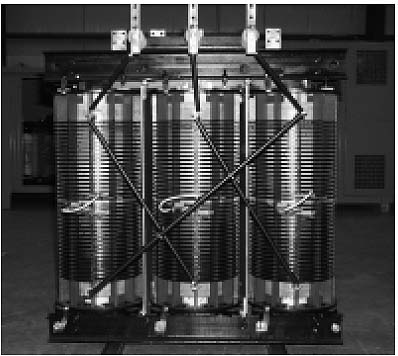
Transformer with disc wound coils[Dry-Type disc wound transformers in medium voltage applications. Derek R. Foster I.Eng. MIIE]
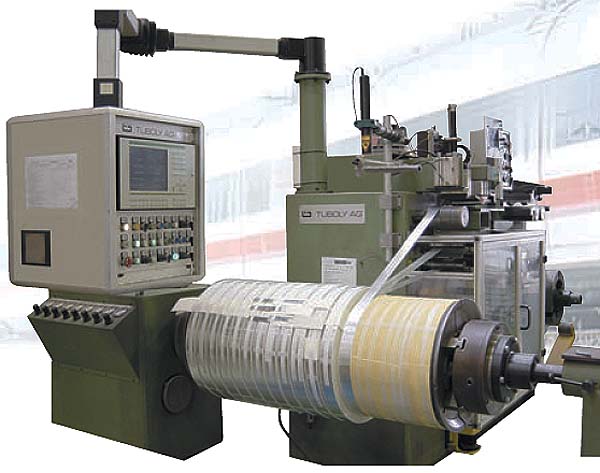
Computer aided winding process
Рис. ABB
Тематики
Обобщающие термины
Синонимы
EN
Русско-английский словарь нормативно-технической терминологии > дисковая катушечная обмотка
См. также в других словарях:
Process-Space Festival — Process – Space Festival of Contemporary Arts takes place annually in June at the town of Balchik on the north coast of the Black Sea, Bulgaria. The festival aims to stimulate the innovations and research in contemporary arts, to open the… … Wikipedia
Space Invaders — ] cite book| title = The Art of Game Worlds| first = Dave| last = Morris| pages = p. 166| publisher = HarperCollins| isbn = 0060724307| year = 2004] Despite the specially developed hardware, Nishikado was unable to program the game as he wanted… … Wikipedia
Process architecture — is the structural design of general process systems and applies to fields such as computers (software, hardware, networks, etc.), business processes (enterprise architecture, policy and procedures, logistics, project management, etc.), and any… … Wikipedia
Space debris — populations seen from outside geosynchronous orbit (GEO). Note the two primary debris fields, the ring of objects in GEO, and the cloud of objects in low earth orbit (LEO) … Wikipedia
Space manufacturing — is the production of manufactured goods in an environment outside a planetary atmosphere. Typically this includes conditions of microgravity and hard vacuum.Manufacturing in space has several potential advantages over Earth based industry.# The… … Wikipedia
Process isolation — is a set of different hardware and software technologies[1] designed to protect each operating system process from other processes. It does so by preventing process A from writing into process B. Process isolation can be implemented by with… … Wikipedia
Space weathering — is a blanket term used for a number of processes that act on any body exposed to the harsh space environment. Airless bodies (including the Moon, Mercury, the asteroids, comets, and some of the moons of other planets) incur many weathering… … Wikipedia
Space medicine — is the practice of medicine on astronauts in outer space.Who benefits from space medicine research?Astronauts are not the only ones who benefit from space medicine research. Several medical products have been developed that are space spinoffs,… … Wikipedia
Space — • The idea of space is one of the most important in the philosophy of the material world; for centuries it has preoccupied and puzzled philosophers and psychologists Catholic Encyclopedia. Kevin Knight. 2006. Space Space … Catholic encyclopedia
Space opera — is a subgenre of speculative fiction or science fiction that emphasizes romantic, often melodramatic adventure, set mainly or entirely in space, generally involving conflict between opponents possessing powerful (and sometimes quite fanciful)… … Wikipedia
Space science — is an all encompassing term that describes all of the various science fields that are concerned with the study of the Universe, generally also meaning excluding the Earth and outside of the Earth s atmosphere . Originally, all of these fields… … Wikipedia
